Introduction
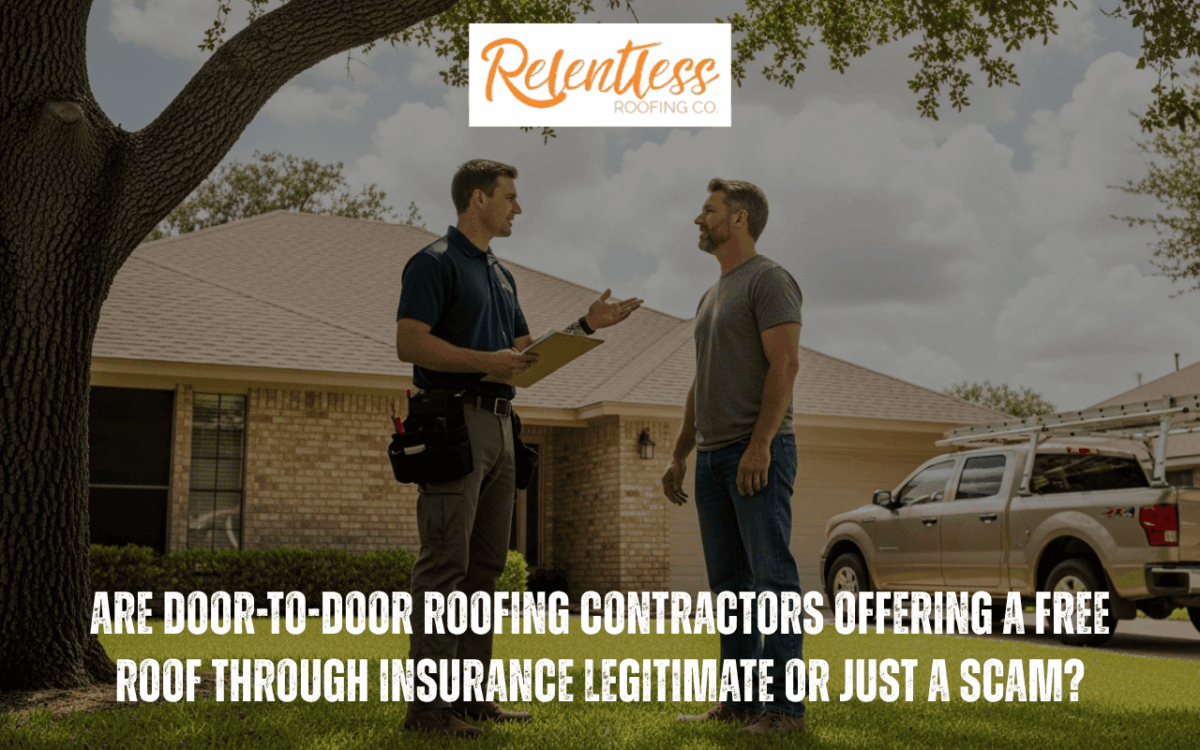
When a storm or hail storm passes, homeowners often see a wave of roofers knocking on doors offering “free roof inspections” or even promising a “free roof” through insurance. While some roofers are legitimate, many of these door-to-door offers are scams that can cost homeowners thousands and even trigger insurance fraud.
This guide from Relentless Roofing Co., explains how roofing scams work, why homeowners need to stay alert, and the steps to avoid falling victim.
What Are Roofing Scams and Why Do They Target Homeowners?
Roof scams are deceptive practices where a contractor misleads homeowners into unnecessary or inflated roof repairs or replacements. Scammers often use fear, urgency, or storm damage as leverage.
The main reason homeowners get targeted is timing. After hail storms or hurricanes, people worry about hidden damage. Scammers exploit this stress by posing as professional roofers offering quick fixes or insurance-paid replacements. Storm chaser roofers especially go door-to-door, knowing many families won’t have time to verify their credentials.
How Do Roofing Scams Work After Hail or Storm Damage?
After hail or storm damage, roofing scams often target worried homeowners. Storm chaser roofers use quick promises and insurance tricks to take advantage.
- Storm Chaser Roofers – Show up in neighborhoods after hail storms, claiming your roof is unsafe.
- Fake Inspections – Some cause damage during the “inspection” to justify roof replacement.
- Fabricated Evidence – Use fake photos of damaged shingles or exaggerate repair needs.
- Insurance Promises – Claim that “insurance will cover everything,” pushing unnecessary claims.
These scams work because homeowners trust contractors who seem helpful after a disaster. Stay cautious and verify every roofer before agreeing to work.
You may also read: Should You File a Wind or Hail Claim on a 20‑Year‑Old Roof?
Why Are Contractors Who Go Door-to-Door Considered Risky?
Door-to-door roofing offers are a major red flag. Reputable roofing companies rarely rely on this approach. Instead, they market through referrals, online presence, or established local offices.
Scam artists who knock on your door pressure you to sign a contract quickly before you’ve had time to research. They often avoid giving a physical address, full insurance documents, or references. Once paid, many vanish without completing the roof repair or provide poor-quality work.
If someone knocks on your door promising a free roof inspection, always pause and verify before agreeing.
How Can a Free Roof Inspection Be a Setup for Fraud?
A free inspection can sometimes be legitimate if offered by a trusted, local roofing company. But in scams, the “free” comes at a high cost.
Here’s how:
- Fabricated Damage – Contractors may pull shingles to mimic wind damage or show pictures from another home.
- High-Pressure Tactics – They insist you must file an insurance claim immediately.
- Insurance Exploitation – By filing unnecessary or fraudulent claims, you risk insurance fraud without realizing it.
Homeowners must remember: a free estimate is normal, but a “free roof” through insurance is almost always too good to be true.
What Are the Most Common Roofing Scams Homeowners Should Know?
Roofing scams often appear after hail or storm damage, preying on worried homeowners. Understanding the most frequent tricks can help you avoid costly mistakes.
Storm Chasers After Hail Storms
Storm chaser roofers travel from town to town after hail storms. They knock on doors offering fast roof replacement but often provide poor workmanship or disappear once paid.
Deductible Scams and Insurance Fraud
Some contractors claim they will “waive” or cover your deductible. This is illegal insurance fraud that can raise your premiums or even cancel your coverage.
Bait-and-Switch Estimates
A roofer may start with a low estimate but later inflate the bill with hidden charges. This bait-and-switch tactic leaves homeowners paying far more than expected.
Down Payment Scams
Another common scam involves demanding large payments upfront, only for the contractor to vanish without completing the roof repair or replacement.
You may also read: Avoid Roofing Scams in Elkhart – How to Choose a Trustworthy Roofer
How Does Insurance Fraud Play a Role in Roofing Scams?
Insurance fraud is at the center of many roofing scams. Contractors may inflate insurance claims for roof damage or push homeowners to misreport conditions.
For example, a roofer may claim shingles are discontinued and demand a full replacement. In reality, matching shingles may exist, and repairs could cost a fraction of the claim.
Insurance companies are fighting back by raising premiums, denying claims, or requiring mandatory roof replacement at certain ages. Homeowners caught in fraudulent claims may face policy cancellations and even legal penalties.
Why Hiring a Roofing Contractor Without Research Is a Major Risk
Skipping research when hiring a roofing contractor can expose homeowners to scams and poor workmanship. Unlicensed or uninsured roofers may disappear after partial work, leaving you with a damaged roof, no warranty, and unexpected expenses.
Reputable roofing companies, by contrast, provide written contracts, customer references, and proof of insurance to protect your investment. These steps show accountability and help ensure the work is completed to proper standards.
Taking the time to research roofing companies online, check reviews, and verify credentials is essential. Without these checks, homeowners risk paying more in the long run through repeat repairs, insurance claim problems, or even premature roof replacement.
What Questions Should You Ask a “Free Inspection” Roofer?
Before letting any roofer inspect your roof, ask key questions to protect yourself from scams:
- Are you licensed and insured?
- Can you provide references or reviews from past homeowners?
- What inspection methods do you use—drone, infrared, or physical?
- Will you provide a written estimate with clear costs?
These simple questions help expose roofing scammers who rely on vague answers or avoid giving proof of credibility.
How Do You Verify a Contractor’s Credentials?
To avoid roofing scams, homeowners should always confirm a contractor’s credibility:
- Check BBB Ratings – Review for complaints, scam alerts, and business reputation.
- Confirm State License – Use your state’s online database to verify roofing licenses.
- Ask for Proof of Insurance – Ensure they carry liability and workers’ compensation.
- Read Online Reviews – Look for consistent feedback, not just a single good review.
- Confirm a Local Address – Reputable roofing companies have a permanent office, unlike storm chasers.
If a roofer hesitates to provide these details, it’s a clear red flag.
You may also read: Choosing the Right Roofing Contractor – 10 Key Questions to Ask
Why Do Insurance Companies Sometimes Require Certain Contractors?
Insurance companies often recommend “preferred contractors” for storm damage roof repairs. These partnerships help insurers control costs, streamline claims, and ensure a standard level of service for homeowners.
However, you should not assume that these contractors are always the best or only option. While many are legitimate, some may prioritize the insurance company’s interests over yours, which could affect the quality of materials or workmanship used on your roof.
Homeowners have the right to choose their own roofing contractor. Even if your insurer suggests a company, always research them independently, check reviews, and confirm credentials to make sure you are working with reputable roofing companies you can trust.
How Can You Avoid Fraudulent Claims and Roofing Scams?
Homeowners can reduce risk by following a few simple steps to avoid roofing scams and fraudulent insurance claims:
- Get Multiple Inspections – Arrange two or three roof inspections before filing a claim.
- Avoid High-Pressure Contractors – Never sign a contract on the spot.
- Report Suspected Fraud – Contact your state’s insurance fraud division if needed.
- Choose Local Roofers – Work with a trusted local roofing company that has verifiable credentials.
These tips help protect your home, your insurance policy, and your peace of mind after hail or storm damage.
Why Working With a Local Roofing Company Matters
Local roofing companies provide accountability and peace of mind. They operate from a permanent office, maintain an established reputation, and stand behind their work with warranties or follow-up repairs.
Storm chasers, on the other hand, move on quickly after each hail storm or disaster. If issues arise later, they are often impossible to reach, leaving homeowners stuck with unfinished or poor-quality roof repairs.
By choosing a trusted local roofing contractor, you gain better workmanship, reliable service, and long-term support. Local companies also understand area building codes, weather challenges, and insurance requirements, which adds another layer of protection for your home.
Key Signs of a Reputable Roofing Contractor vs. a Roofing Scammer
Spotting the difference between a reputable roofing contractor and a roofing scammer is critical for protecting your home and insurance. A few clear signs can help you decide who to trust.
Signs of a Reputable Roofing Contractor
A trustworthy roofing contractor provides a written roofing contract, operates from a local address, carries verifiable insurance, and shares references with clear, transparent pricing.
Signs of a Roofing Scammer
Roofing scammers often knock on doors after hail storms, avoid giving straight answers, pressure homeowners into filing an insurance claim immediately, and demand money upfront before work begins.
Quick Comparison
Homeowners can easily protect themselves by comparing these traits. Reputable roofing companies offer transparency and accountability, while scammers rely on pressure and vague promises.
You may also read: Overlay vs Tear‑Off: Is Re‑Roofing Over Existing Shingles Worth It?
Conclusion
Roofing scams tend to pop up after hail storms and often start with a knock on your door. While some contractors are honest, many “free roof” or “free inspection” offers are traps that can lead to inflated costs, insurance fraud, or unfinished work.
The best way to avoid roofing scams is simple: research roofing contractors, verify credentials, and work with a local roofing company you can trust. Homeowners who stay vigilant protect not only their roof but also their finances and insurance coverage.
Key Takeaway
Homeowners should treat door-to-door roof offers and “free roof through insurance” promises as red flags. By verifying every roofing contractor’s credentials, avoiding high-pressure tactics, and working with reputable local roofing companies, you can protect your roof, your insurance policy, and your finances from scams.
FAQs About Roofing Scams and Free Roof Offers
1. Is offering a free roof inspection soliciting?
Yes. If a roofer knocks on your door with a free inspection offer, it is a form of solicitation. Homeowners should always research the roofing contractor and roofing companies before agreeing to an inspection.
2. Is door-to-door roof inspection a scam?
Not always, but it is a major red flag. Many roof scams start when a contractor goes door-to-door after hail or storm damage, pressuring you to sign a contract for roof repair or roof replacement.
3. Is the free roof program legit?
In most cases, no. A free roof through an insurance claim often involves insurance fraud or fake storm damage. Always confirm with your insurance company and a reputable roofing contractor.
4. How does a roofing scam work?
Many roof scams start with a free inspection. Scammers fabricate shingle or siding damage, inflate the insurance claim, or take money up front for roof repair or replacement without finishing the job.
5. How can homeowners avoid fraudulent insurance claims?
Have your roof inspection verified by an insurance adjuster, get quotes from reputable roofing companies, and never sign a contract with a roofer using pressure tactics over storm damage or deductible offers.