

The best time to replace a roof in Indiana is usually during mild, dry weather in spring or fall. Yet the best time to start planning is earlier. Michiana data shows roofing demand rises sharply from March through July, so homeowners who inspect and book in February may have more scheduling options for spring installation.
Introduction
Roof replacement has two timelines. One is the installation window, when weather allows safe roofing work and materials can perform as intended. The other is the booking window, when homeowners should arrange inspections, estimates, and scheduling.
That difference matters in Michiana. The Michiana Roof Report 2026 found that roofing requests rise sharply once winter ends.
Waiting for perfect spring weather before calling a roofer may mean starting the process when many other homeowners are doing the same thing.
Key Takeaway
Indiana homeowners should separate the month they book from the month their roof is installed. Moderate spring and fall weather often works well for installation, while February can be a useful planning month before local roofing demand climbs.
The Michiana Roof Report 2026 found:
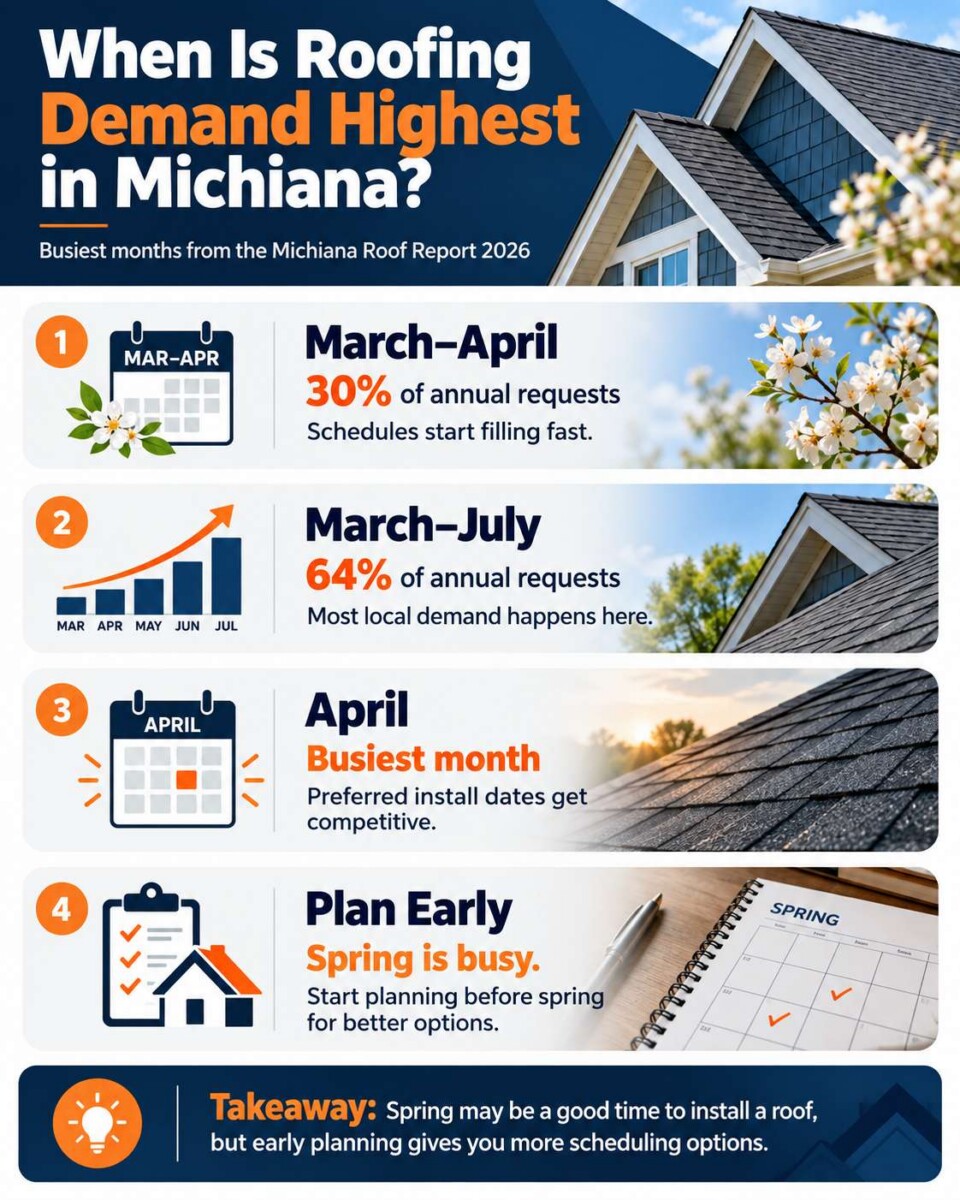
- 30% of annual requests occur in March and April.
- 64% occur from March through July.
- April is the busiest month.
For a planned spring roof replacement in Elkhart, getting the roof inspected and priced in February can give you more time to compare options before contractor schedules become tighter.
What Does “Best Time to Replace a Roof in Indiana” Actually Mean?
The “best time” depends on what you are trying to accomplish.
For installation, contractors need suitable weather. Asphalt shingles generally perform best when temperatures are moderate, the roof deck is dry, and rain, snow, ice, or strong winds are unlikely to interrupt the work.
For homeowners, timing starts earlier. Inspections, estimates, insurance questions, material selection, and contractor scheduling can all happen before installation weather arrives.
A better question is therefore: When should I start planning, and when should the roof actually be installed?
What Does Michiana Roof Demand Data Show About the Busiest Months?
Local demand rises well before summer. According to the Michiana Roof Report 2026, almost two-thirds of annual roofing requests occur between March and July.
| Period | Local Demand | What It Means |
| March–April | 30% of requests | Schedules begin filling quickly |
| March–July | 64% of requests | Most annual demand is concentrated here |
| April | Busiest month | More homeowners compete for preferred dates |
Spring demand can rise because winter damage becomes easier to spot, planned home projects restart, and storms can create new roof problems.
The practical lesson is simple: spring may be a good time to install a roof, but waiting until spring to start planning can reduce your options.
What Weather and Temperature Conditions Are Best for Roof Installation in Indiana?
Asphalt shingles are commonly installed most comfortably in moderate temperatures, with the research for this guide placing a useful range around 45°F to 85°F. The exact limits depend on the roofing product and manufacturer instructions.
Cold weather can make shingles stiffer and slow their sealing. Strong summer heat can soften shingles and make them easier to mark during installation.
Weather also matters beyond temperature. Roofing work may be delayed by:
- Rain or wet roof decking
- Snow and ice
- Strong winds
- Extreme heat
- Sudden storms
A dry, mild day outside the “ideal” season can be better than a wet or stormy day in May or October.
Why Is February an Important Month to Book a Spring Roof Replacement?
February can give Michiana homeowners a scheduling advantage because it comes just before local roofing demand rises sharply. It is best viewed as a planning month, not necessarily an installation month.
Consider two homeowners:
| Starts in February | Waits Until April |
| Gets an inspection early | Starts during peak demand |
| Has time to compare estimates | May face fewer open dates |
| Can choose materials calmly | Decisions may feel rushed |
| Can reserve spring work | Installation may move later |
This matters even more if storm damage or an insurance claim is involved. The Michiana Roof Report 2026 found that 15% of local roofing requests were tied to storms or insurance.
Which Season Is Best for Roof Replacement in Northern Indiana?
No single season is best for every Indiana roof. The better choice depends on weather, roof condition, contractor demand, and how urgently the work is needed.
Spring
Mild temperatures can support asphalt shingle installation. The drawback is rising demand, rain, and spring storms. Homeowners who want spring work should plan early.
Summer
Warm conditions help shingles seal, and long daylight hours can support efficient work. High heat and thunderstorms can still cause delays.
Fall
Fall often brings comfortable roofing temperatures and gives homeowners a chance to prepare before winter. The main risk is a shorter working window as colder weather approaches.
Winter
Roof replacement is possible on suitable days, especially when damage cannot wait. Cold temperatures, snow, and ice can limit working conditions and may require special installation steps.
When Should Roof Age, Damage, or Insurance Override the Ideal Season?
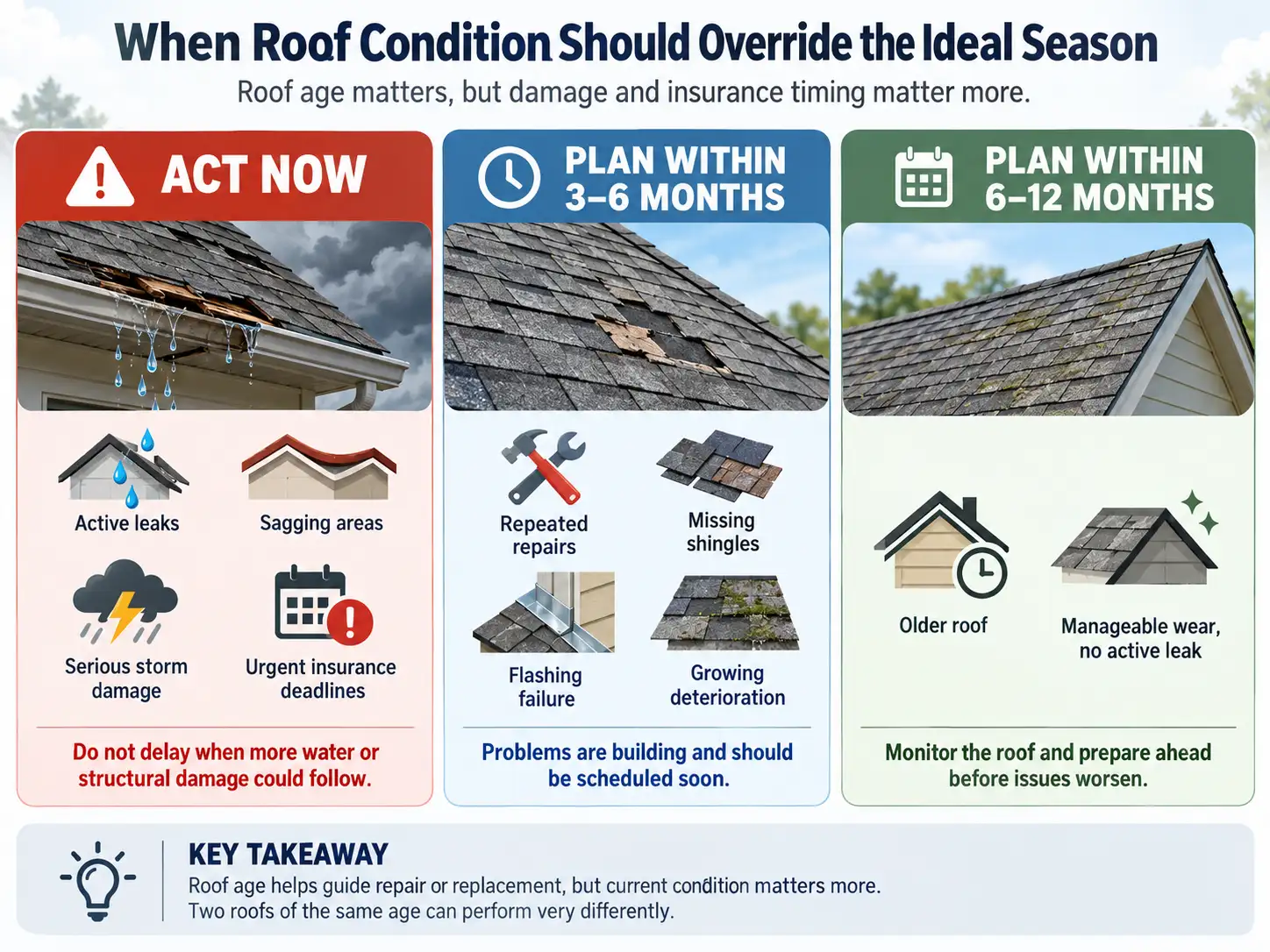
A damaged roof should not wait for a preferred season if delaying repairs can allow more water or structural damage.
Use this simple timing guide:
- Act now: Active leaks, sagging areas, serious storm damage, damaged decking, or urgent insurance deadlines.
- Plan within 3–6 months: Repeated repairs, several missing shingles, flashing failure, or growing deterioration.
- Plan within 6–12 months: An aging roof with manageable wear and no active leak.
Roof age helps guide whether to repair or replace your roof, but condition matters more. Two roofs of the same age can deteriorate at very different rates.
How Should Indiana Homeowners Plan From Inspection to Installation?
A planned spring replacement works better when homeowners start before peak demand.
- January: Review roof age, previous repairs, leaks, and winter damage.
- February: Schedule a professional roof inspection and collect estimates.
- March: Compare contractors, roofing materials, warranties, and project scope.
- April–June: Install the roof when weather conditions are suitable.
- Keep flexibility: Allow room for rain, wind, or storm delays.
This sequence gives homeowners time to make decisions before the March-to-July demand surge.
How Do Timing, Roof Replacement Cost, and Contractor Availability Connect?
Season affects scheduling more directly than it affects what a new roof costs in Michiana, because project details drive most of the final price. Roof size, material, slope, tear-off, damaged decking, flashing, and labor usually have a greater effect on the final price.
Before scheduling, compare:
- Full project scope
- Roofing material
- Tear-off and disposal
- Decking allowances
- Flashing and ventilation
- Warranty coverage
- Start-date expectations
- Weather-delay policy
- Payment terms
Booking earlier may give you more date choices and more time to compare estimates without rushing because your preferred season has already begun.
Conclusion
The best installation weather and the best booking time are not always the same. Indiana homeowners across the Michiana service area may find good roofing conditions in spring or fall, while Michiana data shows that planning should often begin earlier.
With 30% of local requests arriving in March and April and 64% from March through July, February gives homeowners useful time to inspect, compare, and schedule.
Plan early when the roof allows it. If leaks, storm damage, or structural problems make the job urgent, act sooner and let safe installation conditions guide the final date.
You May Also Want to Read
You may also want to read:
Storm Damage: Should You Call a Roofer or Your Insurance Company First?
What Does a New Roof Cost in Elkhart & Michiana?
FAQs About Roof Replacement Timing in Indiana
How Long Does a Roof Replacement Usually Take in Indiana?
Many residential projects take several working days, but there is no single verified Indiana-wide duration. Roof size, slope, material, decking repairs, crew size, and weather can change the timeline. Ask the contractor for a project-specific schedule before work begins.
Do I Need a Permit to Replace My Roof in Indiana?
Permit rules can vary by city, county, and project scope. Ask your local building department or roofing contractor whether your property requires a permit and who is responsible for getting it before installation begins.
Can a New Roof Be Installed Over Existing Shingles?
Sometimes, but the decision depends on the existing roof layers, decking condition, local code, and roofing product requirements. A full tear-off also allows the contractor to inspect the roof deck before installing the new system.
What Is the 25% Rule for Roofing, and Does It Apply in Indiana?
The research used for this article does not confirm one statewide Indiana “25% rule” that applies to every roof. Local code requirements may differ. Check with the building department that serves your property before using a percentage rule to decide between repair and replacement.
What Should I Do if Bad Weather Arrives During My Roof Replacement?
The contractor should stop work when conditions become unsafe and protect exposed roof areas from water. Before the project starts, ask how the crew handles temporary covering, weather monitoring, material protection, and rescheduling.