
Introduction
Roof flashing repair stops leaks at the weakest points of your roof. Flashing sits around chimneys, vents, and joints to keep water out. When it fails, water can move inside your roof and cause damage fast. Many homes in Michiana deal with heavy rain, snow, and freeze cycles. These conditions put extra stress on flashing. Small gaps or loose sections can lead to stains on ceilings, mold, and wood damage.
This guide explains how roof flashing works, how to spot damage, how repairs are done, and what it costs. You will also learn when to fix it yourself and when to call a roofing contractor.
Key Takeaway
- Roof flashing repair stops leaks at the most vulnerable points of your roof.
- Small issues like cracks or loose flashing can quickly lead to serious damage if ignored.
- Regular inspection helps you catch problems early before they spread.
- Early repairs extend the life of your roof and reduce repair costs.
- Knowing when to repair or replace flashing helps you make better decisions.
- Acting early keeps your roof system strong and your home dry.
What Is Roof Flashing and Why It Matters for Preventing Leaks
Roof flashing is a thin metal barrier that seals joints on your roof and directs water away from vulnerable areas. It prevents water from entering gaps where shingles meet structures like chimneys or vents.
Definition Block:
Roof flashing is a sheet of metal installed at roof joints to create a watertight seal and stop water from entering the roofing system.
Flashing is placed under shingles and around edges. It protects areas where water collects or flows. Without it, water can seep into the roof deck and cause rot.
Understanding Roof Flashing and How It Protects Your Roofing System
Flashing works by guiding water off the roof, and if water has already entered your home, knowing what to do when your roof leaks in rain can help you limit damage while waiting for repairs. This is critical in areas like valleys where two slopes meet.
Common Flashing Materials Used In Roof Installation
- Aluminum: Lightweight and resists rust
- Galvanized steel: Strong and common in homes
- Copper: Long life and high durability
“What this means: flashing is your roof’s first defense against water at its weakest points.”
Signs of Roof Flashing Damage You Should Never Ignore
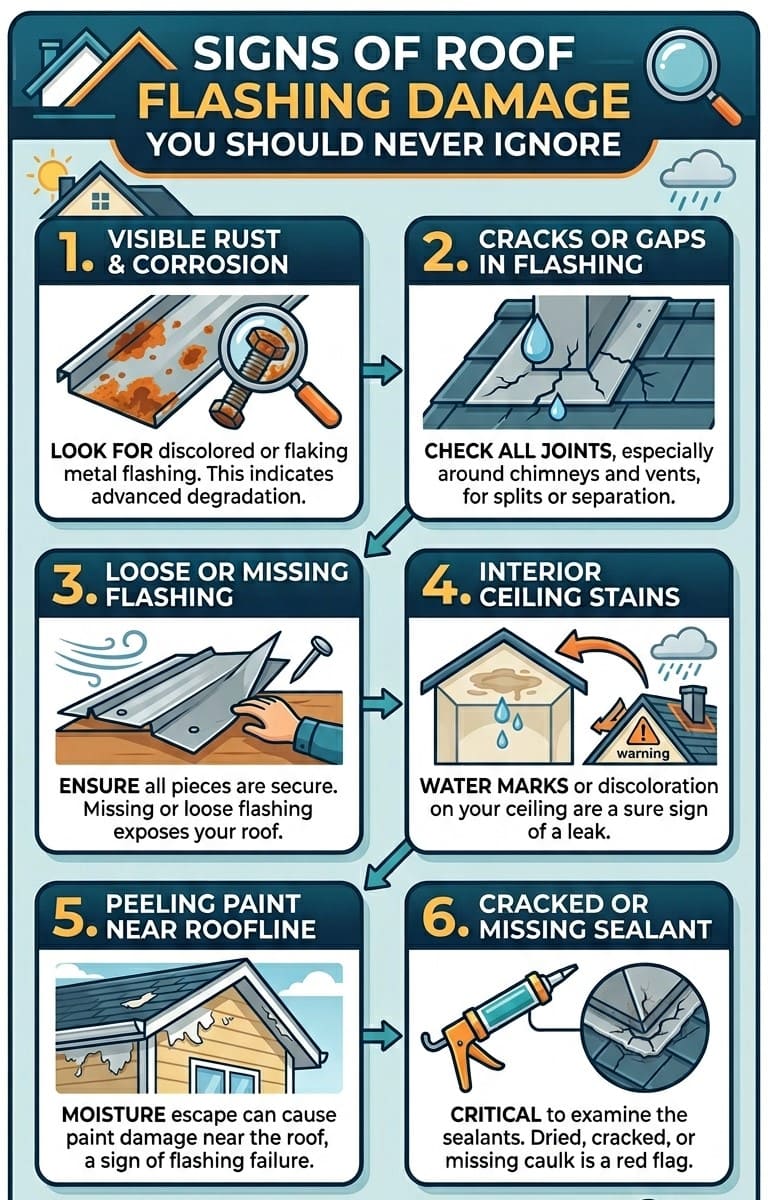
Roof flashing damage shows clear signs that should not be ignored. Early detection helps prevent major roof repair costs.
Watch for these signs:
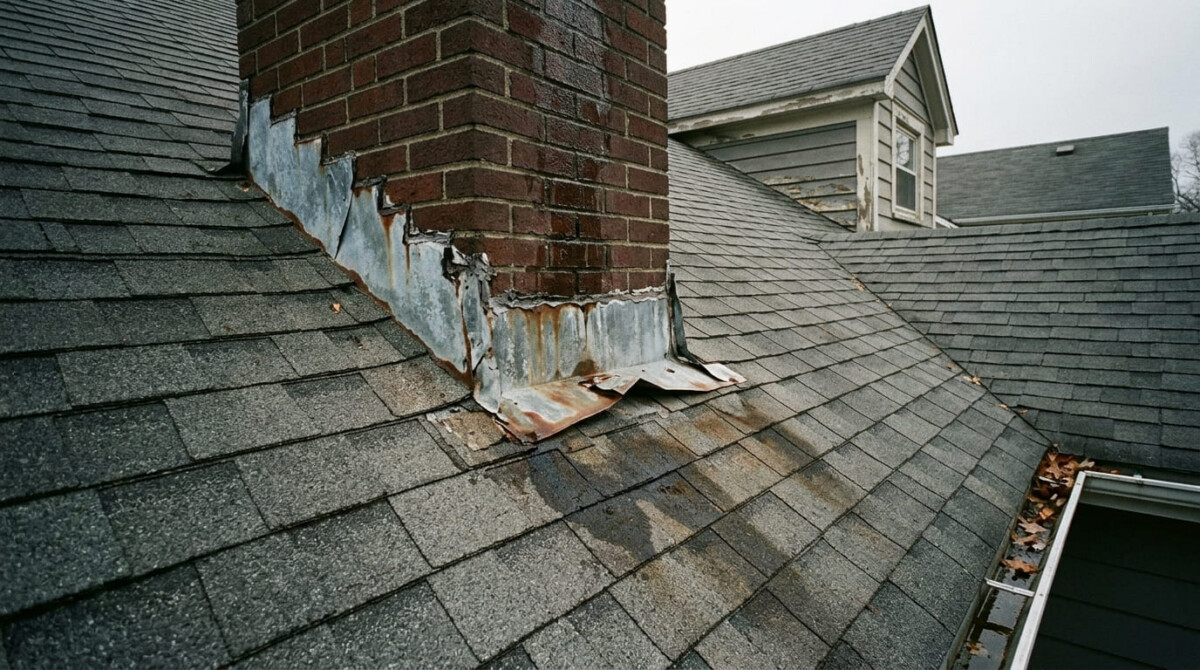
- Rust or corrosion on flashing material
- Cracks or splits in the metal
- Loose or missing flashing pieces
- Water stains on ceilings or walls
- Leaking around chimney or vent
- Mold or damp smell in attic
Definition Block:
Damaged roof flashing refers to flashing that has cracks, rust, gaps, or failed seals, allowing water to enter the roof system.
If you see water stains or leaking around flashing, the seal is likely broken. In cold climates like Michiana, freeze-thaw cycles can widen cracks quickly, which is why understanding what to do in an emergency roof repair situation before winter sets in is critical for homeowners.
“Small flashing problems grow fast when water keeps entering the same spot.”
How Roof Flashing Repair Works Step by Step
Roof flashing repair restores the seal by fixing cracks, replacing damaged sections, and securing the flashing back in place.
Step-by-step process to repair roof flashing
1. Inspect the flashing: Look for cracks, rust, or loose sections around chimney, vent, or shingles.
2. Remove damaged flashing: Lift shingles and remove old or damaged flashing.
3. Clean the area: Remove debris and old sealant to prepare the surface.
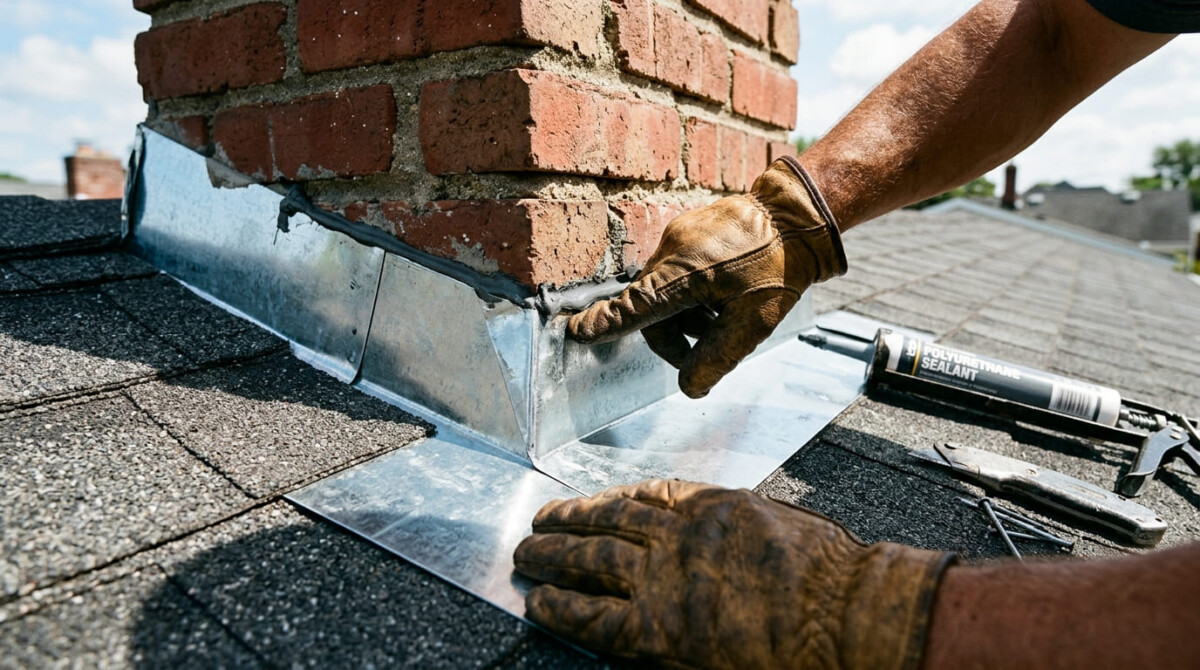
4. Install new flashing or repair existing: Replace with new flashing or seal minor cracks with caulk.
5. Secure and seal: Use nails and sealant to create a watertight seal.
6. Reinstall shingles: Place shingles back to protect flashing.
Definition Block:
A watertight seal is a barrier that prevents water from passing through joints or surfaces on the roof.
“What this means: proper repair is not just sealing cracks—it is restoring full protection.”
Repair or Replace Roof Flashing: What’s the Right Decision?
Repair flashing if the damage is small and limited. Replace it if the flashing is rusted, missing, or failing across large sections.
Decision checklist
Use repair if:
- Small cracks or gaps
- Minor sealant failure
- Flashing still firmly attached
Use replacement if:
- Heavy rust or corrosion
- Missing flashing sections
- Water damage under shingles
- Improper installation
| Condition | Best Option |
| Minor crack | Repair |
| Loose flashing | Repair |
| Rust or corrosion | Replace |
| Missing sections | Replace |
“Fix early when possible, but replace when the structure is compromised.”
Cost of Roof Flashing Repair: What Homeowners Should Expect
Roof flashing repair usually costs between $200 and $1,000 depending on the size of the repair and materials used.
Cost breakdown
| Type of Work | Average Cost |
| Minor repair | $200–$500 |
| Partial replacement | $500–$1,200 |
| Full replacement | $1,000+ |
Factors that affect cost
- Size of damaged area
- Type of flashing material
- Roof height and access
- Labor rates in Michiana
Real-world insight: Local contractors often charge more in winter due to weather risks, and knowing how much roof repairs cost in Elkhart Indiana helps you budget before calling anyone out.
“What this means: fixing flashing early is cheaper than waiting for water damage repairs.”
Where Roof Flashing Is Installed (And Why These Areas Leak Most)
Roof flashing is installed in areas where water collects or changes direction. These are the most common leak points on a roof.
Key areas that need flashing
- Chimney flashing: Seals the base of the chimney
- Vent flashing: Protects around pipes and ventilation
- Valley flashing: Handles heavy water flow between slopes
- Skylight flashing: Prevents leaks around openings
These areas face direct water exposure, and poor installation or aging sealant often causes leaks here that require a professional roof leak repair service to properly diagnose and fix.
“Most roof leaks start at flashing points, not in the middle of shingles.”
DIY vs Hiring a Roofing Contractor: What’s Safer and Smarter?
DIY flashing repair works for small fixes, but connecting with a trusted local roofing contractor is the safer choice when dealing with larger or hidden damage that requires proper sealing and structural assessment.
Pros and cons
| Option | Pros | Cons |
| DIY repair | Low cost, quick fix | Risk of poor seal, safety issues |
| Contractor | Proper repair, long-term fix | Higher cost |
When DIY works
- Small cracks
- Minor seal repairs
- Easy-to-access roof areas
When to call a contractor
- Major leaks
- Damaged flashing under shingles
- Chimney or valley issues
“When safety or structure is at risk, professional help is the smarter choice.”
How to Prevent Future Roof Flashing Problems
You can prevent flashing problems with simple maintenance and regular inspection.
Maintenance checklist
- Inspect flashing twice a year
- Check after storms
- Clean debris around flashing
- Seal small cracks early
- Ensure flashing is securely fastened
Homes in Michiana face snow and ice buildup. Ice dams can force water under flashing and cause leaks.
“Prevention costs less than repair, and far less than water damage.”
Conclusion
Roof flashing is one of the most important parts of your roofing system. It protects joints and directs water away from critical areas. Understanding how flashing works, how to spot damage, and how repairs are done helps you make better decisions.
Whether you handle small repairs or hire a contractor, acting early is key. A well-maintained flashing system keeps your home safe from leaks and long-term damage.
You May Also Want to Read
You may also want to read:
- Quick Tips — What to Check After Roofers Install a New Roof
https://relentlessroofingco.com/quick-tips-what-to-check-after-roofers-installed-new-roof/
- How to Prepare Your Roof for Spring Storms in Indiana
https://relentlessroofingco.com/how-to-prepare-your-roof-for-spring-storms-in-indiana/
FAQs
1. How do you repair flashing on a roof?
You repair flashing by removing damaged sections, cleaning the area, applying sealant or installing new flashing, and securing it properly. This restores a watertight seal and prevents leaks.
2. Is roof flashing repair expensive?
Roof flashing repair is usually affordable. Minor repairs cost a few hundred dollars, while larger repairs or replacement cost more depending on damage.
3. Can you replace flashing without removing shingles?
Some small repairs can be done without removing shingles, but full replacement usually requires lifting shingles for proper installation.
4. How much does roof flashing repair cost?
Roof flashing repair typically costs between $200 and $1,000. The price depends on damage size, materials, and labor.
5. Are roof flashing repair kits worth it?
Repair kits can work for small fixes, but they are not long-term solutions. Proper repair or replacement gives better results.