
Roof sheathing thickness is the size of the panels that form your roof deck. Most homes use 1/2-inch or 5/8-inch panels, but the right choice depends on rafter spacing, load, and roofing material. Choosing the correct thickness helps prevent sagging, supports shingles, and improves long-term roof performance.
Introduction
Roof sheathing is the base layer installed over rafters, and understanding the anatomy of a roof helps you see how each component depends on the others. It supports shingles, underlayment, and the full roofing system. Many homeowners overlook thickness, but this single factor affects strength, lifespan, and repair costs.
Thin sheathing may reduce upfront cost, but it contributes to common roofing problems in Indiana homes that show up as sagging and leaks over time. Over time, it can bend, sag, or weaken under load. Snow, foot traffic, and heavy roofing materials all put stress on the roof deck. That stress builds slowly and often shows up later as uneven surfaces or leaks.
This guide explains how thick your roof sheathing should be. It covers plywood, OSB, building code, and real-world choices. The goal is simple. Help you choose the right roof sheathing thickness based on performance, not just minimum standards.
Key Takeaway
- Roof sheathing thickness controls strength, durability, and long-term performance
- Standard thickness is 1/2 inch, but 5/8 inch performs better in most cases
- Rafter spacing and climate play a major role in choosing thickness
- Plywood offers better moisture resistance, while OSB is more cost-effective
- Thicker sheathing reduces sagging and improves structural integrity
- Proper installation is critical for performance
- Choosing beyond code minimum helps avoid future repair costs
What Is Roof Sheathing (Roof Deck) and Why Thickness Matters More Than You Think
Roof sheathing is a layer of structural panels, usually plywood or oriented strand board, installed over rafters to form a solid roof deck. Its thickness controls strength, load support, and how well your roof resists sagging, moisture, and long-term wear.
The roof deck acts as the base layer for the entire roofing system. Every shingle and fastener depends on it. If the sheathing is too thin, it flexes under pressure. This movement loosens nails and weakens the bond between layers. Over time, this leads to leaks and early failure.
Thickness also affects how weight is handled. Snow loads, roofing material, and workers walking on the roof all add pressure. Thicker panels spread that load across a wider area. Thin panels concentrate stress between rafters, which increases the risk of sag.
Moisture is another hidden factor. When panels flex, small gaps form. Water can enter and damage the substrate. This is why thickness matters. It is not just about strength. It affects durability, stability, and how well your roof performs over time.
Standard Roof Sheathing Thickness Explained (3/8 to 3/4 Inch) — What Each Size Really Means
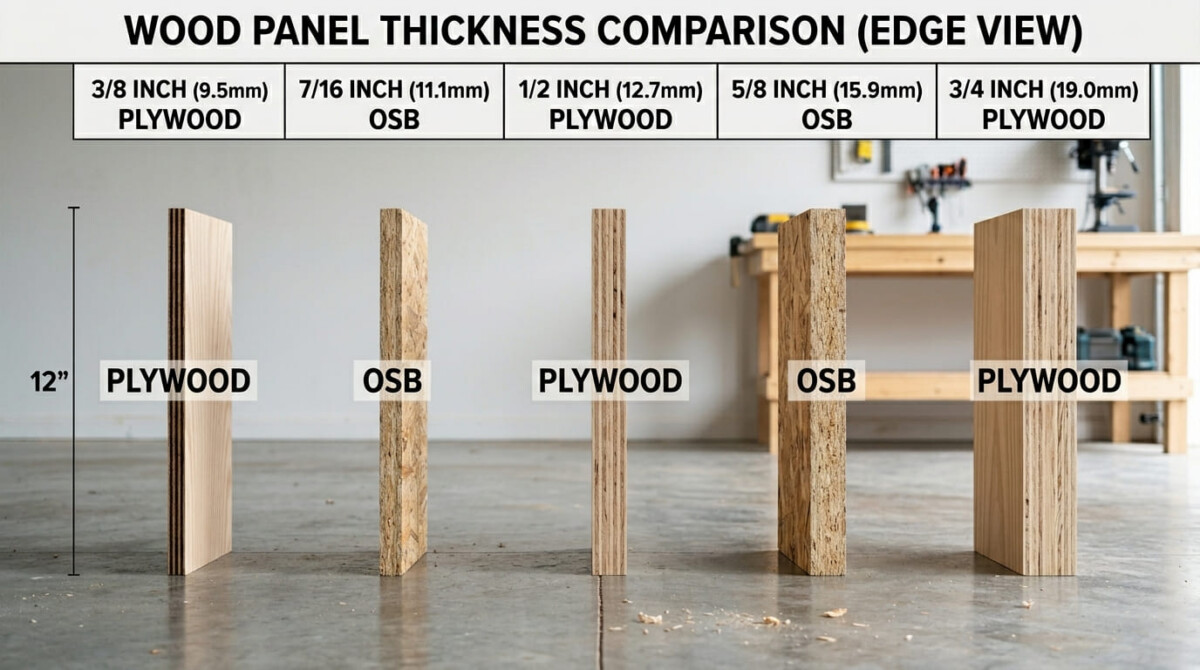
Most homes use roof sheathing between 3/8 inch and 3/4 inch thick. The most common sizes are 1/2-inch and 5/8-inch panels. The right thickness depends on rafter spacing, roofing material, and load conditions.
| Thickness | Typical Use Case | Risk Level |
| 3/8 inch | Older or light-duty roofs | High risk |
| 7/16 inch | Basic OSB systems | Moderate |
| 1/2 inch | Standard residential roofs | Balanced |
| 5/8 inch | Stronger, more durable roofs | Low |
| 3/4 inch | Heavy load or special builds | Very low |
A 1/2-inch panel works well for roofs with 16 inches spacing. It meets building code and supports asphalt shingles. However, it may not perform well in areas with snow or wider spacing — conditions that often lead to common roofing problems in Indiana homes over time.
A 5/8-inch panel performs better over time. It reduces flex and improves structural integrity. Many roofing professionals prefer it because it handles weight and foot traffic more effectively.
The key point is simple. Standard does not always mean best. Thicker sheathing often provides better long-term results.
Plywood vs OSB vs ZIP: Which Roof Sheathing Material Performs Better Over Time
Plywood, OSB, and ZIP panels are the main materials used for roof sheathing. Plywood offers better moisture resistance. OSB is more affordable. ZIP panels combine structure with a built-in barrier.
| Material | Strength | Moisture Resistance | Cost | Performance |
| Plywood | High | Better | Higher | Reliable |
| OSB | Moderate | Lower | Lower | Acceptable |
| ZIP | High | High | Highest | Strong |
Plywood is made from thin layers of wood glued together. It handles moisture better and dries faster. This makes it a strong choice for areas with rain or humidity.
OSB, or oriented strand board, is made from compressed wood strands. It is widely used because it costs less. However, it can swell when exposed to water. Once damaged, it may not return to its original shape.
ZIP panels include a protective layer built into the panel. This reduces the need for separate underlayment in some cases. They perform well but require careful installation.
In most cases, plywood performs better over time. OSB works when installed correctly and kept dry. The choice depends on budget, climate, and long-term goals.
How Rafter Spacing, Building Code, and Climate Decide Your Roof Sheathing Thickness
Roof sheathing thickness depends on rafter spacing, building code, and climate. Wider spacing needs thicker panels. Harsh weather increases load. Code sets the minimum, but real-world conditions decide what works best.
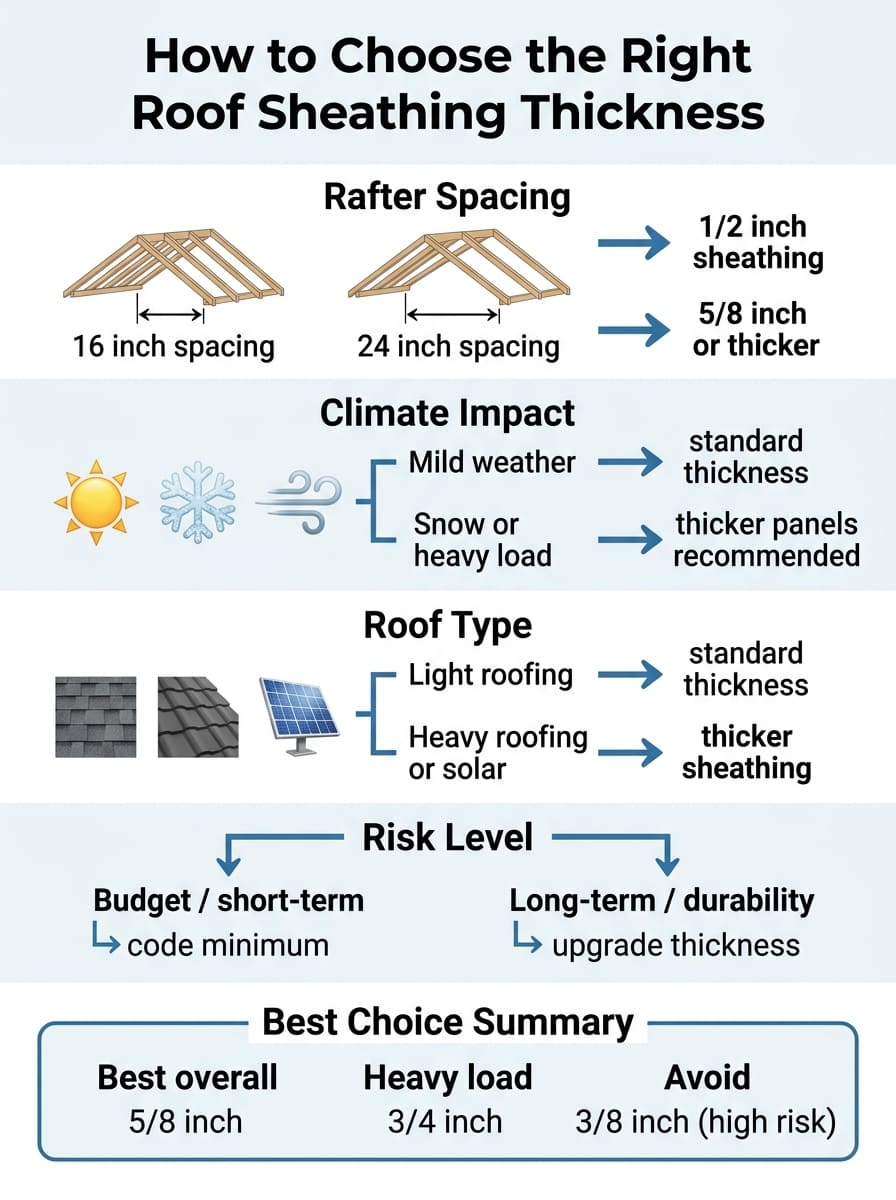
Start with rafter spacing. This is the distance between structural supports. When rafters are spaced 16 inches on center, 1/2-inch sheathing is often enough. When spacing increases to 24 inches, the panel must span a larger gap. This increases stress and requires thicker sheathing, usually 5/8 inch or more.
Next is building code. Local building codes define the minimum thickness for safety. These rules focus on basic performance, not long-term durability. Many homes meet code but still develop issues over time because the minimum standard was used.
Climate plays a major role. Snow loads add weight. Wind creates uplift and pressure. Areas with snow and ice require stronger panels to prevent sagging, and roof maintenance in harsh Indiana winters becomes significantly harder when the deck beneath is not thick enough to hold up under repeated freeze-thaw stress.
To choose correctly:
- Check your local building codes
- Measure rafter spacing
- Consider snow loads and weather patterns
- Choose thickness based on performance, not just code
The 3R Framework: How to Choose the Right Roof Sheathing Thickness (Region, Roof, Risk)
The 3R framework helps you choose the right roof sheathing thickness using region, roof type, and risk level. It moves beyond minimum standards and helps you make a practical decision based on real conditions.
| Factor | Code Minimum | Better Choice | Long-Term Choice |
| Region | Mild weather | Moderate climate | Snow or high wind |
| Roof | Basic shingles | Architectural shingles | Heavy materials |
| Risk | Low cost | Balanced | Long-term focus |
Start with your region. Mild climates can use standard thickness. Areas with snow or strong wind need thicker sheathing for support.
Next, consider your roofing material. Asphalt shingles work with standard panels. Heavier materials need more support to prevent movement and damage.
Risk is the final factor. If you plan to stay in your home long-term, thicker sheathing reduces future repair costs. It also improves structural integrity.
This method gives you a clear path. It helps you choose the right thickness based on performance, not just price.
Real-World Scenarios: What Thickness Works Best for Your Roof Setup
The best roof sheathing thickness depends on your setup. Real-world conditions often matter more than general guidelines.
Scenario 1: 24 Inches Spacing + Snow Loads
This setup needs at least 5/8-inch panels. In areas with snow, 3/4 inch performs better. Thicker sheathing spreads weight and reduces sag.
Scenario 2: Asphalt Shingles + 16 Inches Spacing
A 1/2-inch panel works here. It meets building code and supports shingles. Upgrading to 5/8 inch improves durability and reduces flex.
Scenario 3: Heavy Roofing or Solar Panels
Heavier roofing materials add stress to the roof deck. Thicker sheathing provides better support and reduces long-term movement.
Cost vs risk insight:
Saving a small amount per square foot on thinner panels can lead to higher repair costs later. Thicker sheathing often pays off through better performance.
Signs Your Roof Sheathing Thickness Is Not Enough (And When to Replace It)
Roof sheathing that is too thin often shows clear warning signs. These signs help you act early before major damage occurs.
- Sagging between rafters
This shows the panel cannot support the load. It is a common issue with wide spacing or thin sheathing. - Soft or weak spots
These areas indicate moisture damage. The panel has lost strength and may need replacement. - Nail pops or loose shingles
Movement in the roof deck causes fasteners to loosen. This weakens the roofing system. - Uneven roof surface
This often comes from panel flex or long-term wear. It affects both performance and appearance. - Water damage or leaks
Thin or damaged sheathing allows water to enter. This leads to further structural problems. If a storm caused the damage, our guide to filing a roof insurance claim in Indiana explains how covered repairs are estimated.
If you notice these signs, inspection is important, and a professional assessment can determine whether a full roof replacement is needed to address the underlying deck issues. In many cases, replacing the sheathing with thicker panels improves performance and prevents future issues.
Installation Essentials That Make Your Roof Deck Perform Better
Proper installation plays a major role in roof performance. Even the right thickness can fail if installation is poor.
- Use H-clips to support panel edges
- Leave small gaps between panels for expansion
- Install panels across rafters for strength
- Follow correct nailing patterns based on code
- Drive nails flush to avoid weak connections
H-clips reduce sag by supporting panel edges. This is important for wider spacing like 24 inches. Spacing between panels allows for expansion. Without it, panels can push against each other and cause buckling.
Fastening is also critical. Nails should be placed correctly and driven to the proper depth. This ensures strong attachment and long-term stability. Good installation improves durability and helps the roof system perform as expected.

Conclusion
Roof sheathing thickness is a key part of your roofing system. It affects how well your roof handles weight, weather, and long-term wear. Many problems like sagging and leaks start with weak or thin decking.
Choosing the right thickness depends on several factors. Rafter spacing, roofing material, and climate all play a role. Code requirements set a baseline, but they do not always reflect the best long-term option.
A smart choice balances cost and durability. Thicker sheathing often performs better and reduces future repairs. When in doubt, work with a trusted roofing contractor who can assess your specific setup and help you choose strength over minimum standards.
You May Also Want to Read
You may also want to read:
- Roof Anatomy Diagram — 7 Hidden Parts Most Roofers Skip
https://relentlessroofingco.com/anatomy-of-a-roof/ - DIY Roof Repair vs Hiring a Professional — Pros and Cons
https://relentlessroofingco.com/diy-roof-repair-vs-hiring-a-professional-pros-and-cons/
FAQs
1. What is the standard roof sheathing thickness?
The standard roof sheathing thickness is usually 1/2 inch for most homes with 16 inches rafter spacing. Many contractors prefer 5/8 inch because it performs better, reduces sagging, and improves durability, especially in areas with heavier loads or wider spacing.
2. Is 7/16 OSB enough for a roof?
7/16 OSB can be used for roof sheathing when rafters are spaced 16 inches on center and loads are low. However, it may not perform well over time in areas with snow or heavy roofing materials. Thicker panels like 1/2 or 5/8 inch are safer.
3. Should I choose 1/2 or 5/8 plywood for roofing?
Choose 1/2-inch plywood for standard roofs with tight spacing and light loads. Choose 5/8-inch plywood if you want better strength, less flex, and longer life. It is often the better option for durability and long-term performance.
4. Does roof sheathing thickness matter for 24 inches on-center spacing?
Yes, roof sheathing thickness matters more with 24 inches spacing. Wider gaps between rafters increase stress on panels. In most cases, 5/8 inch is the minimum, while 3/4 inch provides better support and reduces sagging over time.
5. What thickness should roof sheathing be for modern homes?
Modern homes often use 5/8-inch roof sheathing because it balances strength and cost. It supports common roofing materials and performs better over time. Thicker options may be needed for heavy roofing systems or areas with snow and strong weather conditions.