
Introduction
Flat roofs are common on homes and commercial buildings because they are cost-effective and space-efficient. However, they require a different level of care compared to a pitched roof. Water does not run off quickly, which increases the risk of damage. Many homeowners assume flat roofs are completely level, but they are built with a slight slope to allow drainage. When this system fails, water begins to collect and slowly weakens the roof structure.
This guide explains the most common flat roof problems, why they happen, and what you can do to fix or prevent them before they become serious.
Key Takeaway
- Flat roof problems often start small but spread fast if ignored
- Ponding water, membrane damage, and flashing failure are the most common issues
- These problems increase the risk of leaks and hidden structural damage
- Early inspection helps catch issues before they turn into costly repairs
- Regular roof maintenance improves drainage and prevents water buildup
- Knowing how problems develop helps you take action at the right time
- A well-maintained flat roof lasts longer and performs more reliably
- Preventive care protects your property from avoidable damage
Quick Flat Roof Triage: How to Spot Problems in 60 Seconds Before They Get Worse
A flat roof can show early warning signs within minutes if you know where to look. Quick checks after rain help you spot ponding water, blocked drains, or surface damage before they lead to leaks and costly repairs.
What to check right after rain or storms
Look for standing water, clogged gutters, and debris buildup. Water that stays longer than 48 hours signals drainage issues.
Signs of damage you should not ignore
Watch for cracks, bubbles in the membrane, and stains on ceilings inside your home. These often point to hidden leaks.
Risk levels: monitor, schedule inspection, act now
- Monitor: Small debris or minor dirt buildup
- Inspect: Early cracks or slow drainage
- Act Now: Active leaks or large ponding areas
Quick Checklist:
- Standing water present
- Drain blocked
- Membrane damage visible
- Interior stains forming
The Most Common Flat Roof Problems (And What They Really Mean)
Flat roof problems usually fall into a few key categories, including drainage failure, leaks, and material wear. Each issue signals a deeper problem within the roof system that needs attention before it spreads.
Ponding water and poor drainage
Water that sits on the roof weakens materials over time, and understanding whether flat roof pooling needs repair or full replacement helps you act before the damage spreads.
Leaks and moisture damage
Leaks often start small but travel under the membrane, which is why knowing how to find a leak in a flat roof before it spreads can save you from much larger repair costs.
Membrane cracks, blisters, and wear
Flat roofing materials like EPDM, PVC, and modified bitumen can crack or blister due to heat and age.
Flashing and edge failures
Flashing protects weak points. When it fails, water enters quickly.
Structural or hidden issues
Sagging areas may indicate deeper problems like insulation damage or deflection.
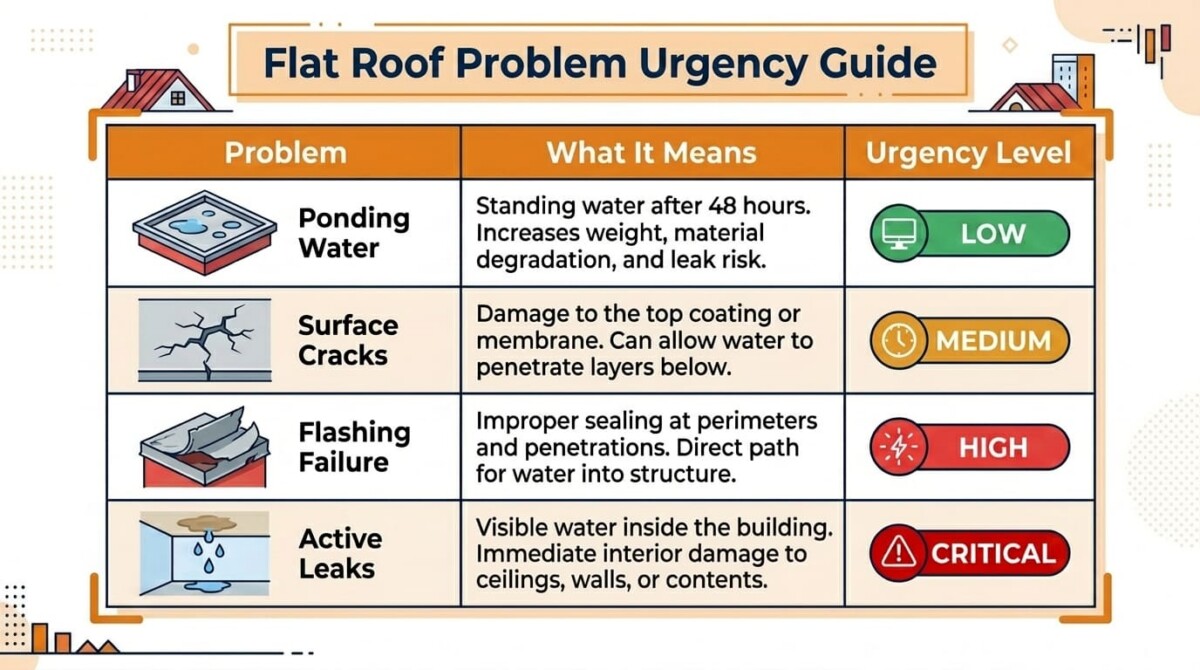
Problem → Meaning → Urgency Table
| Problem | What It Means | Urgency |
| Ponding water | Poor drainage or slope issue | High |
| Cracks/blisters | Aging or heat damage | Medium |
| Leaks | Active water entry | Critical |
| Flashing failure | Weak seal at edges | High |
Water Problems Explained: Why Ponding Water and Drainage Failures Lead to Leaks
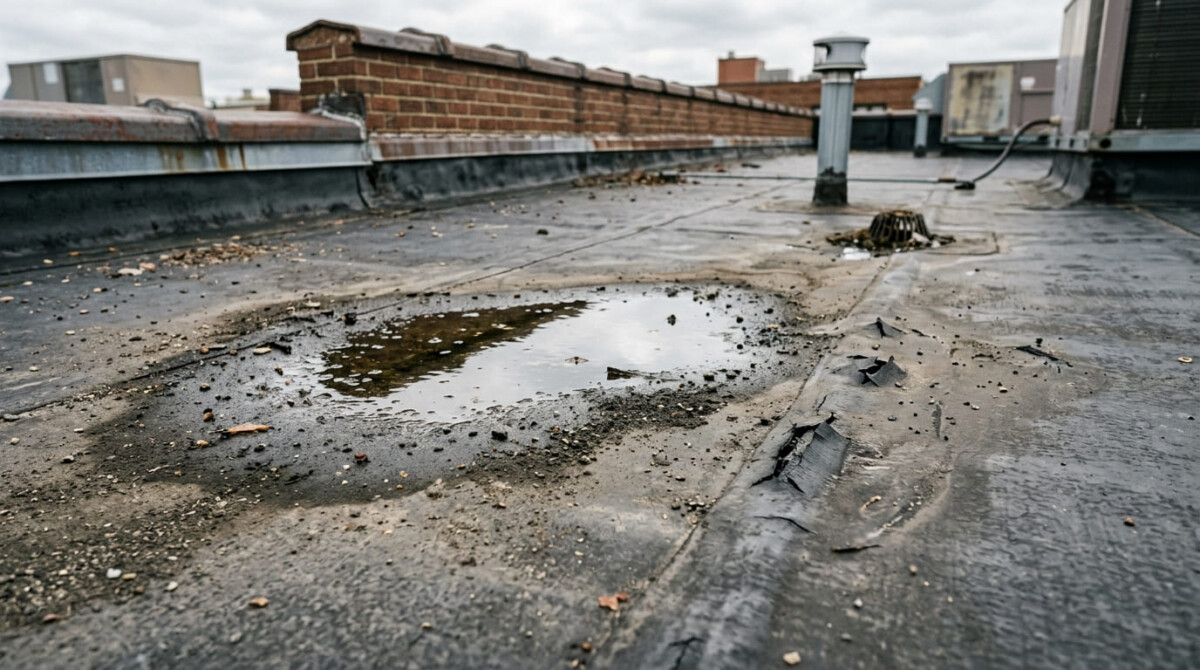
Ponding water is one of the most serious flat roof issues because it slowly breaks down the membrane and increases pressure on the roof surface. Over time, even strong materials lose their watertight seal.
Flat roofs rely on proper drainage systems, including internal drains, gutters, and slight slope design. When debris blocks these systems, rainwater cannot drain properly.
Standing water also accelerates material aging, and homeowners with newer membranes should know that a TPO roof can still pool water after replacement if drainage was not properly addressed during installation. This is how many roof leaks begin without visible damage at first.
Timeline of Damage:
- Water collects after rain
- Surface weakens and softens
- Small cracks form
- Water enters layers below
- Leak appears inside property
Surface & Membrane Damage: When Small Cracks Turn Into Costly Repairs
Surface damage often starts small but grows quickly if ignored. Cracks, blisters, and splits in the roof membrane allow water to enter and spread beneath the surface.
Different flat roofing materials react differently. EPDM rubber handles movement well but can shrink over time. PVC offers strong sealing but may crack under stress. Modified bitumen is durable but can split with age.
The key is knowing when a repair is enough. Small cracks can be sealed with proper sealant. Larger damaged areas often require patching. If damage spreads across large sections, exploring a professional flat roof replacement service becomes the better and more cost-effective option.
Repair vs Replace Table
| Condition | Best Option |
| Small cracks | Sealant repair |
| Local damage | Patch repair |
| Widespread damage | Replacement |
Flashing, Edges & Penetrations: The Most Overlooked Cause of Flat Roof Leaks
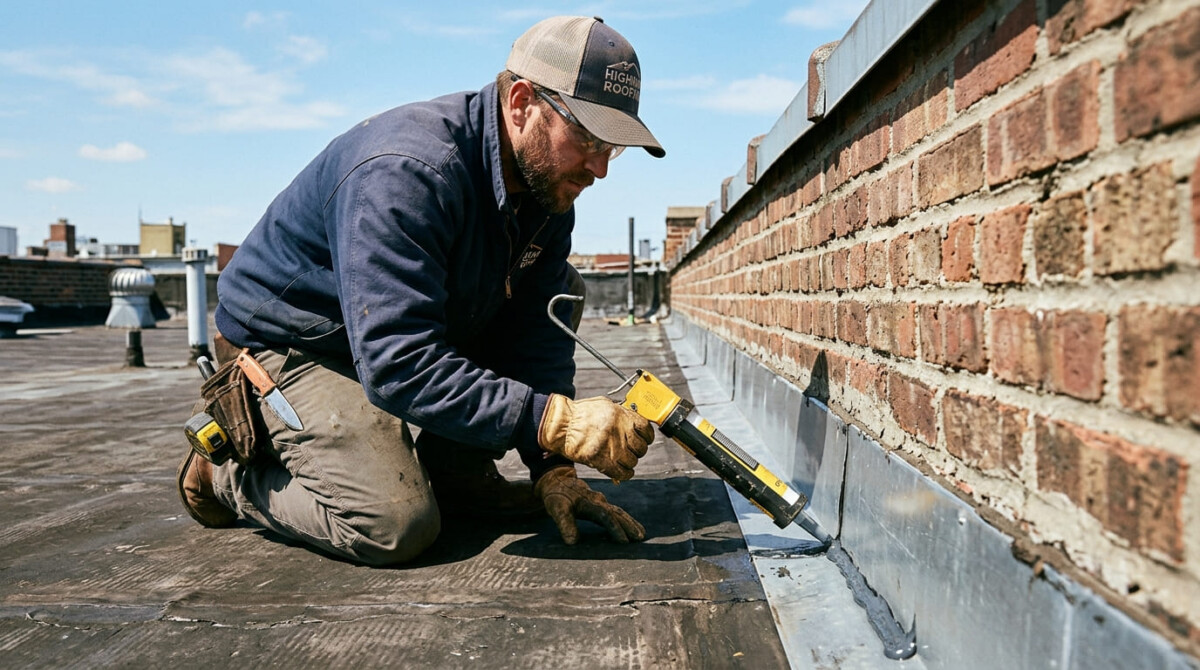
Flashing is the material used to seal joints and edges where the roof meets walls, vents, or other structures. These areas are the weakest points in any roof system. Water often enters through small gaps around vents, skylights, or edges. These gaps may not be visible but allow moisture to travel beneath the roof surface.
Homeowners can inspect these areas for loose or lifted sections. However, repairs often require a roofer because proper sealing is critical. Ignoring flashing issues leads to fast water entry, making it one of the most common causes of flat roof leaks.
Structural & Hidden Problems: When It’s More Than Just a Surface Issue
Some flat roof problems go beyond the surface. Structural issues develop when water reaches deeper layers like insulation or decking. A soft or sagging area often means water has been present for a long time. This weakens the structure and reduces load capacity.
Insulation plays a key role in maintaining a flat roof. When it becomes wet, it loses effectiveness and adds weight. This can lead to further deflection and drainage problems.
These hidden issues are harder to detect but more expensive to fix. Early inspection helps prevent major damage.
Repair or Replace? A Simple Decision Framework Homeowners Can Use
Choosing between repair and replacement depends on damage level, age, and overall roof condition. A simple approach helps avoid wasting money on short-term fixes.
When a repair is enough
- Damage is small and localized
- Roof is relatively new
- No structural issues
When replacement is the better option
- Multiple leaks present
- Roof nearing end of lifespan
- Widespread membrane failure
Decision Checklist
- Is damage limited or widespread?
- How old is the roof?
- Are repairs recurring?
If repairs keep happening, replacement often saves money in the long run.
Flat Roof Maintenance Checklist: Simple Steps to Prevent Future Problems
Maintaining a flat roof reduces the risk of leaks and extends its lifespan. Regular care prevents small issues from becoming costly repairs.
Seasonal maintenance (spring and autumn)
Inspect the roof after harsh weather. Look for debris, cracks, and drainage issues.
Cleaning drains, gutters, and debris
Clear all roof drains and gutters to ensure proper drainage. Blockages are a major cause of ponding water.
Inspection timing and what to look for
Check for signs of damage such as cracks, blisters, and loose flashing.
Maintenance Checklist:
- Clean drains and gutters
- Inspect membrane condition
- Check flashing and edges
- Remove debris buildup
- Schedule professional inspection yearly
Conclusion
Flat roofs offer practical benefits but require proper care to perform well. Most problems come from poor drainage, aging materials, or neglected maintenance. Knowing how to identify early warning signs gives you control. You can fix small issues before they become major repairs.
With the right approach and support from an experienced local roofing contractor, a flat roof can remain durable, reliable, and cost-effective for many years.
You May Also Want to Read
You may also want to read:
- How Long Should a Flat Roof Last? Real Lifespan, Costs, and What Actually Affects It
https://relentlessroofingco.com/flat-roof-lifespan/ - How Do Roof Leaks Happen on Commercial Buildings
https://relentlessroofingco.com/how-do-roof-leaks-happen-on-commercial-buildings/
FAQs
1. What are the most common flat roof problems homeowners face?
The most common flat roof problems include ponding water, leaks, membrane damage, and flashing failure. These issues usually result from poor drainage, aging materials, or lack of maintenance. Identifying them early helps prevent structural damage and reduces repair costs.
2. Is standing water on a flat roof a serious issue?
Yes, standing water is a serious problem because it weakens the roof membrane and increases the risk of leaks. If water remains for more than 48 hours, it indicates poor drainage and should be addressed quickly to avoid long-term damage.
3. How do I know if my flat roof needs repair or replacement?
You need repairs if the damage is small and localized. Replacement is better when leaks are frequent, damage is widespread, or the roof is near the end of its lifespan. A professional inspection helps confirm the right choice.
4. How long does a flat roof usually last?
A flat roof typically lasts 20 to 30 years depending on materials like EPDM or PVC and how well it is maintained. Regular inspection and proper drainage can extend its lifespan beyond expected limits.
5. Can I fix flat roof problems myself or should I call a professional?
Small issues like clearing drains or sealing minor cracks can be handled yourself. However, leaks, flashing repairs, and structural problems require a professional roofer to ensure proper and long-lasting results.