
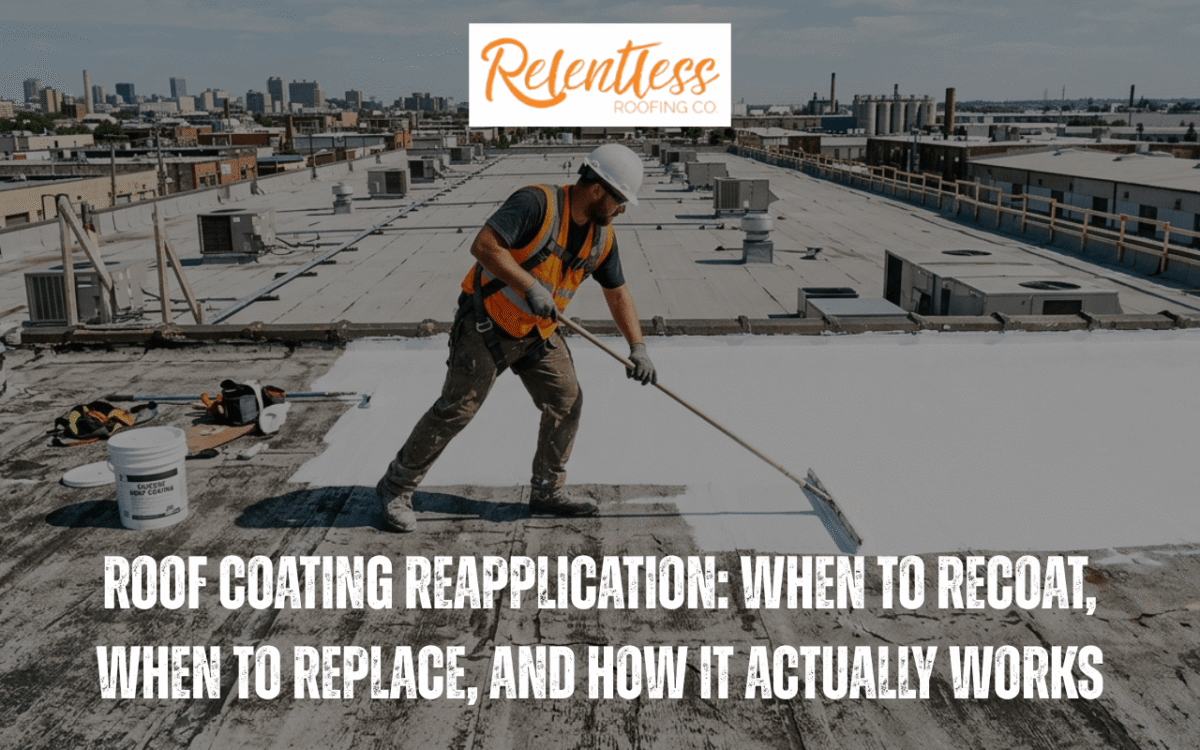
Roof coating reapplication is the process of adding a new protective layer over an existing roof coating to restore waterproofing, reflect heat, and extend roof life. The right timing depends on roof condition, coating type, and climate. Recoating too late leads to leaks, while recoating too early wastes money.
Introduction
Roof coating reapplication sounds simple. Add another layer and move on. But most homeowners struggle with one question—when is the right time? Some wait too long and face leaks. Others recoat too early and spend money they did not need to.
That confusion comes from one problem. Many guides give fixed timelines like “every 5 years.” Real roofs do not work like that. Weather, roof type, and past work all change the timing.
This guide breaks that pattern. You will learn how coatings actually age, what signs matter, and how to decide between recoating and replacement. The goal is simple—help you avoid costly mistakes and make a clear decision.
Key Takeaway
- Roof coating reapplication depends on real roof conditions, not a fixed timeline. The right time to recoat depends on the roof system, coating type, and exposure to UV, ponding water, foot traffic, and normal wear and tear.
- The 3C framework helps you make a better decision. Check the condition of the existing roof, understand whether the roof coating is silicone coating, acrylic, or polyurethane, and look at how climate affects the roof surface, waterproof performance, and reflectivity.
- Acting at the right time protects the entire roof and helps prevent a leak. Waiting too long can lead to deeper damage and raise the chance of needing a new roof, while recoating too early can waste money on a new coat before it is needed.
What Is Roof Coating Reapplication (And Why Timing Matters More Than You Think)
Roof coating reapplication means adding a new coat over an existing roof to restore waterproof protection, improve reflectivity, and extend the life of the roof system. It helps prevent a leak, protect the roof surface from UV damage, and delay the need for a new roof.
A roof coating is a liquid layer applied across the entire roof that forms a seamless barrier. It works on many types of roof systems, including metal roof, bitumen, and other roofing material surfaces. Common options include silicone coating, acrylic, and polyurethane. Each coating must adhere well to the substrate, often with a primer to improve adhesion.
Over time, coatings break down due to UV exposure, ponding water, foot traffic, and normal wear and tear. A silicone roof coating handles water better, while acrylic can wear faster in wet conditions.
Coatings do not fail all at once. They weaken slowly across the roof surface. That is why timing matters. A well-timed recoat keeps the roof protected. Waiting too long reduces performance, even with a high-quality coating.
How Roof Coatings Age: Why Some Roofs Need Recoating Sooner Than Others
Roof coating ages due to UV exposure, temperature changes, moisture, and daily wear and tear. Not every roof system performs the same. A metal roof or flat roof with ponding water will degrade faster than one in stable conditions. That is why some roofs need a recoat sooner.
UV rays break down coating chemistry over time. This reduces reflectivity and weakens the roof surface — one reason why energy-efficient roofing materials are built with UV-resistant properties that standard coatings try to restore after the fact. Fading or chalking is an early sign. It shows the coating is losing its waterproof strength and may lead to a leak if ignored.
Temperature shifts also stress the coating. The roof surface expands and contracts, creating small cracks. If adhesion is weak or the coating did not adhere well to the substrate, damage happens faster. A primer helps improve bonding on roofing material like bitumen.
Ponding water speeds up damage. Silicone coating resists it well, while acrylic wears faster. Foot traffic and poor application also reduce lifespan. This is why the same existing roof can age differently depending on use and conditions.
The 3C Framework: How Condition, Chemistry, and Climate Decide When You Recoat
The 3C framework—Condition, Chemistry, and Climate—helps you decide when to recoat your roof based on real factors, not guesswork. It applies to any roof system, whether it is a metal roof, bitumen surface, or other roofing material.
1. Condition comes first. Check the roof surface for cracks, peeling, soft spots, or early leak signs. If the roof system is still solid, a new coat can restore waterproof protection. If damage is deep, recoating may not be enough.
2. Chemistry means the type of roof coating used. Silicone coating handles ponding water and keeps strong adhesion over time. Acrylic works better in dry areas but wears faster with standing water. Polyurethane resists foot traffic and impact. Each coating must adhere well to the substrate, often with a primer to improve bonding.
3. Climate affects how fast coatings break down. High UV reduces reflectivity. Heat and cold cause movement on the entire roof, and roofing maintenance in snowy climates requires extra attention to how freeze-thaw cycles accelerate coating wear. Wet climates increase leak risk and stress waterproof layers.
When you combine these three, decisions become clearer. A silicone roof coating on a wet roof surface may last longer, while acrylic may need an earlier recoat. This approach replaces fixed timelines with real conditions.
How Often Should You Recoat a Roof? (Real Ranges by Coating Type + Triggers)
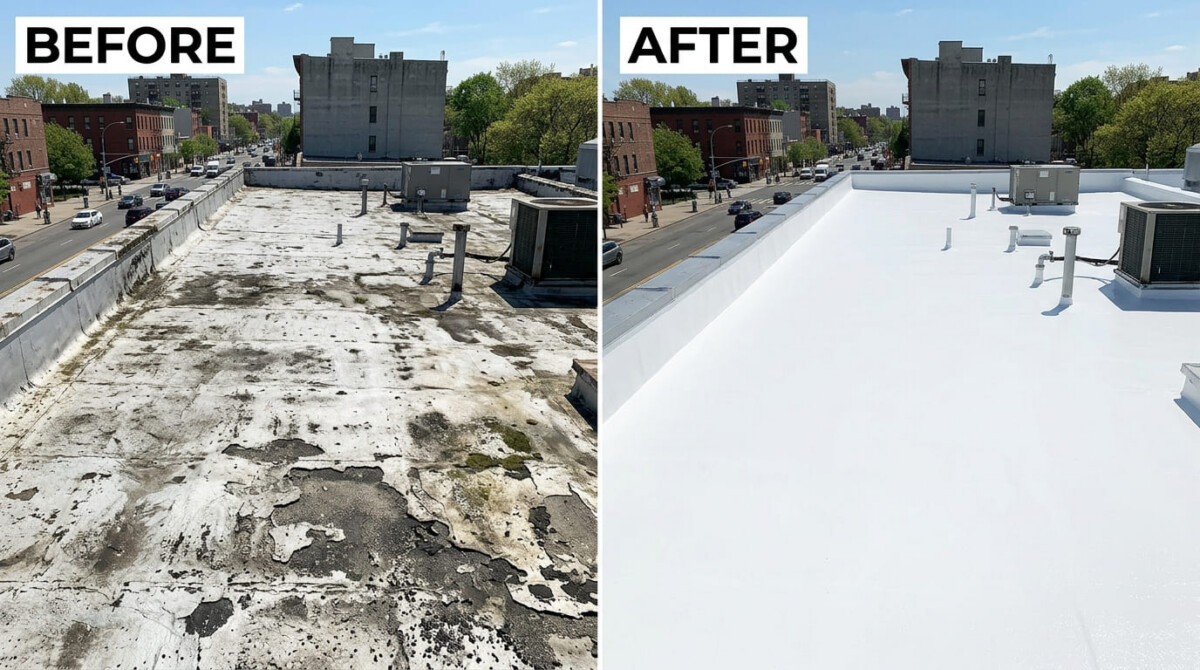
Roof coating reapplication does not follow one fixed schedule. Most roofs need recoating every 5 to 15 years depending on coating type, climate, and maintenance. The real trigger is condition, not just time.
| Coating Type | Typical Range | Key Trigger for Recoat |
| Acrylic coatings | 5–8 years | Fading, cracking, UV wear |
| Silicone coating | 10–15 years | Loss of thickness, minor wear |
| Polyurethane | 10–15 years | Surface wear, traffic damage |
| Asphalt/bitumen | 3–7 years | Drying, cracking, leaks |
These ranges are not guarantees. They are guidelines. A roof exposed to heavy UV or ponding water may need earlier recoating.
Here is the key insight. Waiting for a leak is too late. The best time to recoat is when the coating starts to weaken, not when it fails.
Regular inspection every year helps you catch that moment, and extending the life of your roof through regular maintenance is one of the most cost-effective habits a homeowner can develop. This avoids major repair costs and extends the roof’s service life.
Warning Signs Your Roof Coating Is Failing (Mapped by Urgency Level)
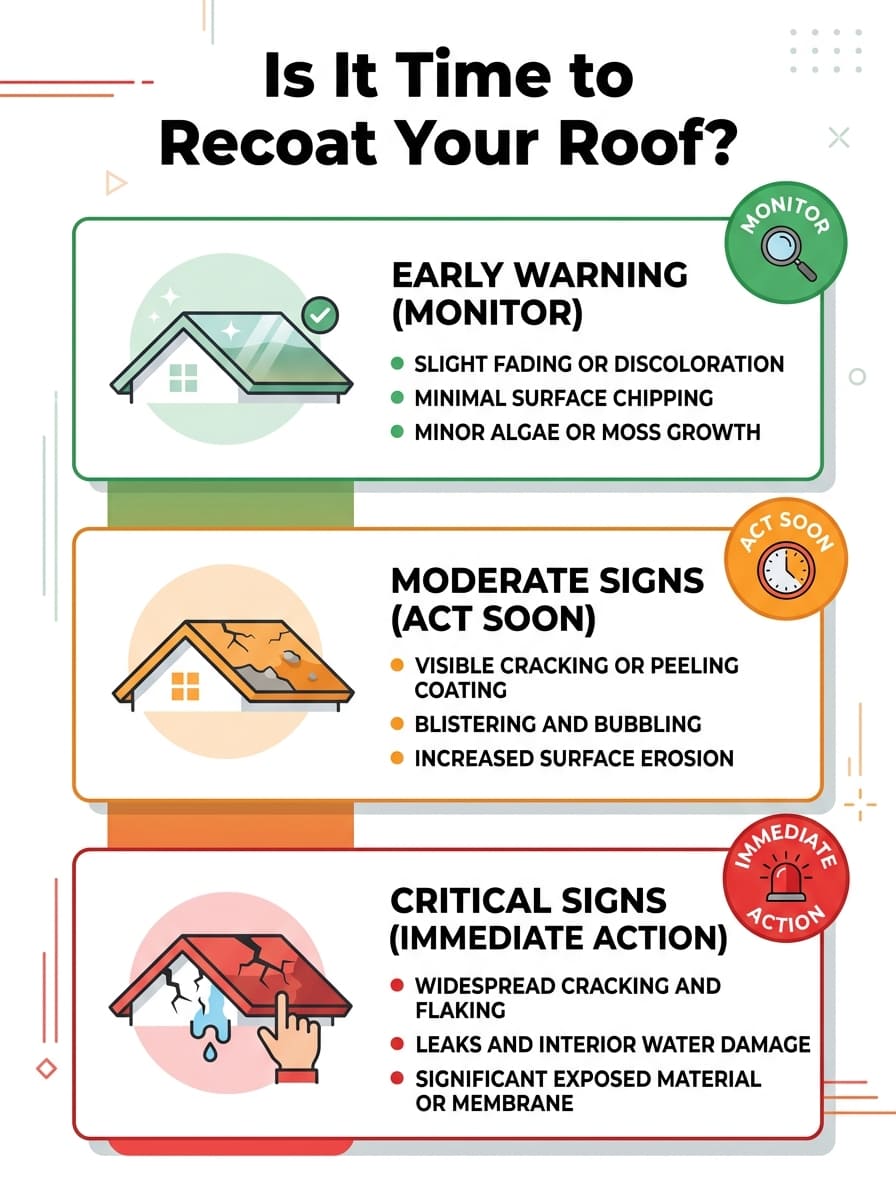
Roof coating failure shows clear signs if you know what to look for. These signs can be grouped by urgency so you know when to act.
Early Warning Signs (Monitor and Plan)
- Fading or discoloration
- Slight loss of reflectivity
- Minor surface wear
These signs mean the coating is aging but still working. Plan for recoating within a few years.
Moderate Signs (Take Action Soon)
- Small cracks or peeling
- Ponding water areas forming
- Reduced waterproof performance
At this stage, recoating should be scheduled soon. Delay increases risk.
Critical Signs (Immediate Action Needed)
- Active leaks
- Soft or wet insulation
- Repeated repairs in same areas
These signs mean the coating has failed. Recoating may not be enough. You may need roof repair or replacement.
Understanding urgency helps avoid panic decisions. It also prevents spending money too early or too late.
Roof Coating Reapplication Cost: Real Price Ranges, Hidden Factors, and Cost of Waiting
Roof coating reapplication typically costs between $2 to $6 per square foot depending on coating type, roof condition, and labor. The final cost depends more on preparation and repairs than the coating itself.
| Factor | Impact on Cost |
| Roof condition | High |
| Type of coating | Medium |
| Prep work needed | High |
| Roof size | Medium |
Here is the key insight. The cheapest option today may cost more later. Skipping prep work or using thin coatings leads to early failure.
The cost of waiting is often higher. Delaying recoating allows water to enter the roof system. This leads to wet insulation and structural damage.
A simple recoating may turn into a full roof replacement if ignored. This is why decisions should focus on long-term value, not just upfront price.
How Roof Coating Reapplication Works Step-by-Step (What Contractors Actually Do)
Roof coating reapplication follows a structured process. Each step affects how long the coating will last. Most failures happen because steps are skipped or rushed.
1. Inspection – Check roof condition, moisture, and problem areas
2. Cleaning – Pressure washing removes dirt and debris
3. Repairs – Fix cracks, seams, and weak areas
4. Priming – Improves adhesion where needed
5. Coating Application – Apply coating at correct thickness (mil thickness)
6. Curing – Allow proper drying time based on weather
Key checkpoints include moisture testing, adhesion testing, and ensuring proper thickness. These steps ensure the coating adheres well and performs as expected.
What can go wrong
- Skipping cleaning leads to poor adhesion
- Thin coating reduces lifespan
- Applying in wrong weather affects curing
DIY recoating may seem easy, but missing these steps often leads to early failure. That is why professional application usually performs better.
When Roof Coating Is Not Enough (And Replacement Becomes the Smarter Move)
Roof coating reapplication is not always the right solution. Some roofs are too damaged and need replacement. Recoating in these cases only delays the problem and adds cost.
A roof is no longer a good candidate when the structure is compromised. This includes wet insulation, repeated leaks, or large damaged areas.
Red flags that point to replacement
- Soft spots across large areas
- Saturated insulation
- Multiple past repairs failing
- Structural damage or code issues
Here is the key idea. Coating works when the roof system is still sound. If the base is failing, a new coating cannot fix it.
Using the 3C framework, this means Condition is too poor for Chemistry to help, regardless of Climate.
In uncertain cases, getting a second opinion from a trusted roofing contractor helps avoid wrong decisions that cost far more than the recoating itself.
How to Choose the Right Coating System (Silicone vs Acrylic vs Others for Your Roof Type)
Choosing the right roof coating depends on roof type, climate, and usage. No single coating works best for every situation.
| Coating Type | Best For | Weak Point |
| Silicone | Ponding water, flat roofs | Higher cost |
| Acrylic | Dry climates, cost-effective | Poor ponding resistance |
| Polyurethane | High traffic roofs | More complex application |
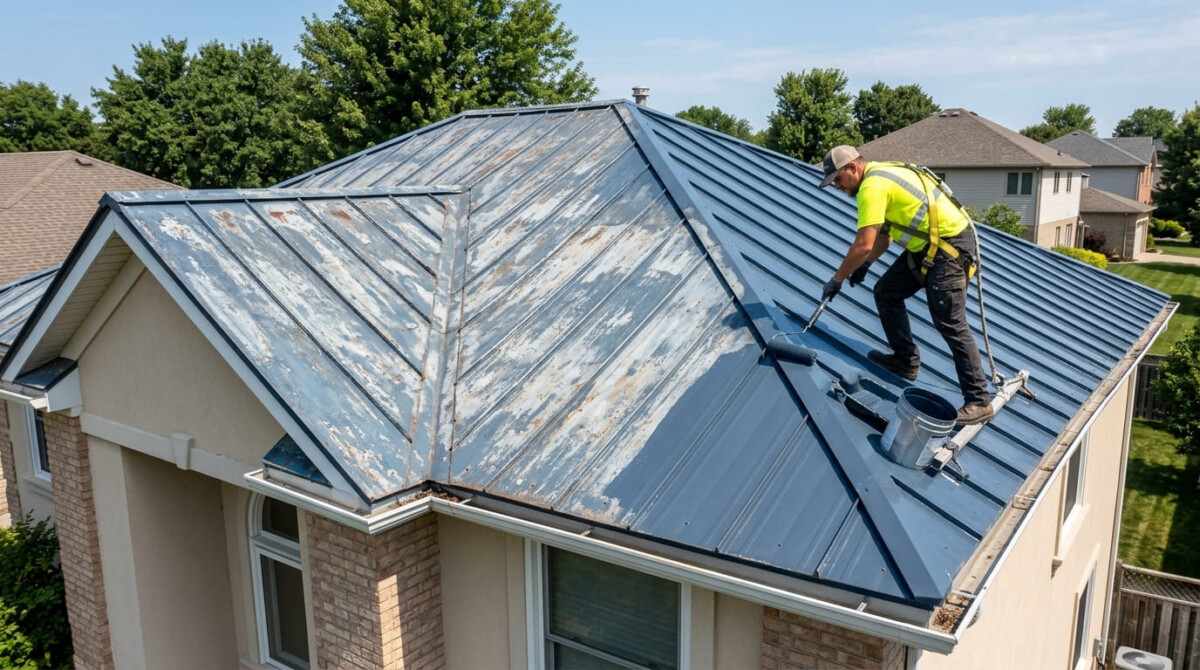
Silicone roof coating is often chosen for flat roofs because it withstands ponding water. Acrylic coatings are popular due to lower cost but need more maintenance. Metal roof systems may perform well with both, but surface prep is critical.
The goal is to match coating chemistry with climate and roof condition. This ensures long-term performance.
Working with a Roofing Contractor: What a Proper Inspection and Report Should Include
A professional roof inspection gives you a clear path forward. It removes guesswork and helps you decide between recoating and replacement.
Before the visit:
- Prepare roof history and past repairs
During the visit:
- Full inspection of roof surface and membrane
- Moisture checks
- Photos of problem areas
After the visit:
- Written report
- Clear options (recoat, repair, replace)
- Cost ranges and timeline
A good contractor does not guess. They assess condition, identify coating type, and consider climate exposure.
This structured approach leads to better decisions and avoids unnecessary work.
Conclusion
Roof coating reapplication is a reliable way to protect your roof system and extend its life, whether it is a metal roof, bitumen surface, or another roofing material. Results depend more on timing and proper application than the coating itself. A silicone coating or acrylic layer performs best when it adheres well to the substrate and suits the roof surface.
Understanding how a roof coating ages—from UV exposure, ponding water, and wear and tear—helps you decide when to recoat. This lowers the risk of a leak and helps you avoid needing a new roof too soon. Using a primer where needed also improves adhesion and waterproof performance.
With regular inspection, a new coat can maintain reflectivity, protect the entire roof, and handle foot traffic and climate stress more effectively.
You May Also Want to Read
You may also want to read:
- Best Roof Cleaning Methods for Longevity — Dos and Don’ts for Indiana Homes
https://relentlessroofingco.com/best-roof-cleaning-methods-for-longevity-dos-and-donts-for-indiana-homes/ - How Quality Roofing Impacts Property Management
https://relentlessroofingco.com/how-quality-roofing-impacts-property-management/
FAQs
1. How often should roof coating reapplication be done?
Roof coating reapplication is usually needed every 5 to 15 years depending on coating type, climate, and roof condition. The best approach is to inspect the roof regularly and recoat when signs of wear appear rather than relying on a fixed schedule.
2. Can you recoat silicone roof coating directly?
Yes, silicone roof coating can often be recoated directly over the existing layer after proper cleaning. Silicone adheres well to itself, but surface preparation like pressure washing is still required to ensure proper adhesion and long-term performance.
3. Does roof coating reapplication stop leaks permanently?
Roof coating reapplication can stop minor leaks by creating a waterproof membrane. However, it does not fix structural damage or major issues. If leaks come from deeper problems, repairs or replacement may be required.
4. Is roof coating reapplication worth the cost?
Roof coating reapplication is often worth it because it extends roof life and avoids costly replacement. The value depends on roof condition. A healthy roof benefits the most, while a failing roof may not.
5. When should you recoat vs replace a roof?
Recoating works when the roof is structurally sound with minor wear. Replacement is needed when there is widespread damage, wet insulation, or repeated leaks. A professional inspection helps confirm the right choice.