
Introduction
A flat roof should last 15 to 30 years, but most homeowners in Michiana see results closer to 20–25 years. The difference comes down to drainage, installation quality, and how often the roof is inspected and maintained. Flat roofs handle water differently than pitched roofs. Snow melt, rain, and ice stay longer on the surface. That adds stress over time.
This guide explains what lifespan to expect, what shortens it, and what actions help your roof last longer.
Key Takeaway
- A flat roof typically lasts 20–30 years, but real lifespan depends on installation, drainage, and maintenance.
- Roofing material sets the potential lifespan, but it does not guarantee it.
- Poor drainage and ponding water can shorten roof life by several years.
- Regular inspections and small repairs help prevent major damage.
- Fixing minor issues early can extend your roof’s lifespan and reduce long-term costs.
What Is a Flat Roof and Why Its Lifespan Is Often Misunderstood
A flat roof is a low-slope roof system that drains water slowly, which makes it more exposed to moisture and wear than pitched roofs. Its lifespan is misunderstood because many people expect it to perform like a traditional sloped roof.
Definition Block
A flat roof has a slight slope (about 1/4 inch per foot) that moves water toward drains instead of shedding it instantly.
Flat roofs stay wet longer after rain or snow. That moisture affects seams, flashing, and the roofing membrane. Over time, these areas weaken.
Most lifespan estimates assume perfect drainage, correct installation, and regular maintenance. In real homes, one or more of these conditions are missing.
Flat roofs also rely on system components. These include insulation layers, membrane sheets like EPDM or TPO, and flashing around edges and vents.
Key insight: A flat roof does not fail from age alone. It fails where water sits or enters.
How Long Should a Flat Roof Last on Average? (Realistic Lifespan Range)
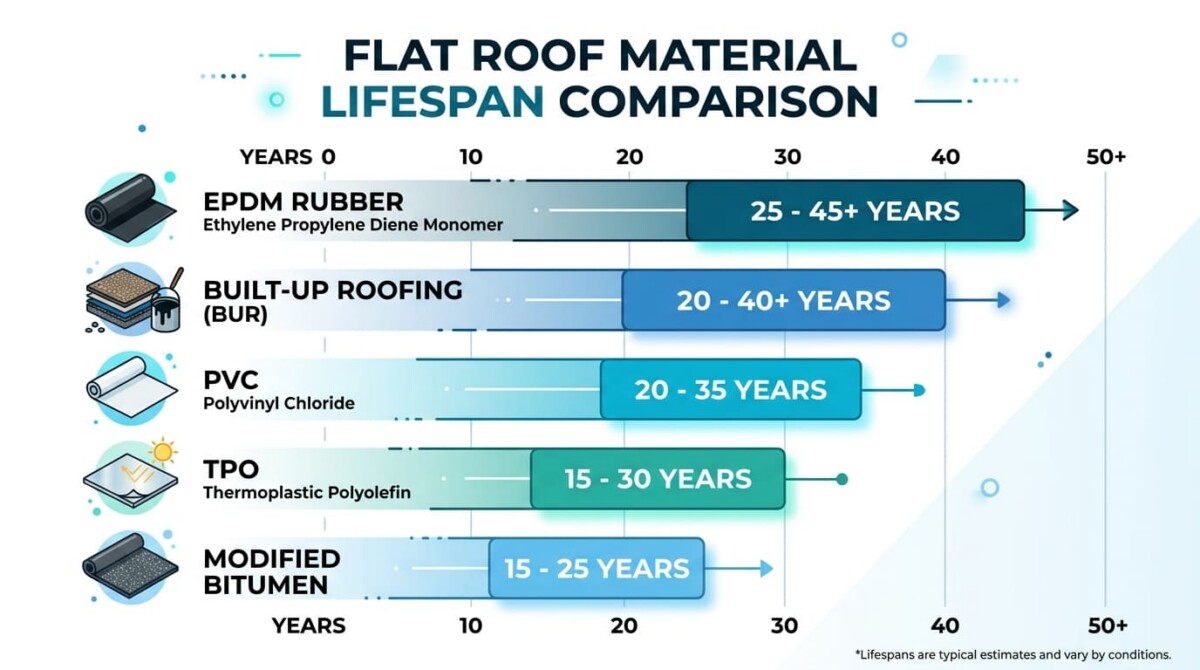
A flat roof should last 20 to 30 years when properly installed and maintained, but real-world conditions often bring that range down to 15–25 years. The actual lifespan depends on drainage, maintenance, and weather exposure.
Definition Block
Flat roof lifespan is the number of years the roofing system performs before major replacement is required.
| Material | Average Lifespan |
|
EPDM (ethylene propylene diene monomer) |
25–30 years |
| TPO (thermoplastic polyolefin) | 20–30 years |
| PVC (polyvinyl chloride) | 20–30 years |
| Modified bitumen | 15–25 years |
| Built-up roofing | 15–20 years |
Industry data from roofing manufacturers shows these ranges assume proper installation and care.
A roof with poor drainage or no maintenance may lose 5–10 years of life. A well-maintained roof often reaches or exceeds its expected lifespan.
What this means: Lifespan numbers are targets, not guarantees. How you maintain the roof decides where it lands in that range.
Flat Roof Material Comparison: Which Roofing System Lasts the Longest?
EPDM and PVC flat roof systems tend to last the longest, but performance depends heavily on installation quality and maintenance. No material alone guarantees long life.
| Material | Strength | Weakness | Lifespan |
| EPDM | Flexible, handles cold climates | Seams can weaken | 25–30 yrs |
| TPO | Reflective, energy efficient | Sensitive to poor installation | 20–30 yrs |
| PVC | Strong seams, durable | Higher cost | 20–30 yrs |
| Modified Bitumen | Affordable | Shorter lifespan | 15–25 yrs |
EPDM performs well in Michiana due to temperature swings. PVC resists UV damage and chemicals. TPO works well but depends on proper seam welding.
Metal roofing systems can last over 40 years, but they require a different structure and higher upfront cost.
Key insight: Material sets the potential lifespan, but installation and maintenance decide the outcome.
The Hidden Factors That Actually Decide How Long Your Flat Roof Lasts
A flat roof lasts longer when installation, drainage, and maintenance are handled correctly. These factors often matter more than the material itself.
Installation Quality
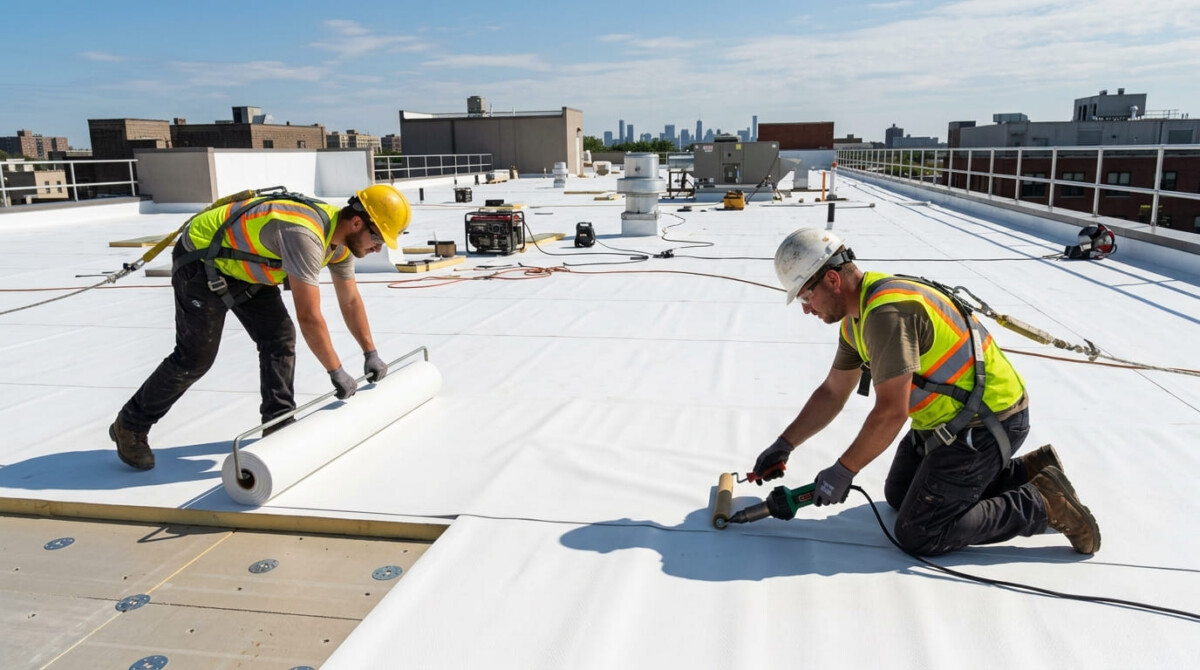
Roofing contractors must follow manufacturer standards like those from NRCA (National Roofing Contractors Association). Poor installation leads to weak seams, poor adhesion, and early leaks.
Climate Impact in Michiana
- Freeze-thaw cycles expand and contract materials
- Snow adds weight stress
- UV exposure weakens membranes
These factors shorten lifespan if not managed.
Drainage Issues
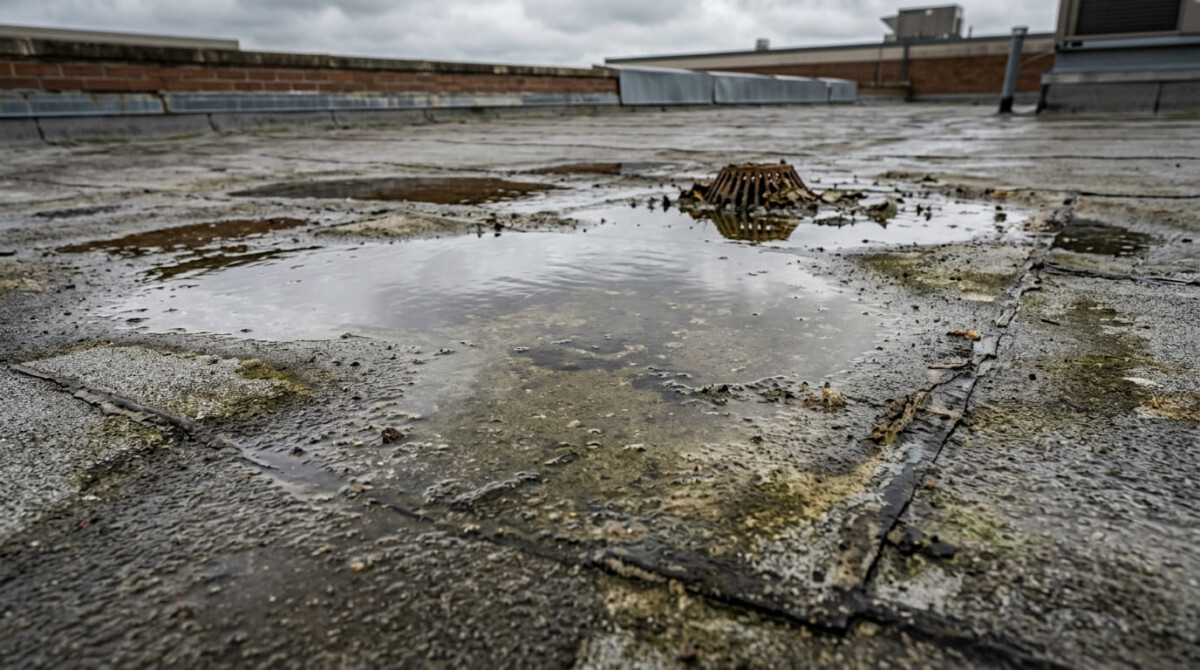
Water must drain within 48 hours, and if you have a TPO system that pools after replacement, problems begin immediately.
Definition Block
Ponding water is water that stays on a flat roof for more than 48 hours, and deciding between flat roof pooling repair vs replacement depends on how long the damage has been spreading.
Maintenance Habits
Regular maintenance includes inspections, cleaning drains, and fixing minor damage early.
Key insight: Two identical roofs can last decades apart based on maintenance alone.
Why Flat Roofs Fail Early (And How to Avoid Costly Mistakes)
Flat roofs fail early because small issues are ignored. These issues build up and damage the roof system over time. The most common failure areas are seams, flashing, and penetrations like vents or HVAC units. These points move and wear faster than the main surface.
Drainage problems are another major cause. Standing water adds pressure and speeds up breakdown of materials. Homeowners often delay repairs because the damage seems minor. But water spreads under the membrane and affects insulation and structure.
Mistakes to avoid:
- Ignoring small cracks or leaks
- Skipping yearly inspections
- Hiring unqualified roofing contractors
- Allowing debris to block drains
Interpretive insight: Most flat roofs fail early due to neglect, not material defects, which is why working with an experienced local roofing team makes a measurable difference in long-term outcomes.
Repair vs Replacement: When Should You Replace a Flat Roof?
You should replace a flat roof when repairs become frequent, damage spreads across multiple areas, or the roof is near the end of its 20–30 year lifespan. Waiting too long often leads to higher repair costs, interior damage, and sudden failure.
Step-by-Step Decision Guide
1. Check the age of your roof: If your flat roof is over 20 years old, it is likely approaching the end of its expected lifespan.
2. Review repair history: If you are fixing leaks or damage every year, the roof system is breaking down, not just one area.
3. Inspect visible damage: Look for cracks, bubbling, sagging sections, and ponding water. These signs show deeper structural issues.
4. Compare repair vs replacement cost: If repair costs are more than 40–50% of a new roof, understanding whether a re-roofing overlay or full tear-off replacement usually saves money over time.
5. Think about long-term reliability: A new roof reduces ongoing repairs and protects your home from unexpected leaks.
Decision insight: The right time to replace a flat roof is before major failure, not after damage spreads inside your home.
Flat Roof Replacement Cost: What You Should Expect to Pay
Flat roof replacement costs range from $5 to $12 per square foot, depending on material, labor, and roof condition.
Cost Breakdown
- EPDM: $5–$9 per sq ft
- TPO: $6–$10 per sq ft
- PVC: $7–$12 per sq ft
- Modified bitumen: $4–$8 per sq ft
Additional costs may include insulation upgrades, drainage improvements, and removal of the old roof. Lower-cost bids often mean lower-quality installation. This can shorten lifespan and increase repair costs later.
Real-world insight: A higher upfront cost often results in lower cost per year over the roof’s life.
How to Extend the Lifespan of Your Flat Roof (Actionable Maintenance Plan)
You can extend your flat roof lifespan by 5 to 15 years with regular maintenance and inspections. Simple actions prevent major damage.
Simple Maintenance Actions
- Clean debris and drains twice a year
- Inspect seams and flashing
- Check for ponding water
- Fix small cracks early
Inspection Timing
- Spring: check for winter damage
- Fall: prepare for snow and ice
- After storms: inspect for damage
Small Fixes That Matter
Fixing minor leaks, sealing seams, and improving drainage prevents long-term damage.
Practical insight: Maintenance costs are small compared to full roof replacement.
Conclusion
Flat roofs can last 20–30 years or more, but only when installation, drainage, and maintenance are handled correctly. Most early failures happen because small problems go unchecked and grow into larger damage over time. To get the most life from your roof, focus on keeping drainage clear, scheduling regular inspections, and fixing minor issues early. These simple actions protect your home and help avoid expensive repairs later.
A flat roof works as a complete system. Its lifespan depends on how well each part—membrane, seams, flashing, and drainage—is maintained throughout its life.
You May Also Want to Read
You may also want to read:
- Indiana Roof Replacement Cost in 2026 — What Homeowners Need to Know
https://relentlessroofingco.com/indiana-roof-replacement-cost-2026/ - Roofing Maintenance Tips for Snowy Climates
https://relentlessroofingco.com/roofing-maintenance-snowy-climates-indiana/
FAQs
1. How often do flat roofs need replacing?
Flat roofs are usually replaced every 20 to 30 years, depending on their condition. If maintenance is ignored, the lifespan can drop to 10–15 years. With regular inspections and timely repairs, some roofs can last longer than 30 years.
2. How much does it cost to replace a flat roof?
The cost to replace a flat roof typically ranges from $5,000 to $15,000 or more. The final price depends on roof size, material choice, labor quality, and whether the old roof needs to be removed.
3. What is the 25% rule in roofing?
The 25% rule means that if repairs cost more than 25% of the roof’s total value, replacement is often the better long-term option. This helps avoid repeated repair costs on a roof that is already wearing out.
4. How long does an EPDM or rubber flat roof last?
An EPDM (rubber roofing) system typically lasts 25 to 30 years. Its flexibility helps it handle temperature changes, but regular maintenance is still needed to prevent seam and edge issues.
5. Is a flat roof a good long-term investment?
A flat roof can be a good long-term option if it is properly installed, and exploring a professional flat roof replacement is often the right starting point for homeowners ready to invest in quality.