Introduction
Most homeowners think a roof is just shingles. That’s what you see from the street. That’s what most quick inspections focus on. But the real story of roof anatomy sits underneath those shingles.
Hidden failures cause the biggest leaks. A small issue in the roof deck, flashing, or underlayment can damage the entire roof system before surface problems appear. By the time stains show on your ceiling, the damage roof layers may already be weakened.
A residential roof is built in layers. Each layer supports the next. Today, we break down the 7 hidden parts most roofers skip so you can understand how your roof truly works — and how to protect it.
Key Takeaway
The most expensive roof failures start below the surface.
- Shingles are only the outer shell of your roof system. The real protection comes from hidden layers like the roof deck, underlayment, flashing, and ventilation.
- When one hidden component fails, the entire roof system can weaken and lead to costly damage.
- Many roof replacement jobs focus only on visible roofing material, while moisture and rot develop underneath.
- Structural problems often begin in areas homeowners cannot see from the ground.
- Understanding roof anatomy helps you ask smarter questions before hiring a roofing contractor.
- Knowing what’s beneath the surface allows you to prevent major roof leaks and avoid expensive repairs.
Hidden layers matter more than surface appearance. Protect them, and you protect your entire roof.
What Is Roof Anatomy?
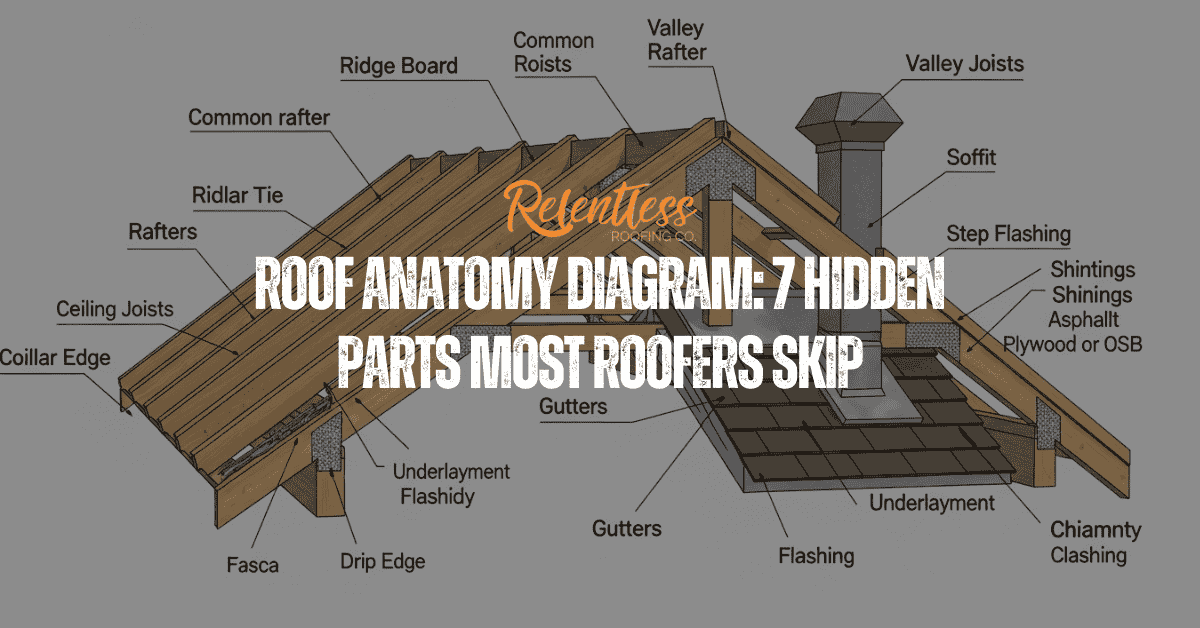
Roof anatomy refers to the layered structure of a residential roof. A roof is not one single piece. It is a system built in stages to support weight, prevent water, and control airflow.
At the base, you have the structural framing — rafters or trusses. On top of that sits the roof deck, usually made of plywood or OSB (oriented strand board). Above the deck comes underlayment, which acts as a water barrier. Then shingles form the visible roof covering. If you want to compare options, review our guide on different types of roofing materials to see how materials interact with each roof layer. Flashing, ridge components, vents, gutters, and other roof components complete the system.
Each layer has a purpose. Each layer supports the roof above and protects the home below.
Now let’s look at the 7 hidden parts most roofers overlook — the ones that truly determine how long your roof lasts.
1. The Roof Deck: The Structural Layer That Fails First
The roof deck is the structural base of your roof. It is the flat surface attached to rafters or trusses that supports everything above it.
What It’s Made Of
- Plywood
- OSB (oriented strand board)
- Sheathing panels
This deck may not be visible, but it carries the full weight of the roofing material, snow load, and weather stress.
Why It Fails
Moisture trapped under shingles or poor ventilation in the attic causes rot. Over time, soft spots develop. If not replaced during roof replacement, weak decking can cause the new roof to fail early.
What Homeowners Can Check
- Soft or sagging roof areas
- Uneven roof planes
- Musty smell in attic
- Visible dark spots on plywood or OSB
If the roof deck is compromised, the entire roof structure is at risk.
2. Underlayment: The Line of Defense You Never See
The underlayment sits directly on top of the roof deck and beneath the shingles. It is your roof’s hidden line of defense.
Types of Underlayment
- Felt (traditional asphalt-based)
- Synthetic (stronger and more tear-resistant)
Its job is simple: prevent water from reaching the deck if shingles fail.
Cheap installations often skip full coverage or overlap improperly. This creates weak zones where water can enter. Once moisture reaches the deck, structural damage begins.
Underlayment protects key areas of your roof, especially valleys and roof edges. During roof replacement, it must be installed carefully and fully sealed.
You may never see it. But without proper underlayment, your roof system cannot protect your home from leaks.
3. Ice and Water Barrier: Code Required but Often Incomplete
An ice and water barrier is a specialized waterproof membrane installed in high-risk areas.
Where It Should Be Installed
- Along the eave (edge of the roof)
- In valleys where two roof planes meet
- Around chimneys and skylights
- Near roof penetrations
This barrier prevents water intrusion from ice dams and wind-driven rain. In cold climates, building codes often require it.
However, shortcuts happen. Some installers reduce coverage to cut costs. When ice dams form, water can back up under shingles and damage roof deck layers.
If this layer is missing or incomplete, your roof is vulnerable in the most exposed areas. Proper coverage is critical for long-term roof durability.
4. Step Flashing at Walls and Chimneys
Step flashing is one of the most important but overlooked roof components. It protects the joint where the roof meets vertical surfaces.
What It Is
- Thin metal pieces layered with shingles
- Installed along sidewalls and chimney bases
- Designed to direct water away from seams
Each piece of metal flashing overlaps the next. This layered system prevents water from entering gaps where roof planes meet walls.
Why It Fails
- Improper overlap
- Nails placed incorrectly
- Sealant used instead of proper metal flashing
When flashing fails, water travels behind shingles. Interior water stains near a chimney or sidewall often point to flashing problems.
Because flashing is hidden beneath the roof covering, many homeowners never realize it is the source of roof leaks. Yet it is one of the most common failure points in roof anatomy.
5. Valley Flashing: Where Two Roof Planes Meet
When two roof planes meet, they form a valley. This area handles more water than almost any other part of your roof. During heavy rain, the valley carries concentrated runoff from both sides of a pitched roof.
Why Valley Flashing Matters
- It protects the joint where roof planes meet.
- It prevents water from reaching the roof deck.
- It supports long-term durability of the roof system.
There are two main types:
Open valley – A visible metal flashing channel that directs water down the center.
Closed valley – Shingles cover the valley, with flashing hidden underneath.
Both work when installed correctly. However, valleys are high-risk areas of your roof because leaves and debris collect there. Blocked valleys trap moisture, which can damage roof components and cause roof leaks.
If valley flashing is poorly installed or rusted, the entire roof structure below it becomes vulnerable. Regular inspection keeps this critical transition point secure.
6. Ridge Vent System: Does a Roof Need to Breathe?
Yes, a roof needs ventilation to last. Without airflow, heat and moisture build up in the attic and weaken the roof deck. This becomes even more critical during freezing weather, which we explain in our article on roof maintenance tips for harsh Indiana winters.
The ridge vent runs along the roof ridge at the peak of the roof. It allows warm air to escape from the top of the roof. But exhaust alone is not enough.
For roof ventilation to work, it must be balanced:
- Soffit vent (intake) pulls cool air in.
- Ridge vent (exhaust) pushes hot air out.
When ventilation is poor, moisture collects under the deck. Over time, this can rot plywood or OSB and shorten the life of asphalt shingles. Excess attic heat also causes shingle deterioration and increases energy costs.
A ridge vent system is not optional for a healthy residential roof. Proper airflow protects the roof deck, prevents mold, and keeps the entire roof system stable.
7. Soffit Intake Ventilation: The Hidden Half of Roof Ventilation
Soffit vents sit on the underside of the eaves. They allow fresh air to enter the attic and support roof ventilation.
Many homeowners focus only on the ridge vent. But intake is just as important as exhaust. Without airflow from the eave level, hot air cannot escape properly from the roof ridge.
Why Soffit Vents Matter
- They supply balanced air circulation.
- They reduce trapped humidity in the attic.
- They prevent deck damage and mold growth.
Blocked soffits are common. Paint, insulation, or debris can close airflow paths. When that happens, moisture remains trapped inside the roof structure. Over time, the deck weakens, and the roof fails prematurely.
Healthy intake ventilation protects the entire roof system. It keeps your roof performing the way it was designed to.
How These Hidden Parts Work Together as One Roof System
A roof is a complex, layered system. Each component of your roof supports another. When one part fails, problems spread.
How the System Connects
- The roof deck supports shingles and underlayment.
- Underlayment prevents water from reaching the deck.
- Flashing protects joints where roof meets walls or valleys.
- Ventilation keeps moisture from damaging structural layers.
- Gutters move water away from the fascia and roof edges.
If ventilation fails, moisture damages the deck.
If flashing fails, water reaches the underlayment.
If underlayment fails, the deck rots.
Over time, that type of hidden failure can lead to major interior damage and high roof leak repair costs.
The entire roof depends on these hidden layers working together. A surface-level inspection is not enough. You must evaluate the full roof anatomy to protect your investment.
What Every Homeowner Should Inspect Before Hiring a Roofer
Before moving forward with a full roof replacement, check these key components carefully.
Quick Homeowner Checklist
- Inspect shingles for curling or missing pieces.
- Look in the attic for dark stains on plywood or OSB.
- Check valley areas for debris buildup.
- Examine flashing around chimney and sidewalls.
- Ensure soffit vents are not blocked.
- Confirm ridge vent runs continuously across the roof ridge.
- Look for sagging areas that suggest deck issues.
Ask your roofer about underlayment coverage and flashing details. A qualified roofing contractor should explain how the roof structure, ventilation, and flashing protect your home.
The right inspection focuses on hidden roof components — not just the shingles you see.
Conclusion
Roof anatomy is more than shingles and surface appearance. A residential roof is a complex system built in layers. The roof deck, underlayment, flashing, valley protection, and ventilation all work together to support the entire roof.
Most major roof leaks begin in hidden parts that homeowners cannot see from the ground. That is why surface inspection alone is not enough.
When you understand the anatomy of a roof, you make smarter decisions. You ask better questions. You protect your home from costly damage before your roof fails.
Hidden layers matter most. Protect them, and you protect your entire roof. For a complete system inspection and professional guidance, visit Relentless Roofing Co. to schedule an evaluation.
You may also want to read:
-
How to extend the life of your roof with regular maintenance
https://relentlessroofingco.com/how-to-extend-the-life-of-your-roof-with-regular-maintenance-15-essential-maintenance-tips/ -
How much does a roof replacement cost in Indiana?
https://relentlessroofingco.com/indiana-roof-replacement-cost-2026/
FAQs
What are the parts of a roof called?
The main parts of a roof include the roof deck, underlayment, shingles, flashing, ridge, vents, gutters, fascia, and structural rafters or trusses.
What are the 8 key components of a residential roof?
Deck, underlayment, shingles, flashing, ridge vent, soffit vent, gutters, and structural framing are the core roof components.
Does a roof need ventilation to last longer?
Yes. Proper roof ventilation prevents moisture buildup, protects the deck, and extends the life of shingles and the entire roof system.
What is roof decking and why is it important?
Roof decking is the structural base made of plywood or OSB that supports the roof covering and transfers loads to rafters or trusses.
What are the most vulnerable parts of a roof?
Valleys, flashing around chimneys, roof edges, and areas where two roof planes meet are the most leak-prone sections of a roof.