Introduction
Roof damage can feel stressful. One section leaks. Another still looks fine. So the big question is simple—do you fix just one part or replace the whole roof?
A partial roof replacement can seem like a smart move. It costs less upfront. It takes less time. But it is not always the right choice.Many homeowners in Michiana deal with storm damage, wind, and aging shingles. These factors make the decision harder. What works for one home may not work for another.
This guide breaks everything down. You will learn when a partial roof replacement works, when it fails, and how to make a smart decision.
Key Takeaway
- A partial roof replacement works best when damage is limited to one section and the rest of the roof is still in good condition
- It offers short-term savings and faster results compared to a full roof replacement
- It is not the best option if your roof is older or has damage in multiple areas
- A full roof replacement often makes more sense for long-term durability and fewer repairs
- Focus on long-term cost, not just upfront savings
- Always get a professional inspection before making a final decision
What Is a Partial Roof Replacement and How Does It Work?
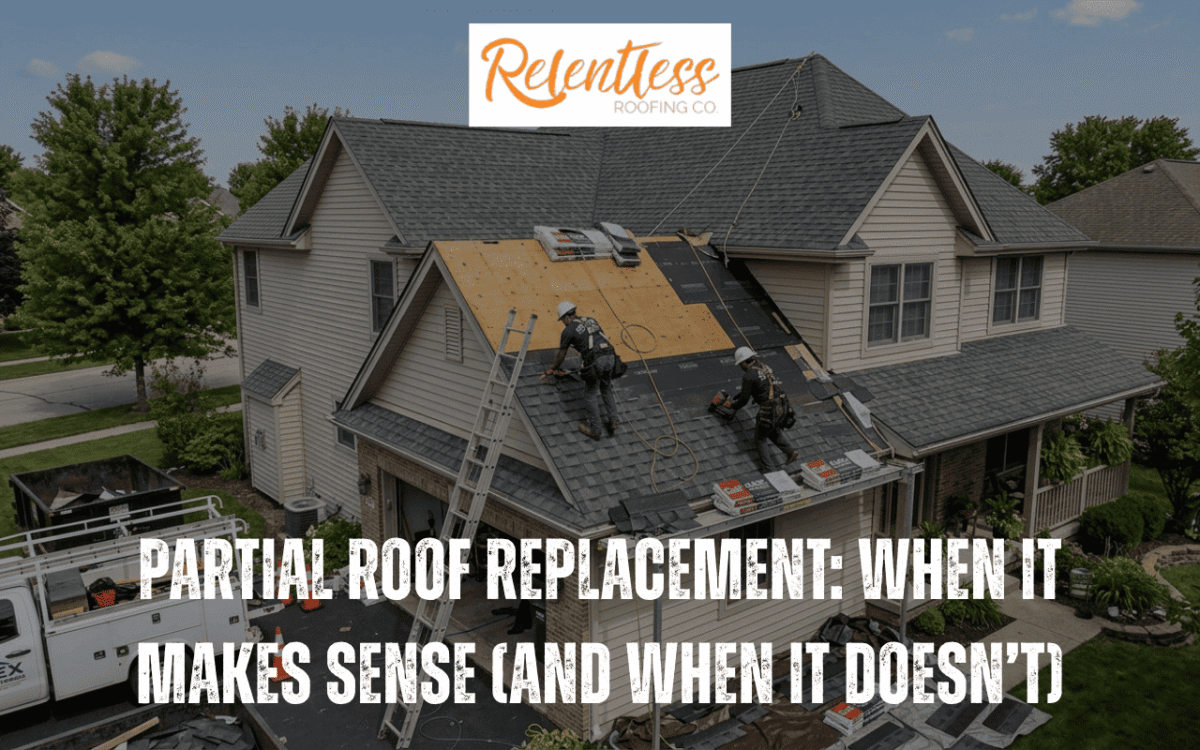
A partial roof replacement means removing and replacing shingles, underlayment, and materials in one section of the roof while keeping the rest of the roof intact.
Definition:
A partial roof replacement is when only a damaged portion of the roof is replaced instead of the entire roof system.
What “partial replacement” really means vs roof repair
- Roof repair: Fixes small issues like a leak or missing shingle
- Partial replacement: Replaces a larger section of the roof
- Full roof replacement: Removes and installs an entirely new roof
A partial replacement sits between repair and full replacement, each serving a different purpose depending on your roof condition. It is used when damage is too large for repair but limited to one area.
How roofers replace a section of the roof
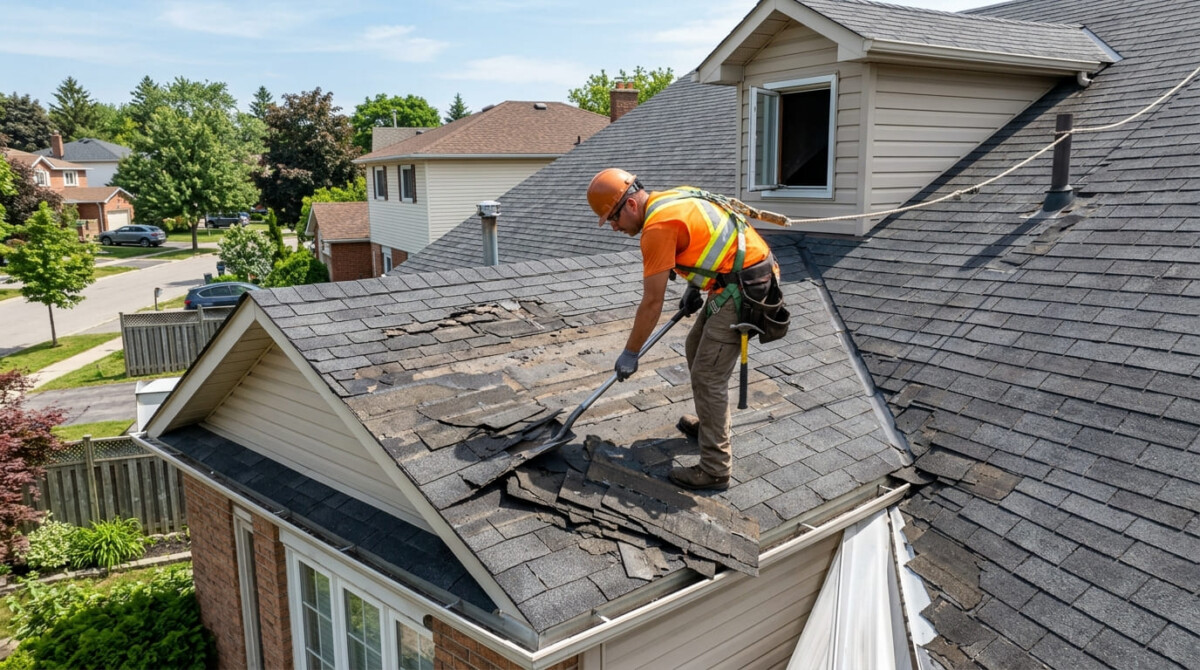
- Remove old shingles in the damaged section
- Inspect decking and underlayment
- Replace damaged layers if needed
- Install new shingles
- Blend new shingles into old at ridges or valleys
This process works best when the rest of the roof is still in good condition.
When Should You Consider a Partial Roof Replacement?
You should consider a partial roof replacement when damage is limited to a specific area and the rest of the roof is still structurally sound and relatively new.
Signs your roof damage is limited
- Damage in one section of the roof
- A fallen tree limb or storm impact
- One-sided wind damage
- No widespread leaks
- The rest of your roof is in good condition
Situations where it makes sense
- Your roof is less than 10–15 years old
- Insurance companies only cover part of the roof
- You need a quick fix before selling your home
Decision Checklist
- Is the damage isolated?
- Is the roof still strong overall?
- Are shingles still available for matching?
If you answer yes to most of these, a partial replacement could work.
Partial vs Full Roof Replacement: Which Option Is Right for You?
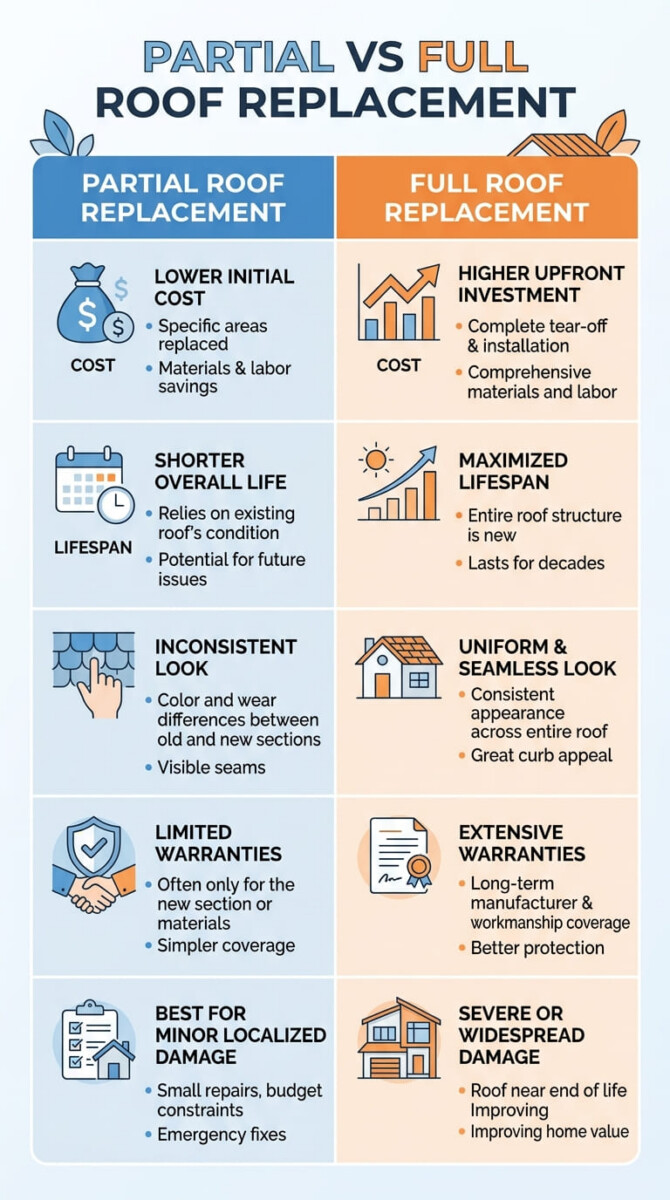
A partial roof replacement costs less at first, but a full roof replacement lasts longer and solves all major problems across the entire roof.
Definition:
A full roof replacement removes all existing layers and installs an entirely new roof system from decking to shingles.
Key Differences
| Factor | Partial Replacement | Full Roof Replacement |
| Cost | Lower upfront | Higher upfront |
| Lifespan | Shorter | Longer |
| Appearance | May not match | Uniform look |
| Warranty | Limited | Strong coverage |
| Structural Fixes | Partial | Complete |
Pros vs Cons: Partial vs Full Roof Replacement
Partial Roof Replacement
Pros
- Lower cost upfront, easier on budget
- Faster project, often done in 1–2 days
- Less disruption to your daily routine
- Good option for damage in one section
Cons
- New shingles may not match old ones (patchwork effect)
- Hidden issues in other parts of the roof may remain
- Shorter lifespan compared to a full replacement
- Can lead to repeated repair costs over time
Full Roof Replacement
Pros
- Fixes all visible and hidden roof issues
- Longer lifespan (often 20–30+ years)
- Uniform appearance improves curb appeal
- Stronger warranties across the entire roof
- Can improve energy efficiency and home value
Cons
- Higher upfront investment
- Takes longer to complete
- More disruption during installation
- Creates more waste from removed materials
What This Means for You:
If your roof has damage in only one area and is still in good condition, a partial roof replacement can be a practical short-term solution. If your roof is older or shows wear in multiple sections, a full roof replacement is often the better long-term decision that saves money and stress later.
What Does a Roofer Check Before Recommending a Partial Replacement?
A roofer checks the roof’s age, structure, damage spread, and material condition before recommending a partial roof replacement. This ensures the repair will hold up and not lead to bigger issues later.
Roof inspection factors
A roofing contractor first looks at the age of the roof to judge how much life is left. Older roofs often need a full replacement. They also examine the condition of shingles and underlayment to see if materials are still in good condition.
Leaks are another key sign. A single leak may support a partial replacement, but multiple leaks suggest wider damage. The roofer also checks the decking to make sure it is strong and inspects ventilation, since poor airflow can weaken the roof over time.
When a roofer advises against it
A roofer may not recommend a partial replacement if damage appears in multiple areas. This often means the problem is spread across the roof.
If the roof is near the end of its lifespan, fixing one section does not help much. Structural problems, like weak decking or moisture damage, also require a full roof replacement.
Inspection Checklist
The roofer confirms if the decking is strong enough and checks if matching shingles are still available. They also verify that damage is limited to one section.
If these conditions are met, a partial roof replacement can be a safe and practical option.
The Real Cons of a Partial Roof Replacement (Most Homeowners Miss This)
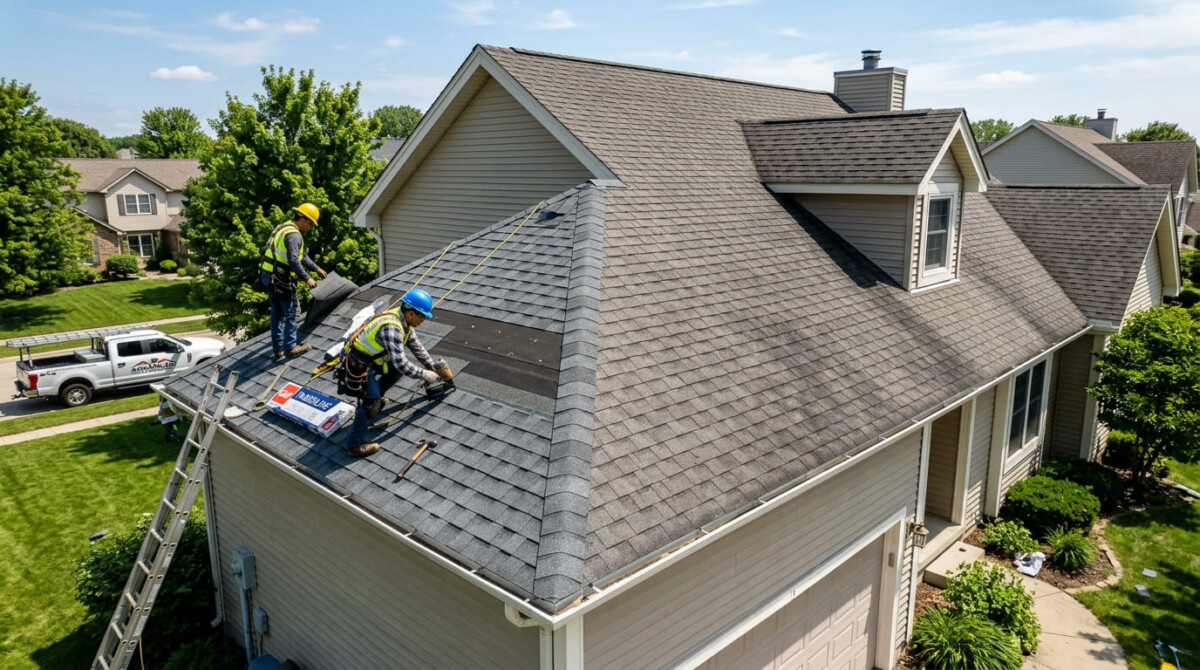
A partial roof replacement can create long-term issues like mismatched shingles, weak connection points, and repeated repair costs. First, mismatched shingles affect aesthetics. New shingles rarely match old ones. This creates a patchwork look that hurts curb appeal.
Second, structural imbalance can occur. New materials connect to older ones at ridges or valleys. These areas can become weak points. Third, costs add up over time. While the initial repair is cheaper, future repairs often follow. Many homeowners end up replacing the whole roof later anyway.
Quote Insight:
“Short-term savings can lead to higher long-term costs if the rest of the roof fails soon after.”
Is a Partial Roof Replacement Actually Cost-Effective Over Time?
A partial roof replacement is cost-effective only if the rest of the roof has many years of life left and no hidden damage.
Short-term vs long-term cost
- Lower upfront cost
- Faster installation
- Less labor
But over time:
- Repeated repairs increase cost
- Old roof sections fail sooner
- Full roof replacement may still be needed if the roof deteriorates sooner than expected.
ROI Example
- Partial replacement: $4,000–$8,000
- Full roof replacement: $8,000–$15,000
If you replace part now and the rest later, total cost may exceed a full replacement.
Key Insight:
A partial replacement is cost-effective only when it delays a full replacement by several years.
How Insurance Companies Handle Partial Roof Replacement Claims
Insurance companies usually approve a partial roof replacement when damage is limited and caused by a covered event like wind or hail damage severe enough to trigger a claim. They focus on repairing only the affected section instead of replacing the whole roof.
The process begins when you file a claim after damage occurs. An insurance adjuster then inspects your roof to evaluate the extent and cause of the damage. If the issue is confined to one area, coverage is typically approved for a partial replacement.
During the inspection, adjusters review how much of the roof is damaged, what caused it, the age of the roof, and whether matching materials are available. These factors help determine if a partial replacement is enough.
A common case is hail damage hitting one side of the roof, where insurance pays to replace only that section.
Important Insight:
If matching shingles are no longer available, you may be able to request full roof replacement coverage instead of a partial repair.
How Roofing Materials and Shingles Affect Your Decision
Roofing materials play a major role in how well a partial roof replacement blends with your existing roof, how it performs, and how long it lasts. The type of material can make the difference between a smooth repair and a visible mismatch.
Matching old and new shingles
Over time, asphalt shingles fade due to sun exposure and weather. This means new shingles often look brighter than the old ones, even if they are the same brand and color. As a result, a color mismatch is common and can affect your home’s curb appeal.
Material impact
Some materials are easier to match than others. Asphalt shingles are usually easier to blend compared to metal or wood. However, older roofing materials may be discontinued, making it hard to find an exact match. Differences in underlayment can also affect how the roof performs, especially in terms of durability and moisture protection.
Material Comparison
| Material | Matching Ease | Lifespan | Risk Level |
| Asphalt | Medium | 15–30 years | Moderate |
| Metal | Low | 40+ years | High mismatch |
| Wood | Low | 20–30 years | High |
Quote Insight:
“Matching materials is often the biggest challenge in partial roof replacement.”
What to Expect During Partial Roof Replacement Work
A partial roof replacement is usually completed in 1–2 days and involves removing and replacing one section of your roof with minimal disruption compared to a full replacement.
Step-by-step process
1. Preparation and setup: The roofing contractor protects your property, sets up equipment, and prepares the work area.
2. Tear-off of damaged section: Only the damaged part of the roof is removed, including shingles and underlayment.
3. Inspection of decking: The roofer checks the decking underneath for rot or moisture damage and repairs it if needed.
4. Installation of new materials: New underlayment and shingles are installed and blended into the existing roof at ridges or valleys.
5. Cleanup and final inspection: The crew removes debris and inspects the work to ensure everything is properly installed.
What homeowners should expect
You can expect some noise during work hours, but the project is short and manageable. There may be light debris around your home, but contractors usually clean up thoroughly after the job.
How to prepare
- Move vehicles away from the house
- Cover or move outdoor furniture
- Keep pets and children indoors during work
Quote Insight:
“Partial roof replacement is quick, but proper preparation helps avoid stress and keeps your home protected during the process.”
Conclusion
Choosing between a partial roof replacement and a full replacement is not simple. Each option has benefits and risks.
A partial replacement works best for localized damage and newer roofs. A full replacement works better for aging roofs, and scheduling one is often the right call for widespread issues.
Your roof protects your entire home. That makes this decision important. Take time to assess the condition, cost, and long-term impact. When in doubt, talk to a trusted roofing contractor who can inspect your roof and guide your decision. A clear inspection can save you money and stress.
You May Also Want to Read
You may also want to read:
- Understanding the Different Types of Roofing Materials
https://relentlessroofingco.com/understanding-the-different-types-of-roofing-materials/ - Choosing the Right Roofing Contractor — 10 Key Questions to Ask
https://relentlessroofingco.com/choosing-the-right-roofing-contractor-10-key-questions-to-ask/
FAQs
1. Can you replace only part of a roof?
Yes, you can replace only part of a roof if the damage is limited to a specific section and the rest of the roof is still in good condition. A roofing contractor must confirm there are no underlying structural issues before proceeding.
2. Is a partial roof replacement cheaper than a full replacement?
Yes, a partial roof replacement is cheaper upfront because it uses fewer materials and less labor. However, if the rest of the roof fails soon after, total costs can end up higher than doing a full replacement from the start.
3. Does insurance cover partial roof replacement?
Yes, insurance companies often cover partial roof replacement when damage is caused by events like wind, hail, or falling debris. Coverage depends on the extent of the damage, the age of the roof, and policy terms reviewed by an adjuster.
4. How much does a partial roof replacement cost?
Most partial roof replacements cost between $4,000 and $8,000. The final cost depends on the size of the damaged area, roofing materials, labor rates, and whether underlying layers like decking or underlayment need replacement.
5. Will a partial roof replacement affect home value?
Yes, it can affect home value if the new shingles do not match the existing roof, creating a patchwork look. Poor visual consistency may reduce curb appeal, which can influence buyer perception and resale value.