![Standing Seam Metal Roof Cost [2026 Indiana Pricing]](https://relentlessroofingco.com/wp-content/uploads/2026/06/Standing-Seam-Metal-Roof-Cost-2026-Indiana-Pricing.jpg)
A standing seam metal roof cost in Indiana often ranges from about $12 to $24 per square foot installed in 2026. Simple steel roofs may cost less. Complex roofs with steep slopes, tear-off, deck repair, premium panels, snow guards, or added flashing may cost more.
Introduction
Standing seam metal roofing costs more than asphalt shingles, but Indiana homeowners should compare more than the first price. A standing seam metal roof can last 40 to 70 years when material, underlayment, flashing, and installation are done right. That longer life changes the true roof costs.
National cost calculators can help, but they often miss Indiana details. A home near South Bend may need stronger snow and ice planning. A home in Indianapolis may need better ventilation because freeze-thaw cycles can stress weak roof assemblies. A home in Evansville may need stronger storm and hail planning.
This guide explains 2026 standing seam metal roof cost, cost per square foot, material choices, roof installation details, hidden costs, and long-term value compared with asphalt shingles.
Key Takeaway
- Standing seam metal roof cost in Indiana often ranges from $12 to $24 per square foot installed in 2026.
- A 1,500-square-foot standing seam roof may cost about $18,000 to $36,000.
- Painted steel or Galvalume steel often gives the best mix of price, lifespan, and Indiana weather fit.
- Asphalt shingles cost less upfront, but may need replacement two or more times over 40 to 50 years.
- A strong quote should list panel type, gauge, underlayment, ice barrier, flashing, snow guards, labour cost, warranty, tear-off, and cleanup.
What Is a Standing Seam Metal Roof and Why Does It Cost More?
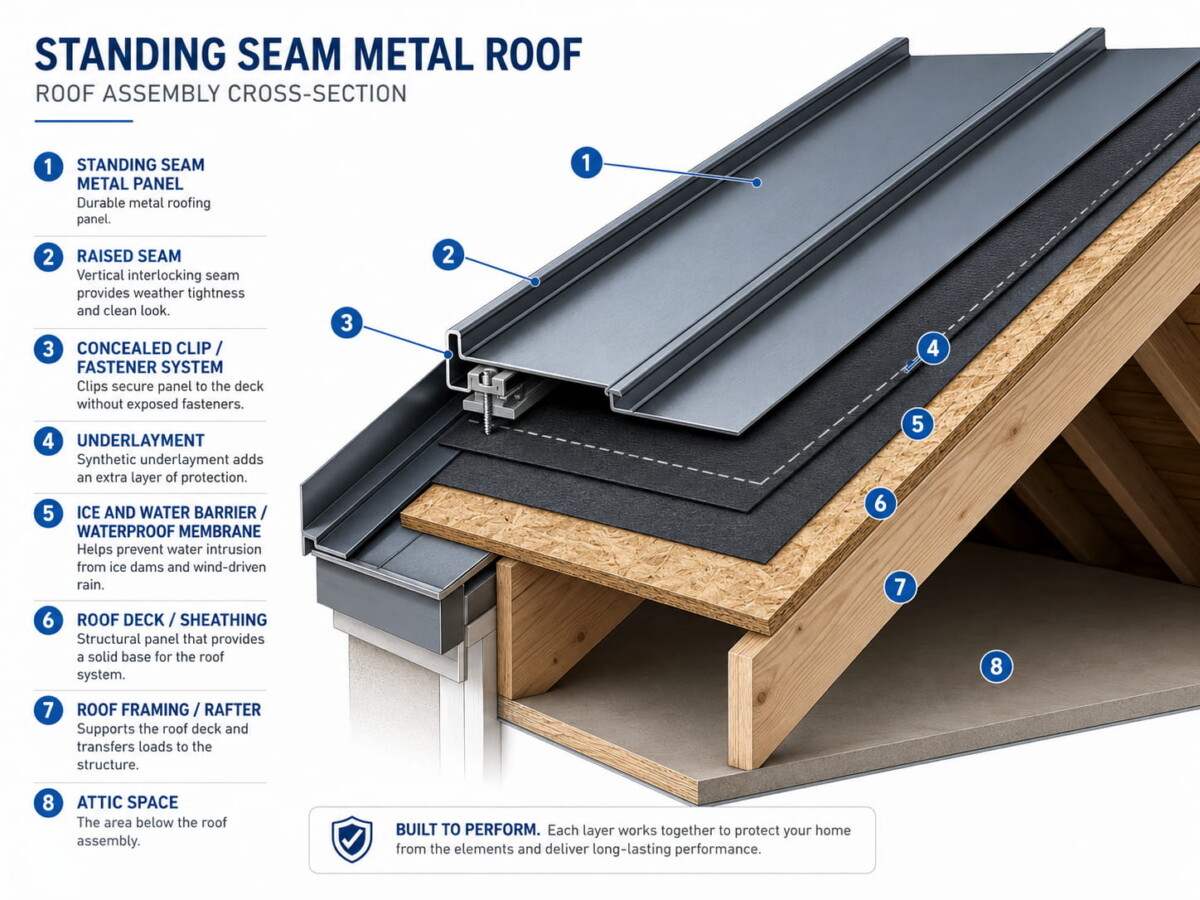
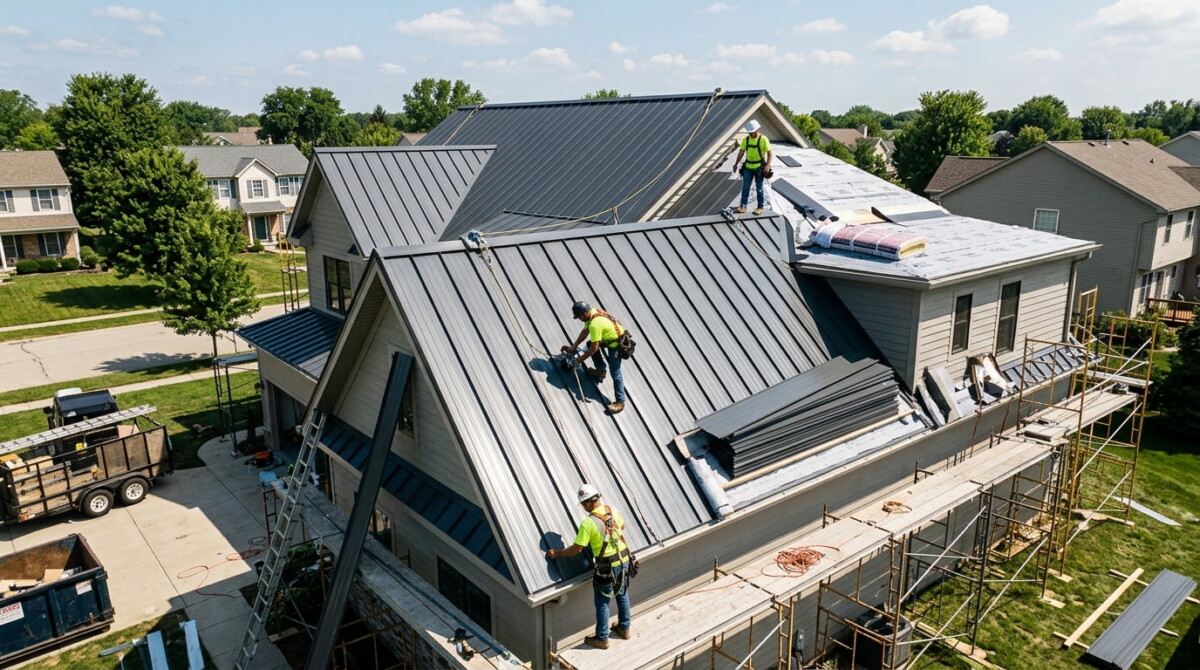
A standing seam metal roof is a hidden-fastener metal roofing system with raised seams between long metal panels. It costs more because the panels, clips, trim, underlayment, and labour require more skill than asphalt shingle roofing or an exposed fastener panel.
Standing seam panels usually run from the ridge to the eave. The raised seams lock the panels together and help move water off the roof. The fasteners are covered, so fewer screw heads sit in rain, snow, sun, and ice. This matters in Indiana because exposed screws can loosen as temperatures move from cold winters to hot summers.
The higher cost also comes from system details. Seam height, panel width, 24 gauge or 26 gauge steel, clip spacing, flashing, and trim all affect total cost. A cheaper seam metal roofing quote may leave out parts that help the roof perform for decades.
How Much Does a Standing Seam Metal Roof Cost Per Square Foot in Indiana?
In 2026, standing seam metal roof cost per square foot in Indiana often falls around $12 to $24 installed. Basic steel systems on simple roofs may sit near the low end. Complex roofs, premium metals, steep pitches, and added snow or ice details push the price higher.
| Price Level | Installed Cost Per Square Foot | Cost Per Roofing Square | Common Project Type |
| Lower range | $12–$16 | $1,200–$1,600 | Simple roof, steel panels, easy access |
| Mid range | $16–$20 | $1,600–$2,000 | Standard Indiana home, painted steel, good underlayment |
| Higher range | $20–$24+ | $2,000–$2,400+ | Steep roof, complex roof, snow guards, premium finish |
A roofing square equals 100 square feet. So $16 per square foot installed equals about $1,600 per roofing square. Indiana pricing may sit below some coastal markets, but local labour, freight, tear-off, decking repairs, roof access, and weather details still affect the final price.
What Changes the Final Standing Seam Metal Roof Cost?
The final standing seam metal roof cost changes because every home has different roof size, pitch, access, decking, underlayment needs, panel specs, and labour demands. In Indiana, snow, hail, ice, and freeze-thaw cycles can also add details that a low quote may leave out.
Key cost factors include:
- Roof size: Larger roofs need more standing seam panels, trim, underlayment, and labour.
- Roof pitch: Steep roofs take more time, safety gear, and crew planning.
- Roof type: Dormers, valleys, skylights, chimneys, and wall tie-ins add flashing work.
- Existing roof: Tear-off adds cost, but it lets the contractor inspect the deck.
- Decking condition: Rotten or soft decking must be repaired before the new metal roofing system goes on.
- Ice barrier and snow guards: These protect the roof deck and help manage snow in colder parts of Indiana.
- Labour cost: Skilled standing seam installers cost more because the work is more exact than basic shingle installation.
A good quote should explain each cost clearly. For Indiana homes, the best value comes from the right materials, proper installation, and details that match local weather.
Standing Seam Metal Roof Cost by Indiana Home Type
Indiana home type can change standing seam roof installation cost by thousands of dollars. A small ranch, a standard two-storey home, and a larger custom home may use the same roofing material, yet land in different price ranges because roof area, height, access, and design all matter.
| Indiana Home Type | Estimated Roof Area | Possible Installed Range | What Changes the Price |
| Small ranch home | 1,400–1,800 sq ft | $16,800–$43,200 | Broad roof area, easy access, fewer details |
| Standard two-storey home | 1,800–2,400 sq ft | $21,600–$57,600 | More height, steeper pitch, safety setup |
| Larger or complex roof | 2,500–3,500 sq ft | $35,000–$84,000+ | Dormers, valleys, custom trim, snow guards |
A simple ranch may cost less per square foot because the crew can move faster. A custom home may need more panel cuts, more flashing, and tighter planning. The annual cost view helps. A $24,000 roof lasting 45 years equals about $533 per year before repairs or insurance factors.
Which Metal Roofing Material Gives Indiana Homeowners the Best Value?
For many Indiana homes, painted steel or Galvalume steel gives the best balance of cost, lifespan, and performance. Aluminum, zinc, and copper can make sense in special cases, but they often raise material costs beyond what a typical homeowner needs.
Galvalume and Galvanized Steel
Galvalume steel is common because it balances price and corrosion resistance. Galvanized steel is also used, but Galvalume is often chosen for long roof life when the finish and installation are right.
Painted Steel with PVDF or Kynar Finish
Painted steel with a PVDF or Kynar coating can help with colour life and sun exposure. This matters when curb appeal and resale value are part of the decision.
Aluminum, Zinc, and Copper
Aluminum roofing resists corrosion and weighs less than steel. Zinc and copper are premium choices with higher panels cost. For many Indiana homes, they are more about design goals than basic value.
Standing Seam vs Asphalt Shingle Cost: Which One Makes More Sense Over 40 Years?
Standing seam costs more upfront than asphalt shingles, but the 40-year cost can be closer than it first appears. Indiana homeowners should compare replacement cycles, repairs, storm risk, maintenance, energy effects, and possible insurance factors before choosing a roof system.
| Category | Standing Seam Metal Roof | Architectural Asphalt Shingles |
| Upfront cost | Higher | Lower |
| Common lifespan | 40–70 years | 15–30 years |
| Maintenance | Lower when installed well | More frequent over time |
| 40–50 year replacements | Often one roof | Often two roofs, sometimes more |
| Storm resistance | Strong with correct system and rating | Depends on shingle grade |
| Best fit | Long hold period, storm/snow concerns | Shorter hold period, tighter budget |
Asphalt shingle roof installation usually costs less per square foot. Standing seam roof installation cost rises because of metal panels, clips, seam work, trim, underlayment, and skilled labour. A homeowner selling soon may not see the same benefit as someone staying 25 years or more.
What Happens During Standing Seam Metal Roof Installation?
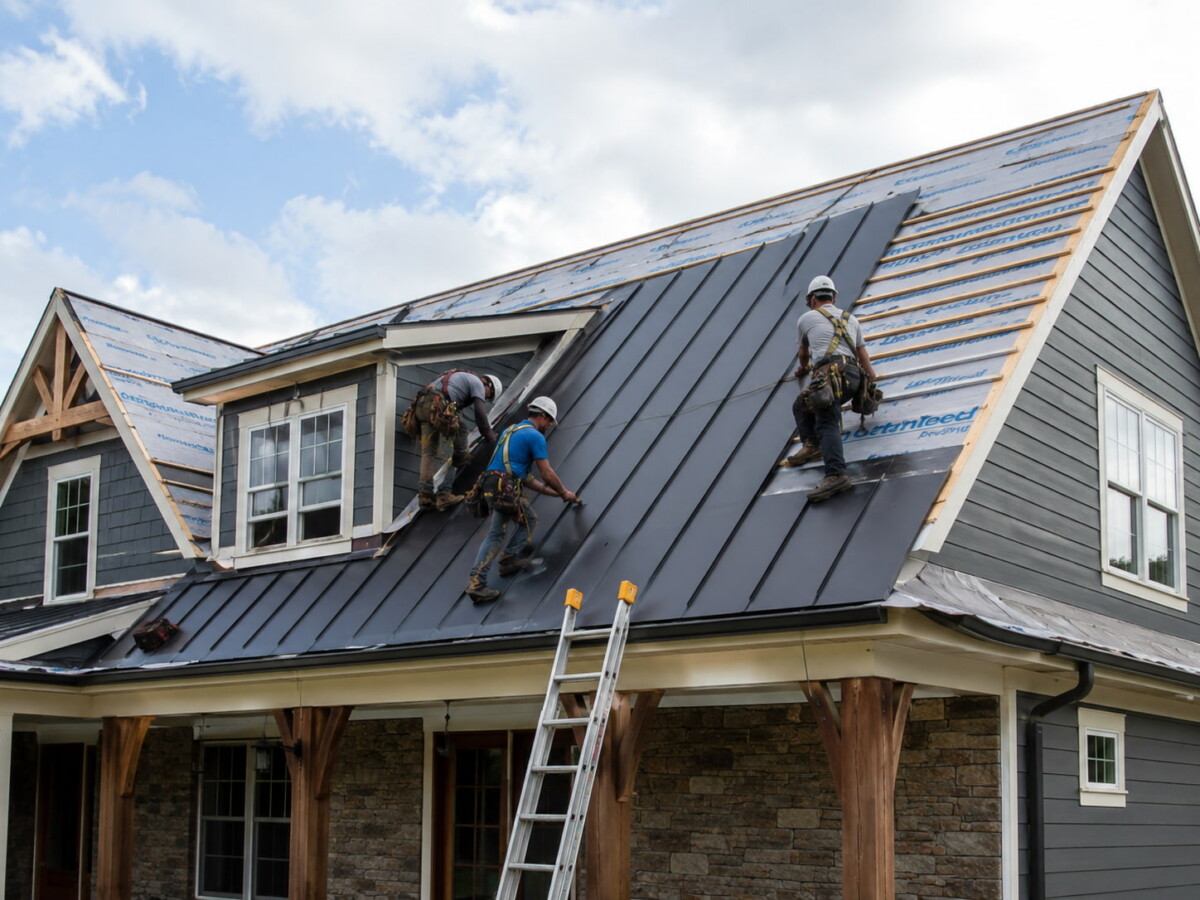
Standing seam metal roof installation includes inspection, measurement, tear-off, deck repair, underlayment, panel layout, fastening, seam work, flashing, trim, cleanup, and warranty documents. Homeowners pay for skilled labour because weak installation can shorten the roof’s service life.
1. Roof inspection and measurement: The contractor checks roof size, pitch, access, deck condition, ventilation, valleys, walls, and penetrations. This helps plan panel lengths, trim, underlayment, snow guards, and waste.
2. Tear-off and deck preparation: The old roof is removed when needed. The crew checks for rot, soft decking, and old leak damage. Weak wood should be repaired before metal panels are installed.
3. Underlayment and ice protection: Synthetic underlayment, ice and water shield, and ventilation details are installed as needed. This helps protect Indiana homes from trapped moisture below metal panels.
4. Panel installation and final details: Standing seam panels are installed with clips or approved fastening methods. Flashing, trim, ridge caps, valleys, snow guards, cleanup, and warranty review complete the job.
A proper installation should make the quote easier to understand. If a contractor explains each step clearly, you can see where the labour cost goes and which details protect the roof for long-term Indiana weather.
Hidden Standing Seam Metal Roof Costs Indiana Homeowners Should Watch For
Hidden standing seam costs often appear in missing quote details. Indiana homeowners should check for decking repairs, underlayment upgrades, snow guards, permits, disposal, ventilation work, access setup, and flashing details before accepting the lowest price.
Use this proposal checklist before choosing a bid:
- Decking replacement: Soft or rotten wood must be repaired before panels go on.
- Tear-off and debris disposal: Ask if old roof removal, dumpster fees, and haul-off are included.
- Ice barrier: Northern Indiana homes may need stronger ice protection near eaves and valleys.
- Condensation control: Poor ventilation can trap moisture below metal panels and damage decking.
- Snow guards: These may be needed where sliding snow could damage gutters, landscaping, or walkways.
- Flashing and trim: Chimneys, valleys, skylights, dormers, and wall areas need careful detail work.
- Permit fees and inspections: Local rules can affect the final cost.
A low bid becomes risky when it leaves out these items. Ask the roofing contractor to revise the quote so each proposal can be compared on the same scope.
Is a Standing Seam Metal Roof Worth the Investment in Indiana?
A standing seam metal roof can be worth it in Indiana if the homeowner plans to stay long enough, wants lower replacement risk, and needs better performance against snow, hail, wind, and freeze-thaw cycles. It is less compelling for short hold periods or tight budgets.
The strongest fit is a homeowner who plans to stay 20 to 30 years or more. In that case, the higher upfront cost can spread across decades. If the roof avoids one full shingle replacement, the cost gap may shrink. If the roof also reduces repair risk after storms, the value becomes stronger.
A standing seam roof is not the right choice for every home. Architectural asphalt shingles may be better when the budget is limited or the owner plans to sell soon. The best decision comes from matching the roof to the home, local weather, budget, and ownership timeline.
How to Compare Standing Seam Metal Roof Quotes Without Overpaying
To compare standing seam metal roof quotes, look past the total price. A strong proposal should explain the full metal roofing system, including panel type, metal gauge, finish, underlayment, flashing, snow retention, tear-off, warranty, crew skill, and project scope. This helps you compare what each contractor is actually installing.
Use this checklist before choosing a roofing contractor:
- Panel type: Ask if the system uses snap-lock or mechanically seamed panels. Seam type affects installation cost, weather control, and long-term roof performance.
- Metal gauge: Ask if the panels are 24 gauge or 26 gauge steel. Thicker panels may cost more, but they can feel stronger and handle some roof conditions better.
- Finish: Ask if PVDF or Kynar coating is included. The finish affects colour life, sun exposure, and curb appeal.
- Underlayment: Ask what goes under the panels. This layer helps protect the roof deck from moisture.
- Ice barrier: Ask where ice and water shield will be used. Indiana freeze-thaw cycles can expose weak roof details.
- Snow retention: Ask if snow guards are needed. Sliding snow can damage gutters, landscaping, and walkways.
- Warranty: Ask what covers materials and workmanship. Panel warranties and labour warranties protect different parts of the project.
Also ask how many standing seam roofs the contractor has installed in Indiana, and how they handle thermal movement, flashing, hidden decking damage, and snow retention before you compare the final price.
Conclusion
Standing seam metal roof cost in Indiana should be judged by price, scope, lifespan, and local weather needs. A fair 2026 quote should explain material, panel type, underlayment, flashing, labour, snow protection, warranty, tear-off, and cleanup.
The cheapest proposal may not be the best value if it skips parts that protect the roof during storms, snow, ice, or freeze-thaw cycles. The highest proposal is not automatically better either. Homeowners should compare line items, ask direct questions, and think in terms of 40 to 50 years of ownership.
A strong standing seam roof is a system. The panels matter. The installer matters more. For Indiana homeowners, the best next step is to request an Indiana-specific quote that explains both the upfront cost and the long-term roof value.
You May Also Want to Read
You may also want to read:
- Can You Paint a Metal Roof
https://relentlessroofingco.com/can-you-paint-a-metal-roof/ - Can You Install a Metal Roof Over Shingles
https://relentlessroofingco.com/can-you-install-a-metal-roof-over-shingles/
FAQs
How much does it cost to install a standing seam metal roof in Indiana?
A standing seam metal roof in Indiana often costs about $12 to $24 per square foot installed in 2026. Simple steel projects may sit near the low end. Steep, complex, or premium projects can cost more. Ask for a line-item quote so you can compare scope.
How much would a standing seam metal roof cost on a 1,000 square foot house?
A 1,000-square-foot standing seam roof in Indiana may cost about $12,000 to $24,000 installed, based on a $12 to $24 per square foot range. The final price can change with pitch, tear-off, decking repairs, panel gauge, underlayment, and flashing details.
Is standing seam roofing more expensive than asphalt shingles?
Yes, standing seam roofing is usually more expensive upfront than asphalt shingles. The cost can make sense if you plan to stay long term because standing seam roofs may last far longer. Compare the upfront price with likely shingle replacement cycles over 40 years.
What is the cheapest standing seam metal roof option?
The cheapest standing seam option is often a simpler painted steel or Galvalume steel system on a low-complexity roof. Avoid choosing price alone. A low quote should still include proper underlayment, flashing, fastening, trim, and warranty coverage for Indiana weather.
Can you install a standing seam metal roof over an existing roof?
Sometimes it may be possible, but full tear-off is often safer for a long-term standing seam installation. Tear-off lets the contractor inspect decking, fix rot, improve underlayment, and check ventilation. Installing over an existing roof can hide problems and may affect warranties.