
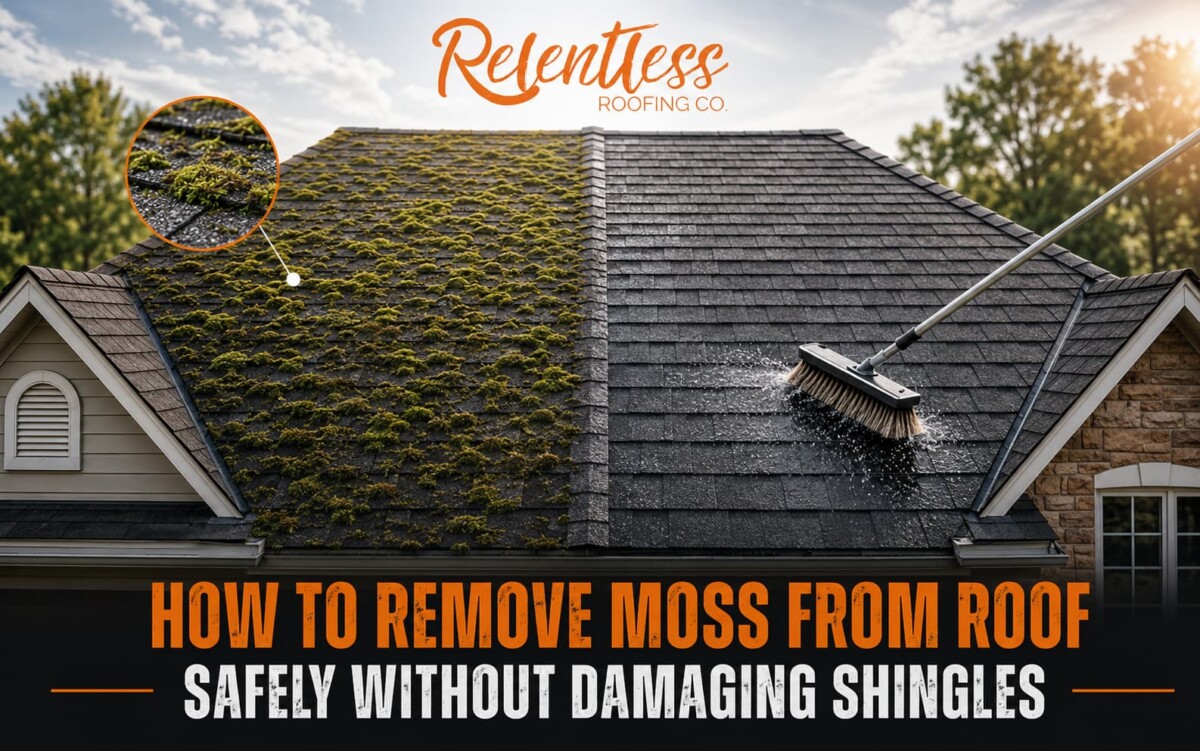
The safest way to remove moss from roof is to check the roof risk first, then choose the gentlest method that fits. Light moss on a sound, low roof may be cleaned with a roof-safe cleaner and soft brush. Heavy moss, steep slopes, old shingles, or leaks need a professional inspection.
Introduction
Roof moss removal sounds simple, but the wrong method can damage shingles, crack tiles, strip granules, or create leaks. Moss can also make the roof slippery, which turns a small cleaning job into a safety risk.
This guide uses a simple Roof Risk Ladder. It helps you decide whether you can handle the moss from the ground, clean it gently, or call a roofer. The goal is to remove moss safely while protecting the roof surface, gutters, landscaping, and warranty.
Key Takeaway
Moss removal should match the roof’s condition, height, material, and moss coverage. Do not choose a cleaner or tool before you judge the risk.
- Light moss on a low, sound roof may be a safe DIY job.
- Moderate moss on older shingles needs extra care.
- Heavy moss, steep roofs, leaks, or damaged roofing material need a roofer.
- Pressure washing asphalt shingles can damage the roof.
- Prevention matters because moss grows back when shade and moisture stay.
Why Does Moss Grow on a Roof and When Should You Worry?
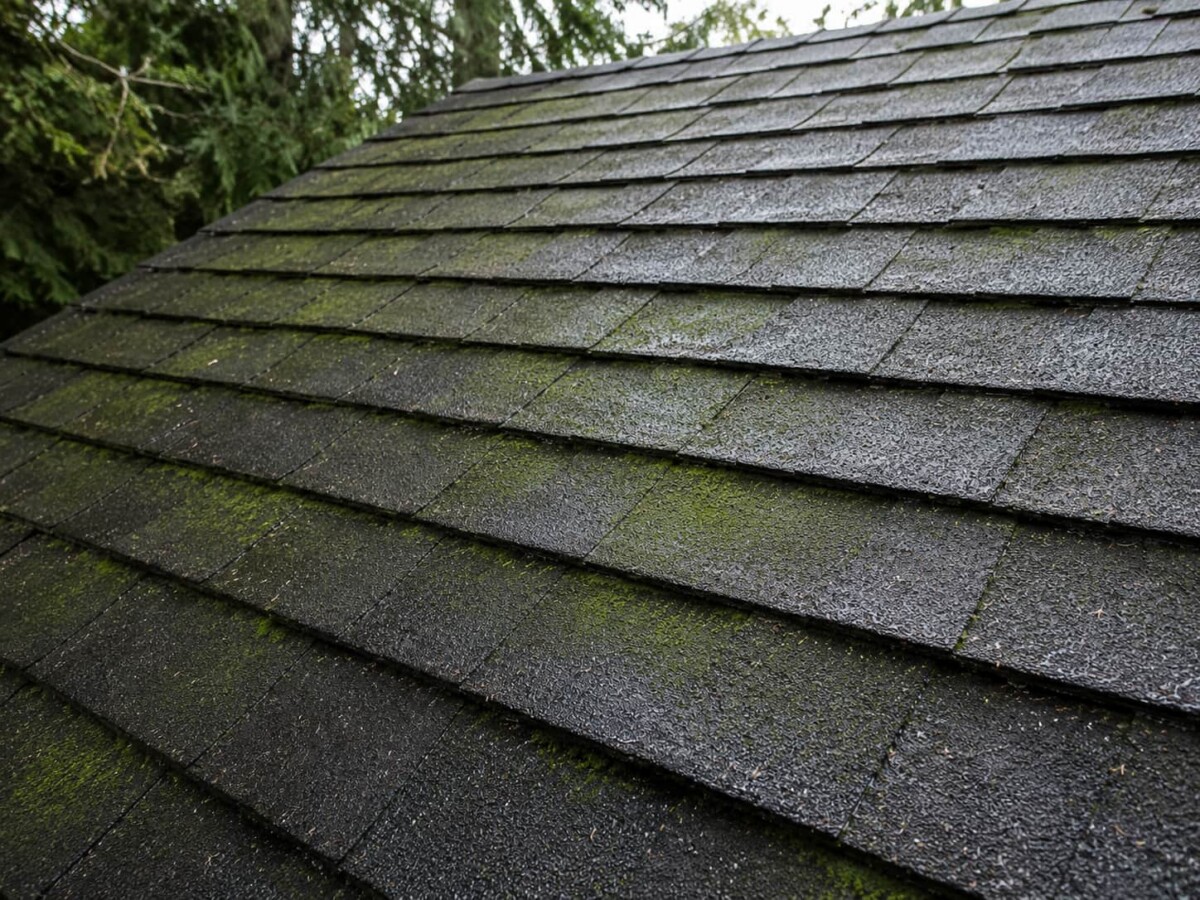
Moss grows on roofs that stay damp, shaded, and dirty. Tree branches, fallen leaves, clogged gutters, and north-facing roof slopes can keep the roof surface wet for longer. Moss does not need soil like garden plants. It can hold moisture on shingles, roof tiles, slate, and metal panels.
You should worry when moss starts to form thick patches. Moss can hold water against asphalt shingles and lift their edges. This can slow drainage and let water reach areas it should not reach. On wood shingles, trapped moisture can speed up decay. On clay or concrete roof tiles, moss may seem harmless at first, but thick growth can hide cracks and block water flow.
Light moss may be mostly cosmetic if the roof is newer, dry, and draining well. The Roof Risk Ladder treats this as low risk. Heavy moss, curled shingles, missing granules, leaks, stained ceilings, or blocked gutters move the roof into a higher risk tier.
Roof Risk Ladder: Should You Remove Moss Yourself or Call a Pro?
The Roof Risk Ladder helps you avoid guessing. Before you remove moss from roof surfaces, match your situation to the right risk level. The higher the risk, the less you should do yourself.
| Risk Level | What You See | Best Action |
| Low Risk | Light moss, low roof, sound shingles, safe access | Use a gentle cleaner, soft brush, or ground-based treatment |
| Medium Risk | Moderate moss, older shingles, damp shaded roof, limited access | Use ground-based treatment or ask a roofer before cleaning |
| High Risk | Heavy moss, steep roof, cracked tiles, leaks, soft decking, two-story height | Do not DIY; call a professional |
Use this table before choosing tools or chemicals. A low-risk roof gives you more safe options. A high-risk roof should be inspected before any cleaning begins.
How to Remove Moss from Roof Safely Step by Step
Safe moss removal means killing and loosening moss without damaging the roof surface. These steps are only for low-risk roofs with safe access, sound shingles, and light to moderate moss. If the roof is steep, wet, old, leaking, cracked, or hard to reach, stop and call a professional.
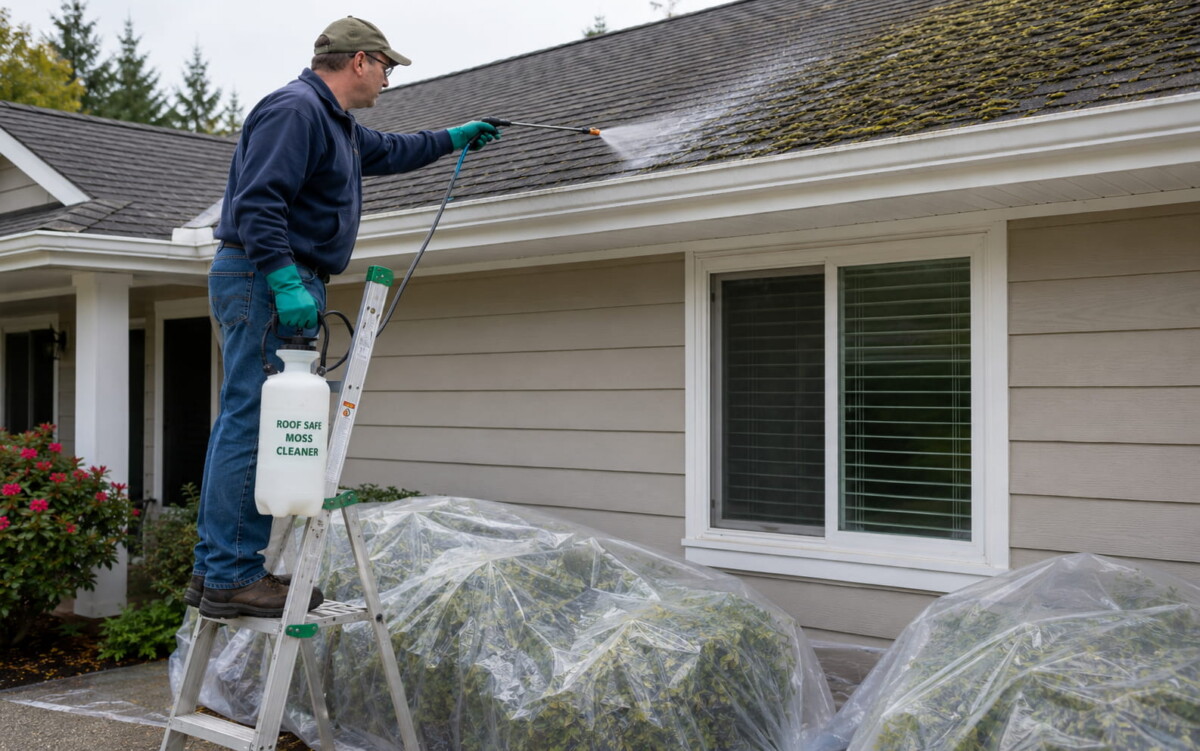
- Check the roof from the ground. Look for missing shingles, curled edges, cracked tiles, rust, sagging spots, clogged gutters, and heavy moss growth. These signs mean the roof may need inspection before cleaning.
- Protect plants and control runoff. Wet nearby plants before using cleaner. Cover delicate shrubs, move outdoor items, and keep chemical runoff away from ponds, drains, and garden beds where possible.
- Apply a roof-safe moss cleaner. Use a pump sprayer or hose-end sprayer. Choose a cleaner that matches your roofing material, and follow the label or manufacturer guidance.
- Let the cleaner work. Do not rush into scraping. Some cleaners loosen moss within minutes, while slow treatments may take days or weeks to break it down.
- Remove loose moss gently. Use a soft broom or soft nylon brush. Work downward with the roof slope so you do not lift shingle edges or damage granules.
- Rinse with low pressure and clear the gutters. Do not pressure wash or force water under shingles. After rinsing, clean gutters and downspouts so remaining moss, leaves, and debris do not trap moisture again.
If moss does not loosen after proper treatment, do not scrub harder. A second gentle treatment or a roofer’s inspection is safer than damaging the roof surface.
Best Roof Moss Removal Methods by Cleaner Type
The best roof moss cleaner depends on the roof material and risk level. A cleaner that works on one roof may harm another. This table helps homeowners compare common options before choosing.
| Cleaner Type | Best Use | Watch Out For |
| Oxygen bleach | Light moss and safer general cleaning | Works slower than stronger chemicals |
| Chlorine bleach mix | Some asphalt shingle cleaning when allowed | Can harm plants and needs careful rinsing |
| Vinegar and water | Small natural moss treatment | Acid may affect plants or some surfaces |
| Dish soap mix | Loosening grime and light buildup | May not kill deep moss roots |
| Commercial moss killer | Ongoing moss control and prevention | Must match roof type and label directions |
For asphalt shingles, avoid harsh scrubbing and high pressure. For roof tiles and slate, foot traffic can crack the surface. For metal roofs, check the coating before using chemicals because some products may stain or corrode metal parts.
Methods to Avoid When Removing Moss from a Roof
Some methods remove moss fast but can damage your roof. These methods sit high on the Roof Risk Ladder because they raise the chance of leaks, broken materials, or warranty problems.
Avoid these methods:
- Pressure washing asphalt shingles. It can strip granules, break seals, and push water under shingles.
- Hard scraping. A scraper can tear shingles, loosen granules, or chip roof tiles.
- Wire brushing on fragile surfaces. It may scratch metal, damage shingles, or crack older materials.
- Strong chemical mixes. Heavy bleach or acidic cleaners can harm plants, stain surfaces, and damage roof parts.
- Walking on wet moss. Moss and cleaner together create a major slip risk.
If loose moss does not come off with gentle treatment, do not fight it. Let the cleaner work longer or ask a roofer what to do next.
How to Prevent Moss from Growing Back on Your Roof
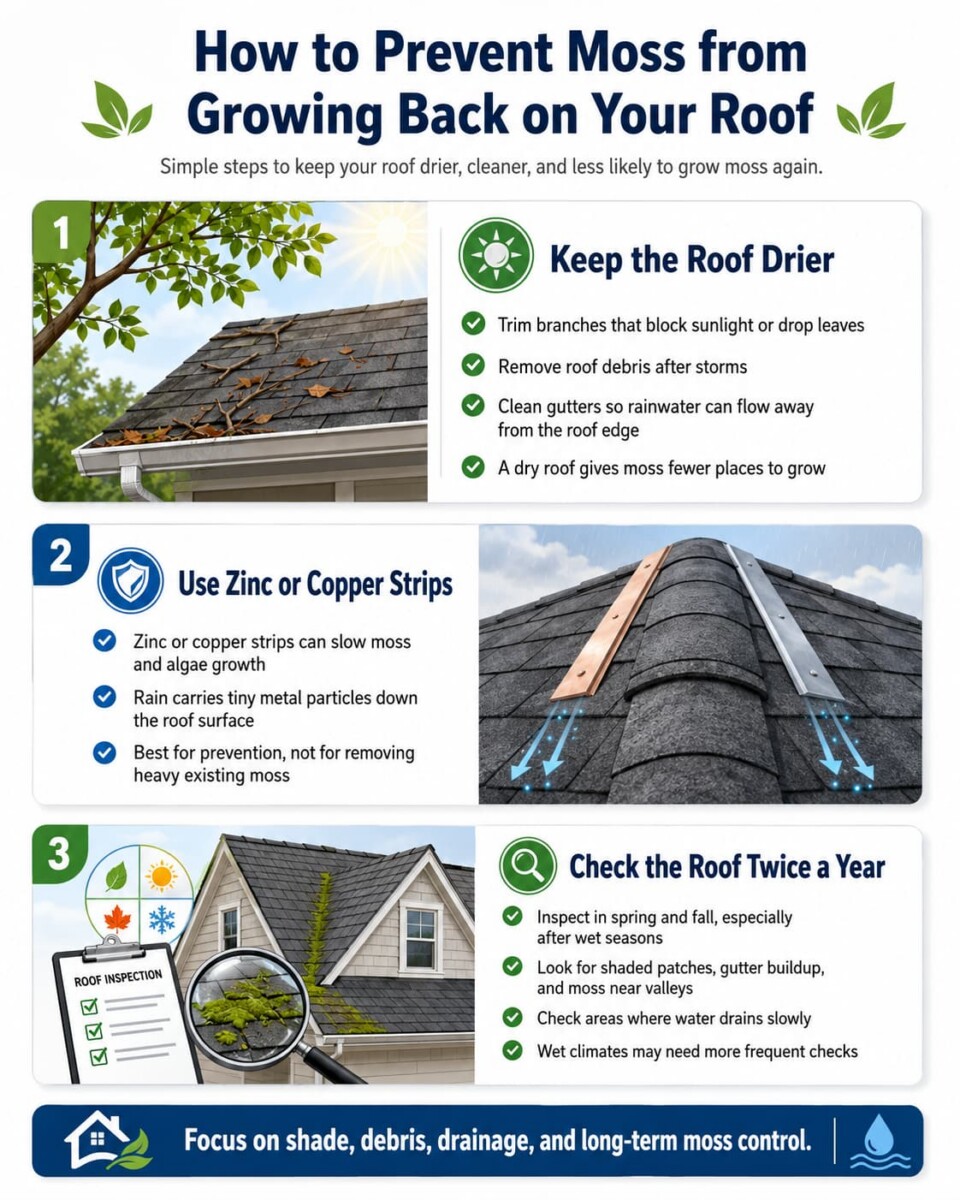
Moss prevention keeps the roof in the lowest risk tier. The drier and cleaner the roof stays, the less likely moss is to return. Focus on shade, debris, drainage, and long-term moss control.
Keep the Roof Drier
Trim branches that block sunlight or drop leaves. Remove roof debris after storms. Clean gutters so rain water can flow away from the roof edge. A dry roof surface gives moss fewer places to grow.
Use Zinc or Copper Strips
Zinc or copper strips can help slow moss and algae growth. Rain passes over the metal and carries small particles down the roof. These strips work best as prevention. They will not remove heavy moss already on the roof.
Check the Roof Twice a Year
Inspect the roof in spring and fall, especially after wet seasons. Look for shaded patches, gutter buildup, moss near valleys, and areas where water drains slowly. In wet climates, you may need more frequent checks.
When Should a Professional Inspect Roof Moss Damage?
A professional should inspect moss damage when the roof is steep, high, aging, leaking, or covered in heavy moss. You should also call a roofer if you see curled shingles, missing granules, cracked roof tiles, soft decking, overflowing gutters, or ceiling stains inside the home.
A roofer can check problems that moss may hide. This includes lifted shingles, weak decking, damaged flashing, blocked valleys, and early leak signs. They can also tell you whether cleaning is worth it or whether the roof is close to replacement.
Ask the roofer clear questions. What cleaning method will you use? Will you avoid pressure washing asphalt shingles? How will you protect plants and gutters? Are you insured? Will the method follow roof manufacturer guidance? Clear answers show that the contractor understands safe moss removal.
Conclusion
Knowing how to remove moss from roof surfaces starts with risk. Light moss on a sound, easy-to-reach roof may be handled with soft tools, roof-safe cleaner, low-pressure rinsing, and gutter cleaning.
Heavy moss, steep roofs, old shingles, cracked tiles, leaks, or unsafe access need professional help. The Roof Risk Ladder keeps the decision simple: clean gently when risk is low, prevent regrowth early, and call a roofer before moss removal can damage the roof or put you in danger.
You May Also Want to Read
You may also want to read:
- Roofing Inspection Checklist: What to Look For
https://relentlessroofingco.com/roofing-inspection-checklist/ - Roofing Maintenance for Snowy Climates: Indiana Guide
https://relentlessroofingco.com/roofing-maintenance-snowy-climates-indiana/
FAQs
What kills moss off a roof?
Roof-safe moss killers, oxygen bleach, approved bleach mixes, and some vinegar solutions can kill moss. The best choice depends on roof type and risk level. Use low pressure, protect plants, and avoid roof access if the surface is steep, wet, or damaged.
Is it okay to scrape moss off the roof?
Light loose moss can be removed with a soft brush or broom. Hard scraping is risky because it can strip granules, lift shingles, or crack roof tiles. If moss is stuck, apply cleaner first and let it loosen before trying again.
Does Dawn dish soap kill moss on the roof?
Dish soap may help loosen light grime and moss, but it is not the strongest moss killer. It works better as part of a mild cleaning mix for low-risk roofs. Do not rely on it for heavy moss growth or deep moss roots.
What kills moss on a roof naturally?
Vinegar and water can kill some light moss naturally, but vinegar is acidic. It may affect plants, soil, or some roof surfaces. Use it only on small low-risk areas, protect landscaping, and rinse gently.
Can moss damage your roof or shingles?
Yes, moss can damage shingles when it holds water, lifts edges, blocks drainage, or keeps the roof wet. Small patches may be low risk, but heavy moss growth can lead to leaks, rot, and shorter roof life if ignored.