![Cost to Replace Roof Shingles [2026 Pricing]](https://relentlessroofingco.com/wp-content/uploads/2026/06/Cost-to-Replace-Roof-Shingles-2026-Pricing-1.jpg)
The cost to replace roof shingles in 2026 often ranges from about $4 to $12 per square foot for asphalt shingles. Many 2,000 sq ft shingle roof projects fall near $8,000 to $24,000. Your final roof cost depends on roof size, roof pitch, tear-off, decking, labor costs, materials, and quote scope.
Introduction
The cost to replace roof shingles can feel confusing because two homes can look similar from the street but receive very different quotes. One roof may be simple, low, and easy to access. Another may have a steep pitch, two layers of old shingles, weak roof decking, poor ventilation, or several chimneys and skylights.
That is why this guide uses the Roof Quote Stack. It breaks your roof replacement cost into clear parts: base scope, roof complexity, hidden condition risk, code and safety needs, and warranty coverage. Instead of only looking at one average cost, you can see how each line item moves the final price.
Key Takeaway
- In 2026, asphalt shingle roof replacement often costs about $4 to $12 per square foot.
- A roofing square means 100 square feet of roof surface.
- A 2,000 sq ft shingle roof may cost about $8,000 to $24,000.
- Roof size, pitch, old shingles, decking, underlayment, flashing, ventilation, and labor costs affect the total cost.
- A low quote may leave out tear-off, disposal fees, roof decking, permits, or warranty details.
- The best quote is clear, itemized, and based on your actual roof condition.
What Is the Average Cost to Replace Roof Shingles in 2026?
The average cost to replace roof shingles in 2026 depends on roof area, not just home size. Roofers price most projects by square foot or roofing square. A roofing square equals 100 square feet of roof surface.
| Roof Size | Estimated 2026 Cost Range |
| 1,000 sq ft roof | $4,000–$12,000 |
| 1,500 sq ft roof | $6,000–$18,000 |
| 2,000 sq ft roof | $8,000–$24,000 |
| 3,000 sq ft roof | $12,000–$36,000 |
These ranges apply mostly to asphalt shingle roof projects. Basic 3-tab shingles sit closer to the low end. Architectural shingles, premium shingles, steep roofs, extra tear-off, and damaged roof decking can raise the actual cost.
A cost calculator can help with early planning, but it cannot inspect your existing roof. A roofer still needs to check roof measurements, layers of shingles, roof leaks, ventilation, flashing, and decking before giving an accurate cost.
How Roof Size, Pitch, and Waste Change Your Shingle Roof Cost
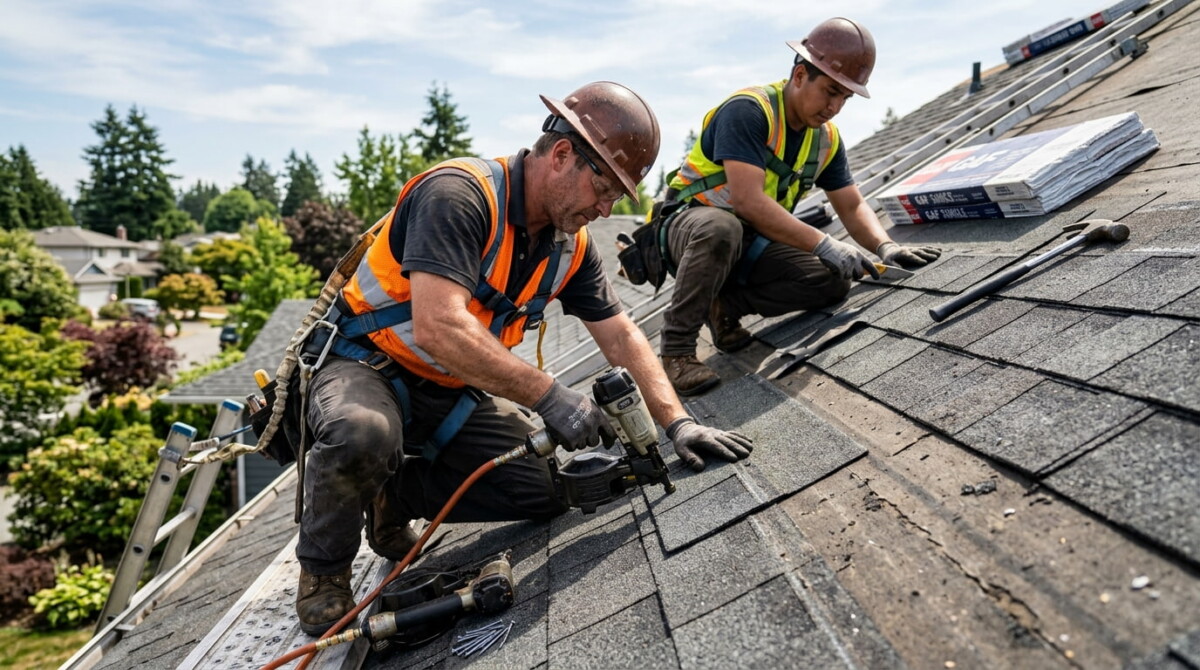
Roof size affects shingle roof cost because a larger roof needs more shingles, underlayment, fasteners, labor, and disposal. Roof pitch and layout also affect the final price because they change the roof area, waste amount, and time needed for installation.
- Roofers measure roof area in squares.
One roofing square equals 100 square feet. A 2,000 sq ft roof is about 20 squares before waste. Your roof may be larger than your home’s floor area because slopes, overhangs, and roof design add extra surface area. - Pitch changes the roof’s square footage.
A steep roof has more surface area than a low-slope roof. The pitch of your roof can also increase labor costs because crews may need extra safety gear, slower movement, and more setup time. - Complex shapes create waste.
A simple gable roof usually needs less cutting. A hip roof with valleys, dormers, chimneys, or skylights often needs more shingles because crews must cut around each feature. This waste can raise the price per square.
In simple terms, roof size tells you how much material is needed. Pitch and layout tell you how hard the job will be. That is why a smaller, steep roof with many valleys can sometimes cost more than a larger, simple roof with easy access.
The Roof Quote Stack: How Roofers Build Your Final Price
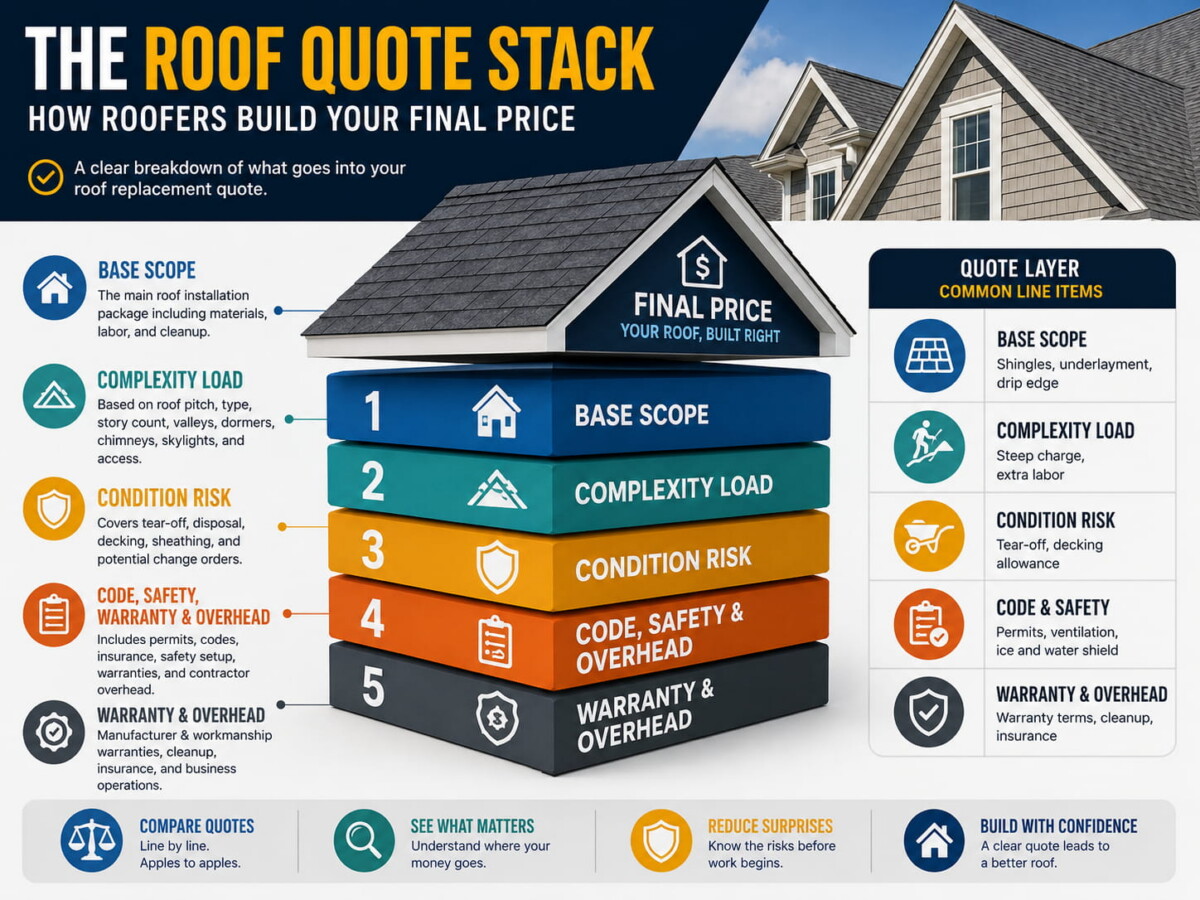
The Roof Quote Stack shows how a roofing contractor builds the final roof replacement cost. It helps homeowners compare quotes line by line instead of guessing which bid is better.
Base Scope
This is the main roof installation package. It includes asphalt shingles, underlayment, drip edge, fasteners, basic labor, and cleanup. This is where the main material costs appear.
Complexity Load
This covers roof pitch, roof type, story count, valleys, dormers, chimneys, skylights, and access. A steep or cut-up roof usually needs more time and more material.
Condition Risk
This includes old shingles, tear-off, disposal fees, roof decking, sheathing, and possible change orders. This is where hidden costs often appear.
Code, Safety, Warranty, and Overhead
This covers permit fees, building codes, insurance, safety setup, manufacturer warranty, workmanship warranty, and contractor overhead.
| Quote Layer | Common Line Items |
| Base Scope | Shingles, underlayment, drip edge |
| Complexity Load | Steep charge, extra labor |
| Condition Risk | Tear-off, decking allowance |
| Code & Safety | Permits, ventilation, ice and water shield |
| Warranty & Overhead | Warranty terms, cleanup, insurance |
Shingle Roof Cost by Material: 3-Tab, Architectural, and Premium Asphalt Shingles
Asphalt shingle choice changes the cost of a new roof because each roofing material has a different price, look, weight, life span, and warranty level. Most homeowners compare 3-tab shingles, architectural shingles, premium designer shingles, impact-resistant shingles, and cool or algae-resistant shingles.
| Asphalt Shingle Type | Typical Installed Cost | Best For |
| 3-tab shingles | $4–$6 per sq ft | Basic budget projects |
| Architectural shingles | $6–$12 per sq ft | Most residential roofs |
| Premium designer shingles | $10–$16 per sq ft | Better appearance |
| Impact-resistant shingles | $8–$14 per sq ft | Hail-prone areas |
| Cool or algae-resistant shingles | $7–$13 per sq ft | Hot or humid climates |
3-tab shingles cost less, but they are thinner and more basic. Architectural asphalt shingles cost more, but they often look better and handle weather better. Premium shingles may make sense when curb appeal, hail resistance, algae resistance, or stronger warranty options matter.
This choice should not be treated as a simple upsell. In the Roof Quote Stack, shingles affect both the base scope and the warranty layer.
Tear-Off, Old Shingles, and Roof Decking: The Hidden Costs Many Quotes Miss
Tear-off means removing the existing roof before installing new shingles. A roof overlay means installing new shingles over old shingles. Overlay work may cost less upfront, but it can hide moisture damage, add weight, and reduce warranty options.
Old shingles can also increase labor costs. One layer is easier to remove than two layers. A steep roof with multiple old layers takes more time and creates more debris. Tear-off and disposal can often add about $1 to $5 per square foot, depending on roof size, access, number of layers, and local disposal fees.
Roof decking is the wood surface under the shingles. It may be plywood, OSB, or older boards. If it is soft, rotten, or water damaged, new shingles cannot be installed correctly. A clear quote should explain how decking replacement is priced, often per sheet or through a stated allowance. Without that detail, the homeowner may face a surprise change order after tear-off starts.
Underlayment, Flashing, and Ventilation: Small Line Items That Protect the Whole Roof
Underlayment, flashing, and ventilation can change the actual cost because they protect parts of the roof that homeowners rarely see. These items may look small on a quote, but missing them can lead to roof leaks, heat damage, and warranty problems.
- Underlayment and ice and water shield: Felt underlayment is a basic option. Synthetic underlayment often costs more. Ice and water shield may be needed near eaves, valleys, or leak-prone areas.
- Flashing around chimneys, walls, and valleys: Step flashing, chimney flashing, valley flashing, and vent flashing help stop water from entering weak points.
- Ridge vents, soffit vents, and box vents: Poor ventilation can trap heat and moisture. That can shorten shingle life and damage roof decking.
A low quote may skip these hidden systems. That keeps the price low on paper, but it can push leak risk and repair costs back to the homeowner.
Labor Costs and Cost by Location: Why Your Neighbour’s Roof Cost May Not Match Yours
Labor costs change by location because wages, insurance, permits, demand, and cost of living vary. A roof in a high-cost city may cost more than the same roof in a smaller market. Storm season can also raise prices when many homeowners need roof repair or roof replacement at the same time.
Labor includes more than placing new shingles. It covers setup, tear-off, site protection, safety equipment, installation, cleanup, disposal, and final walkthrough. A simple one-storey roof may take less time. A steep two-storey roof with poor access may need more crew time. In many asphalt shingle roof projects, labor can make up about 50% to 60% of the total roof replacement cost.
This is why your neighbour’s roof cost may not match yours. One quote may include full tear-off, flashing, ventilation, permit fees, and warranty terms. Another may only include shingles and basic labor. Compare the scope before comparing the price.
How to Compare Roofing Quotes Before You Replace Your Roof
To compare roofing quotes, place each estimate beside the Roof Quote Stack and check whether the same work is included. A cheaper quote is only better if it covers the same roof size, same shingle type, same tear-off plan, and same warranty protection.
Use this checklist:
- Does the quote show the roof size or number of roofing squares?
- Does it list the asphalt shingle type, brand line, and color?
- Does it include old shingles removal and disposal fees?
- Does it explain roof decking or sheathing replacement pricing?
- Does it list underlayment, drip edge, flashing, and ventilation?
- Does it include permit fees, cleanup, and final walkthrough?
- Does it explain manufacturer warranty and workmanship warranty?
- Does it state exclusions, allowances, and change order rules?
A strong estimate should make the final invoice easier to predict. If a line item is vague, ask the roofer to clarify it before signing.
Cost Calculator vs Real Roof Inspection: Which Gives a More Accurate Cost?
A cost calculator can estimate the cost of a new roof, but a roof inspection gives a more accurate cost. A calculator cannot see soft decking, roof leaks, old shingle layers, poor ventilation, or difficult access.
| Tool | Best Use | What It Can Miss |
| Cost calculator | Early budget planning | Hidden roof condition |
| Online cost data | General price range | Local labor rates |
| Roof inspection | Real scope review | Some hidden damage until tear-off |
| Line-item estimate | Quote comparison | Future change orders |
Use a cost calculator when you are planning your budget. Then ask a roofing contractor to inspect your roof. The final estimate should connect online cost data to your actual roof measurements, material choice, existing roof condition, and local labor costs.
Conclusion
The cost to replace roof shingles in 2026 depends on more than square footage. Roof size, roof pitch, old shingles, roof decking, underlayment, flashing, ventilation, labor costs, building codes, and warranty terms all shape the final number.
The Roof Quote Stack helps you see what each quote includes. It also helps you spot missing line items before they become change orders. Before installing a new roof, ask for a clear line-item estimate, compare the same scope across bids, and get warranty terms in writing.
You May Also Want to Read
You may also want to read:
- How Much Does a New Roof Cost in Indiana
https://relentlessroofingco.com/indiana-roof-replacement-cost-2026/ - What Does a 25-Square Roof Replacement Cost in Michiana?
https://relentlessroofingco.com/25-square-roof-replacement-cost-michiana/
FAQs
How much does a 2,000 sq ft shingle roof cost in 2026?
A 2,000 sq ft shingle roof often costs about $8,000 to $24,000 in 2026. The final price depends on asphalt shingle type, roof pitch, tear-off, labor costs, location, and roof decking condition. A simple roof may cost less. A steep or damaged roof may cost more.
What is the 25% rule in roofing?
The 25% rule usually refers to local rules that may require larger roof sections, or the entire roof, to meet current building codes if enough of the roof is repaired. Rules vary by area. Ask your local building department or roofing contractor before choosing repair over replacement.
Is it cheaper to put new shingles over old shingles?
Putting new shingles over old shingles is often cheaper upfront because it skips tear-off and disposal. It can also hide damaged decking, add weight, and reduce warranty options. Ask if an overlay is allowed by local code and by the shingle manufacturer.
What is the cheapest time of year to get a new roof?
The cheapest time may be the slower season for roofing contractors, often late fall or winter in some areas. Weather and local demand matter. If your roof is not leaking, ask whether flexible timing can lower the cost without risking poor installation conditions.
Should I repair roof shingles or replace the whole roof?
Repair roof shingles if the damage is small and the rest of the roof is sound. Replace the roof if shingles are old, curling, missing across large areas, leaking often, or no longer insurable. A roof inspection can help confirm the better choice.