
The cost to replace siding house projects in 2026 often falls between $8,000 and $30,000 for a full replacement, or about $4 to $15 per square foot installed. Your final siding replacement cost depends on home size, siding material, labor, old siding removal, repairs, permits, and quote detail.
Introduction
Siding replacement is a major exterior project. The first price you see online should help you plan, but it should not be treated as your final siding cost. A small ranch home with basic vinyl siding may cost far less than a two-story home with fiber cement siding, gables, bay windows, damaged sheathing, and new trim.
This guide explains the cost of siding through a simple Siding Cost Stack. That stack includes material cost, labor cost, access, old siding removal, hidden repairs, permits, warranty, and contractor overhead. You will also learn how Quote DNA works, so you can compare siding estimates by scope instead of choosing the lowest number too fast.
Key Takeaway
Most homeowners should use online siding cost data as a planning range, not a fixed quote.
Key points:
- Full siding replacement costs often range from $8,000 to $30,000.
- New siding often costs about $4 to $15 per square foot installed.
- Vinyl siding is usually one of the lower-cost siding options.
- Fiber cement siding, brick veneer, and stone veneer raise the project cost.
- Labor, old siding removal, permits, and repairs can change the final cost.
- A clear quote should list materials, labor, removal, housewrap, flashing, trim, and exclusions.
- A very cheap bid may leave out work that later appears as change orders.
What Is the Average Cost to Replace Siding on a House in 2026?
The average siding replacement cost in 2026 depends on home size, siding material, labor rates, and wall condition. Many full-house projects fall between $8,000 and $30,000, but simple projects can cost less and large premium projects can cost more.
For a better budget, focus on the cost range instead of one average cost. A 1,500-square-foot home with basic vinyl siding may sit near the lower end. A larger two-story home with fiber cement siding, old siding removal, trim replacement, and sheathing repairs may land much higher.
The key is to read the number through the Siding Cost Stack. Part of the price is material. Part is labor. Part is risk. Part is the contractor’s warranty, insurance, crew skill, and project management. A national average helps you check the market, but your house creates the real price.
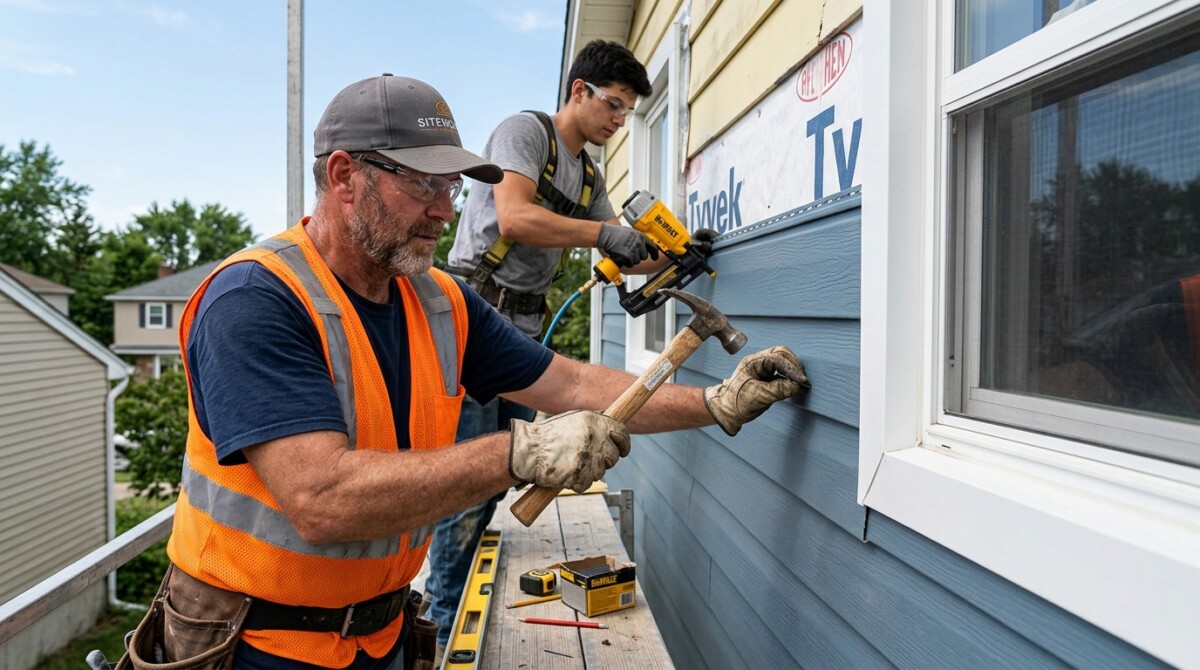
3-Step Siding Cost Calculator: Estimate Your Replacement Costs Before Calling a Contractor
A siding cost calculator gives you a rough cost estimate before you call a siding contractor. It helps you calculate siding needs, apply a waste factor, and compare your number with the contractor’s measurement. It is a planning tool, not a final price.
1. Estimate your exterior square feet
Measure the width and height of each exterior wall. Multiply width by height for each wall, then add the totals together. Subtract large openings like garage doors, patio doors, and large windows. This gives you a rough square footage of your home’s siding area.
2. Add waste for cuts and layout
Most siding projects need extra material. Simple walls may need about 10% extra. Homes with gables, dormers, bump-outs, bay windows, corners, or mixed siding styles may need more. Waste matters because siding panels must be cut, matched, and fitted.
3. Apply material and labor cost
Multiply your estimated square feet of siding by the installed cost per square foot. Vinyl siding may sit near the lower end. Fiber cement, engineered wood, steel, brick siding, and stone veneer can raise the replacement costs. If your contractor’s measured number is much higher or lower than yours, ask why.
Siding Cost Stack: Why Two Contractors Can Quote Different Prices for the Same House
Two contractors can give different siding prices because they may not be pricing the same job. One quote may include tear off, disposal, housewrap, flashing, trim, rot checks, permits, cleanup, and warranty. Another quote may list only basic siding installation.
Here is what usually sits inside the Siding Cost Stack:
| Cost Layer | What It Means | Why It Changes the Price |
| Material cost | Siding panels, trim, fasteners, flashing, housewrap | Premium products cost more |
| Labor cost | Removal, prep, cutting, fitting, install, cleanup | Tall or complex homes take longer |
| Access and layout | Stories, gables, corners, ladders, staging | Hard access slows the crew |
| Old siding removal | Tear off, hauling, disposal | Damaged or layered siding adds time |
| Hidden risk | Rot, insects, wet sheathing, asbestos, lead paint | Repairs can add cost fast |
| Overhead and warranty | Insurance, supervision, warranty support, permits | Better systems cost more upfront |
This is where Quote DNA matters. A good quote shows what you are paying for. A weak quote hides key details. If a bid does not explain how it handles hidden risks like sheathing rot, you are not comparing prices. You are comparing how much surprise you may be signing up for.
Siding Replacement Cost by Material: Vinyl, Fiber Cement, Wood, Metal, Brick, and Stone
Siding material has one of the biggest effects on the final cost. Vinyl siding is often the most budget-friendly option. Fiber cement siding, steel, brick veneer, and stone veneer cost more because they need more material strength, labor time, and install care.
| Siding Material | Typical Installed Cost | Common Lifespan | Best Fit | What to Check in the Quote |
| Vinyl siding | $3–$12 per square foot | 20–40 years | Budget-focused homeowners | Thickness, profile, trim, color |
| Fiber cement / Hardie board | $5–$18 per square foot | 30–50+ years | Long-term owners | Brand, finish, flashing, install specs |
| Engineered wood | $4–$9 per square foot | 20–40 years | Wood look with lower upkeep | Coating, moisture details, warranty |
| Natural wood siding | $7–$15+ per square foot | 20–40 years | Appearance-first homes | Staining, sealing, pest protection |
| Aluminum / steel siding | $3–$16 per square foot | 20–50 years | Harsh weather areas | Dent risk, finish, corrosion resistance |
| Brick veneer | $8–$28+ per square foot | 70–100+ years | Premium curb appeal | Veneer type, support needs, labor |
| Stone veneer | $5–$30 per square foot | 20–100+ years | Accent walls or premium fronts | Full stone, thin veneer, or faux stone |
Vinyl siding works well for homeowners who want a lower cost of siding installation and simple upkeep. Fiber cement siding is better for long-term value and stronger weather resistance. Engineered wood works for homeowners who like a warmer look. Brick veneer and stone veneer make sense when curb appeal is a major goal and the budget allows it.
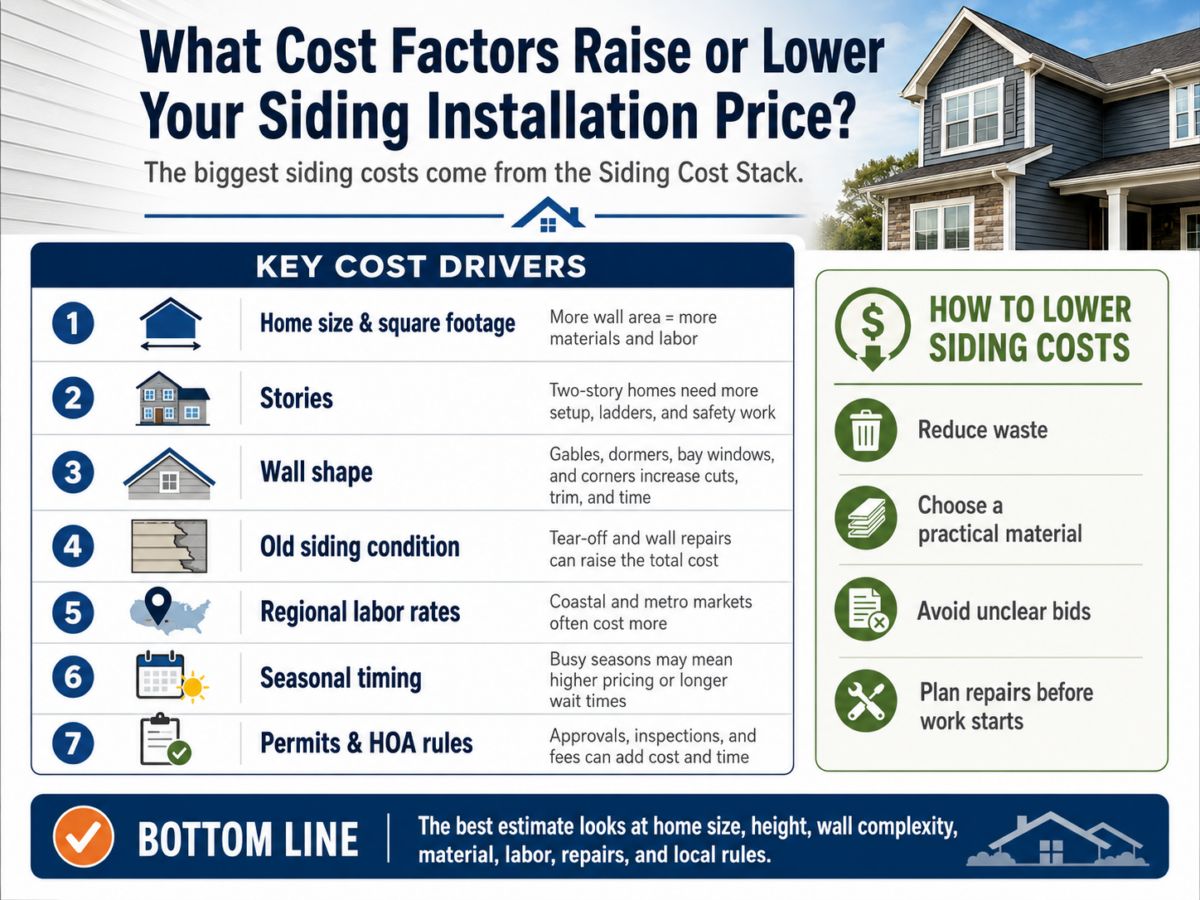
What Cost Factors Raise or Lower Your Siding Installation Price?
The main siding cost factors are home size, stories, wall shape, siding material, labor, old siding removal, repairs, permits, and regional pricing. Each factor changes a different part of the Siding Cost Stack.
Watch these cost drivers closely:
- Home size and square footage: More wall area means more siding panels, trim, fasteners, and labor.
- One-story vs two-story home: Tall homes need more setup, ladders, staging, and safety care.
- Gables, dormers, bay windows, and corners: These features increase cuts, waste, trim work, and install time.
- Old siding condition: Damaged siding may need full tear off and wall repairs before new siding can go on.
- Regional labor rates: High-cost coastal markets and busy metros often cost more than lower-cost regions.
- Seasonal timing: Spring and summer can be busier. Some contractors may have better openings in slower seasons.
- Permits and HOA rules: Local permits, inspections, and HOA approvals can add time and fees.
The best way to lower siding costs is to reduce waste, choose a practical material, avoid unclear bids, and plan repairs before work starts.
What Hidden Costs Should Homeowners Plan for Before Replacing Siding?
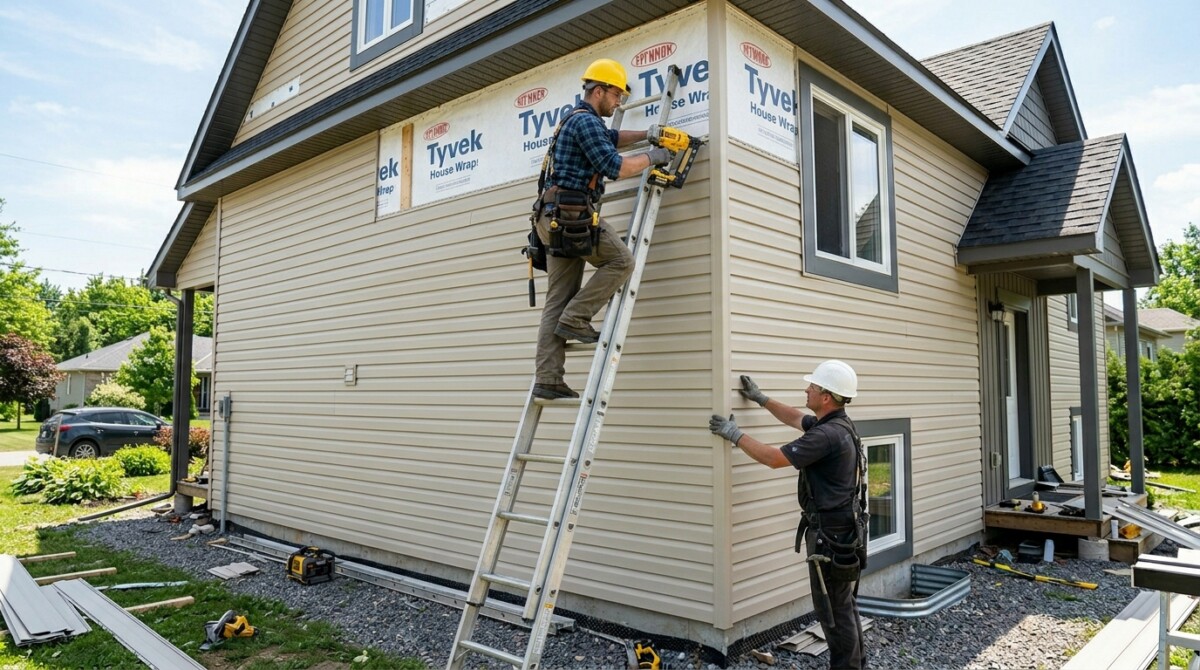
Hidden siding costs usually appear after old siding is removed. Common issues include rotten sheathing, insect damage, failed flashing, wet insulation, damaged trim, permit fees, and hazardous materials like asbestos or lead paint. These problems may not show during the first walkaround because they sit behind the existing siding.
A good quote should explain how surprise repairs will be handled before work starts. For example, the contractor may list a per-sheet price for sheathing replacement or use a written change order process for extra repairs. This helps you understand the cost before approving work if the crew finds dry rot, water damage, or damaged framing.
Housewrap, flashing, air sealing, and moisture barriers also matter. These parts sit behind the visible siding, but they help protect the wall system from water and air leaks. Skipping them may lower the upfront price, but it can create bigger repair costs later. That is why the cheapest siding replacement cost is not always the safest project cost.
How to Read a Siding Contractor Quote Without Getting Trapped by a Low Bid
A siding contractor quote should show the full scope of work. It should explain materials, labor, old siding removal, wall prep, housewrap, flashing, trim, cleanup, payment terms, warranty, and exclusions. A vague quote makes it hard to compare real value.
Use this Quote DNA checklist before you sign:
| Quote Item | Should Be Clear | Red Flag |
| Siding material | Brand, profile, color, thickness | “Standard siding” only |
| Labor | What the crew will remove, prep, and install | No labor detail |
| Old siding removal | Tear off and disposal included or excluded | Removal unclear |
| Wall prep | Sheathing check and repair process | No repair plan |
| Housewrap and flashing | Product or method named | No moisture barrier listed |
| Trim and accessories | Corners, soffit, fascia, openings | Trim missing |
| Warranty | Product and workmanship terms | Verbal promise only |
| Change orders | Written approval process | Open-ended fees |
Ask these questions before you choose a bid:
- What happens if you find rot?
- Is old siding removal included?
- What housewrap and flashing will you use?
- Are permits included?
- What is excluded from this price?
- Who handles cleanup and final walkthrough?
The right comparison is not “Which quote is cheapest?” The better question is, “Which quote explains the work clearly and protects me from surprise costs?”
Is Replacing Siding Worth It for Home Value, Comfort, and Curb Appeal?
Replacing siding can be worth it when old siding is cracked, warped, faded, leaking, or hiding moisture damage. New siding can improve curb appeal, reduce upkeep, help weather protection, and support resale value. The return depends on material, installation quality, local market, and the home’s current condition.
If you plan to sell in two or three years, focus on clean curb appeal, buyer trust, and a material that fits the neighborhood. Vinyl siding or fiber cement siding may make more sense than a premium mixed-material exterior if the local market will not reward the extra cost.
If you plan to stay 15 years or more, think beyond listing photos. Better housewrap, flashing, insulation, and siding installation can improve comfort and reduce moisture risk. Some of that value may not show in photos, but it can matter during inspections, appraisals, and daily living.
Conclusion
The cost to replace siding on a house in 2026 is easier to understand when you break it into the Siding Cost Stack. Material matters, but labor, design, old siding removal, hidden repairs, permits, warranty, and quote clarity can change the final number.
Use online averages to set a starting budget. Then use the Quote DNA checklist to compare real estimates. A good proposal should show what you are paying for, what is excluded, and how the contractor handles surprises behind the old siding.
You May Also Want to Read
You may also want to read:
- How the Right Gutter System Can Prevent Roof Damage and Leaks
https://relentlessroofingco.com/how-the-right-gutter-system-can-prevent-roof-damage-and-leaks/ - How Quality Roofing Impacts Property Management
https://relentlessroofingco.com/how-quality-roofing-impacts-property-management/
FAQs
How much does it cost to put siding on a 2,000 sq ft house?
A 2,000-square-foot house may cost about $8,000 to $30,000 or more, depending on siding material, labor, design, removal, and repairs. Vinyl siding usually costs less than fiber cement, brick, or stone. Check if the quote includes housewrap, flashing, trim, and disposal.
How much siding do I need for a 1,500 sq ft house?
A 1,500-square-foot house may need about 1,400 to 2,400 square feet of siding, depending on wall height, shape, windows, doors, gables, and waste. A simple ranch needs less. A two-story home with many corners often needs more.
Can you install new siding over old siding?
You can install new siding over old siding in limited cases, but the old surface must be flat, dry, solid, and free from rot. Removing old siding is often better because it lets the contractor inspect sheathing, flashing, insulation, and hidden water damage.
Is it cheaper to paint or replace siding?
Painting is usually cheaper upfront if the siding is still sound. Replacement costs more, but it may be the better choice when siding is cracked, warped, rotting, leaking, or near the end of its life. Paint changes the finish. Replacement can fix deeper wall issues.
How long does a siding replacement project usually take?
Many siding replacement projects take one to two weeks. The timeline depends on home size, crew size, weather, material, old siding removal, permits, and repairs. A simple vinyl siding installation may move faster. Fiber cement, trim repairs, or sheathing fixes can add time.