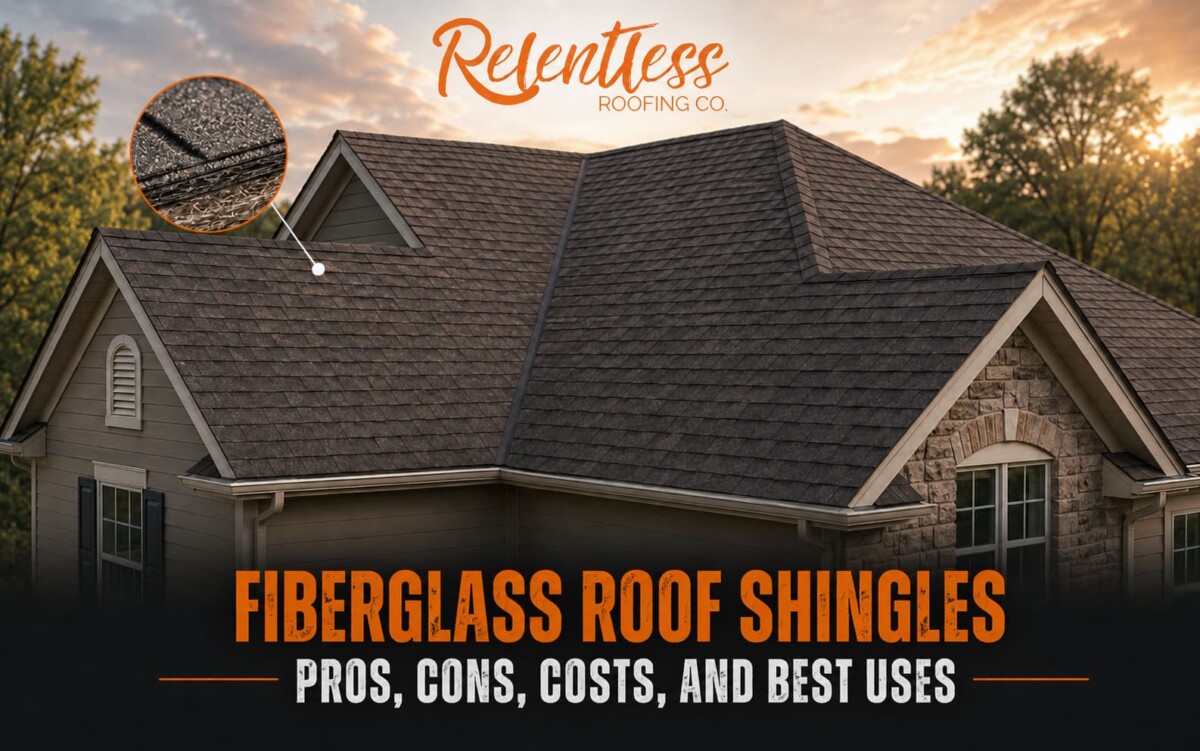
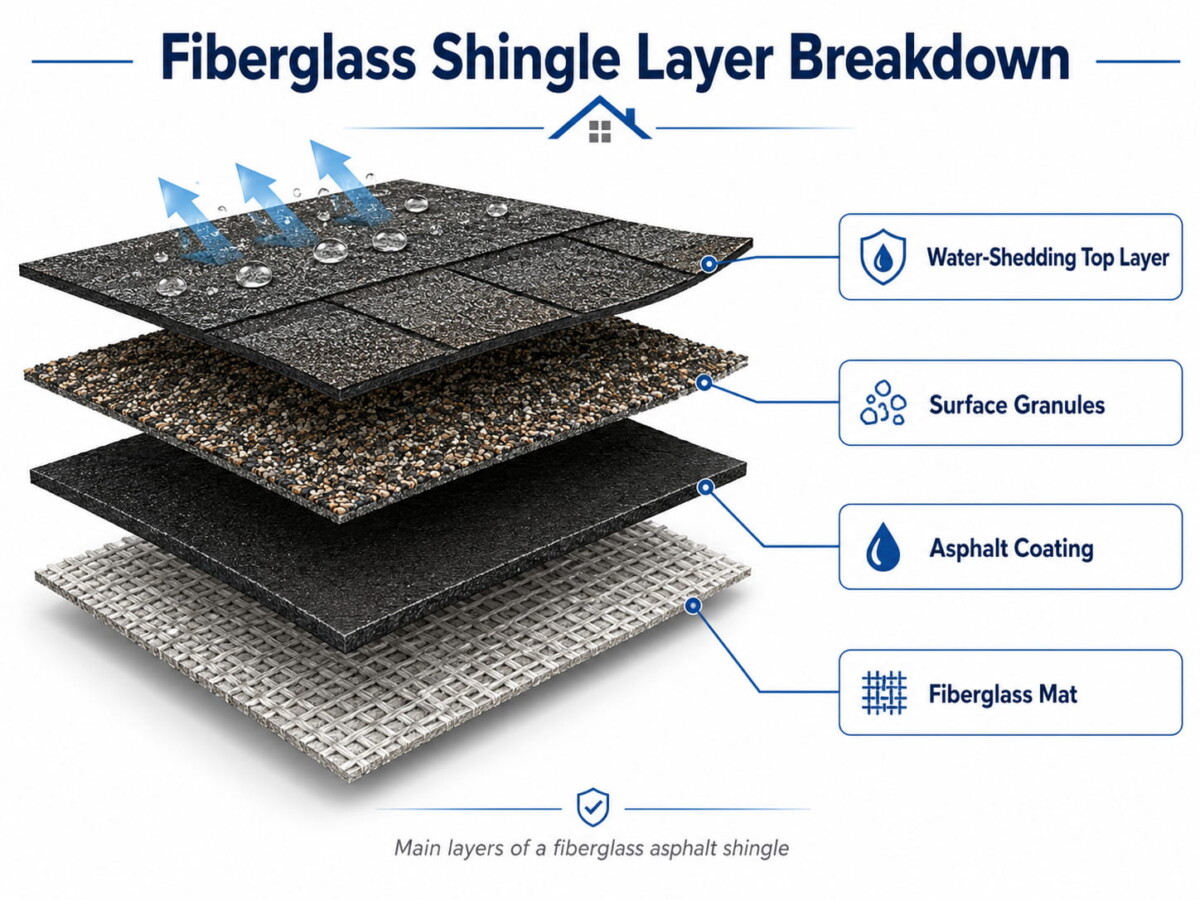
Fiberglass roof shingles are asphalt shingles made with a fiberglass mat, asphalt coating, and surface granules. They are popular because they cost less than many roofing materials, resist fire well, and come in many styles. Their value depends on your climate, roof design, shingle grade, and how long you plan to keep the home.
Introduction
Fiberglass roof shingles can be a smart choice for many homeowners, but they are not the right answer for every roof. A home in a mild or warm climate may get strong value from them. A home in a cold, windy, or hail-prone area may need a stronger shingle or another roofing material.
Use a simple CLAR check before deciding: climate, lifespan, annual cost, and risk. Climate tells you how heat, cold, wind, hail, and moisture may affect the roof. Lifespan tells you how long the roof may last in real use. Annual cost spreads the roof price over its service life. Risk covers leaks, storm damage, repairs, and early replacement.
Key Takeaway
- Fiberglass roof shingles are a type of asphalt shingle.
- They use a fiberglass mat instead of an older organic mat.
- They are usually lighter than organic asphalt shingles.
- They often have strong fire resistance in a rated roof system.
- Many standard projects cost about $3 to $5 per square foot installed.
- They often last about 20 to 30 years, based on climate, installation, and care.
- They work best in mild, warm, or moderate climates.
- They need more caution in cold, hail-prone, and high-wind areas.
What Are Fiberglass Roof Shingles and Why Do They Matter?
Fiberglass roof shingles are asphalt roof shingles with a woven fiberglass mat at the center. The mat gives the shingle its base. Asphalt helps block water. Granules protect the surface from sun, wear, and small impact.
This matters because the base material changes how the roof performs. Older organic asphalt shingles used a paper, wood fiber, or recycled paper base. Fiberglass shingles use a glass-fiber base, so they are lighter and less likely to absorb moisture through the mat.
A fiberglass shingle is only one part of the full roof system. The roof deck, underlayment, flashing, nail pattern, attic ventilation, and gutters all affect performance. A good shingle can still fail early if the roof deck is weak or the attic traps heat and moisture.
Asphalt vs Fiberglass Shingles: What Is the Real Difference?
The real difference is the mat inside the shingle. Organic asphalt shingles use an organic mat. Fiberglass shingles use a fiberglass mat. Both have asphalt and granules, but they do not act the same on a roof.
| Feature | Fiberglass Shingle | Organic Asphalt Shingle |
| Base material | Fiberglass mat | Paper or organic mat |
| Weight | Lighter | Heavier |
| Asphalt content | Usually less asphalt | Usually more asphalt |
| Moisture risk | Lower mat-rot risk | Higher water absorption risk |
| Fire resistance | Often stronger in rated systems | Often weaker due to organic base |
| Cold performance | Can become brittle | May handle cold better in some dry regions |
For most homeowners, the better choice is not just “asphalt vs fiberglass.” The real choice is basic 3-tab fiberglass, architectural fiberglass, designer fiberglass, or another material like metal, tile, or composite.
Fiberglass Roof Shingles Pros and Cons Homeowners Should Know
Fiberglass shingles have clear benefits, but they also have limits. The value depends on the roof’s climate, hazard exposure, and expected lifespan.
Main benefits:
- Lower starting cost than metal, tile, slate, and many composite roofs.
- Lighter weight, which can make installation easier.
- Strong fire resistance when used in a proper rated roof system.
- Good moisture resistance compared with older organic shingles.
- Many style choices, including 3-tab, architectural, designer, shake-style, and tile-style looks.
- Easier repair because single damaged shingles can often be replaced.
Main downsides:
- Shorter lifespan than many premium roofing materials.
- More brittle behavior in harsh cold or freeze-thaw climates.
- Higher hail and wind risk with thin or low-grade shingles.
- Algae, moss, or fungus issues in humid and shaded areas.
- Greater dependence on correct nailing, flashing, underlayment, and ventilation.
The key is fit. Fiberglass shingles make more sense in mild and moderate climates. They need more care in areas with heavy snow, hail, coastal winds, or long summer heat.
How Much Do Fiberglass Shingles Cost in 2026?
Fiberglass shingles cost about $3 to $5 per square foot installed on many standard roofs. Higher-end products or complex roofs can cost more. Your final price depends on roof size, slope, roof shape, shingle grade, labor rates, tear-off, disposal, flashing, and deck repairs.
| Roof Size | Rough Cost at $3–$5/sq. ft. | Higher Range at $6–$9/sq. ft. |
| 1,200 sq. ft. | $3,600–$6,000 | $7,200–$10,800 |
| 1,700 sq. ft. | $5,100–$8,500 | $10,200–$15,300 |
| 2,000 sq. ft. | $6,000–$10,000 | $12,000–$18,000 |
A simple roof with easy access costs less. A steep roof with valleys, dormers, chimneys, skylights, old shingle removal, damaged decking, or poor ventilation costs more. This is why two homes with the same square footage can get very different quotes.
Fiberglass may save money if the roof fits your climate and time plan. If you plan to sell in 10 to 15 years, the lower starting cost may make sense. If you plan to stay for decades in a harsh climate, metal or composite may give better long-term value.
How Climate Affects Fiberglass Shingle Performance
Climate can decide whether fiberglass shingles are a good roof choice or a risky one. The same shingle may work well in one area and wear faster in another.
Hot and Sunny Climates
Fiberglass shingles can work well in hot areas if the attic has good ventilation. Light colors, cool roof options, and proper airflow can help reduce heat stress. Strong sun can still dry the surface over time, so shingle quality matters.
Cold and Snowy Climates
Cold weather is the main concern. Some fiberglass shingles can become brittle in freeze-thaw cycles. Ice dams, trapped attic heat, and poor ventilation can raise leak risk. In these areas, ask about architectural shingles and ice-and-water shield.
Hail, Wind, and Storm-Prone Areas
Basic 3-tab shingles may struggle in high-wind or hail-prone areas. Impact-rated architectural shingles are a safer option. The nail pattern, starter strip, sealed edges, and wind rating matter as much as the shingle brand.
Humid Areas with Algae Growth
Humid areas can lead to algae growth, moss, and staining. Algae-resistant shingles can help. Homeowners should also trim branches, clear gutters, and avoid pressure washing because it can strip granules from the shingle surface.
Shake, Tile, Metal, or Shingle: Which Roofing Material Makes More Sense?
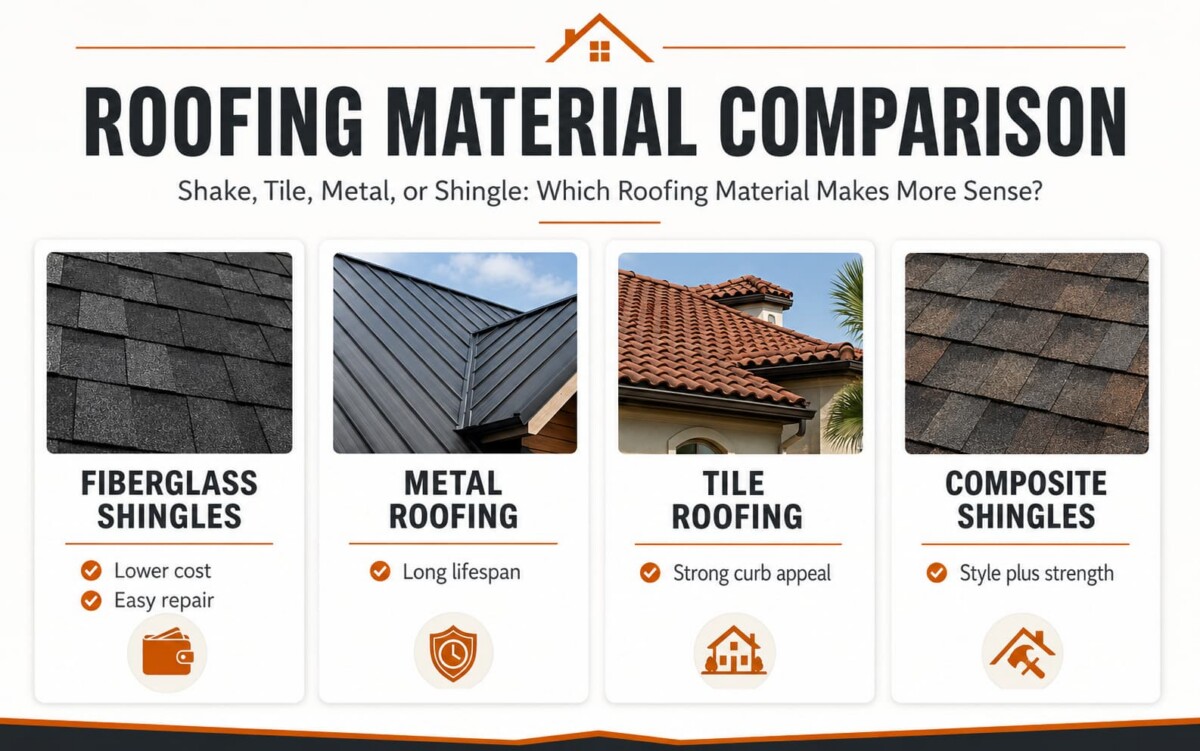
Fiberglass shingles make sense when upfront cost, easy repair, and common installation matter most. Other roofing materials may make more sense when the home faces harsh weather or the owner wants a longer roof life.
| Material | Best For | Main Advantage | Main Trade-Off |
| Fiberglass shingles | Budget-focused homes | Lower cost, easy repair | Shorter life than premium roofs |
| Metal roofing | Long-term homes | Long lifespan, strong weather performance | Higher starting cost |
| Tile roofing | Hot, dry climates | Long life and strong curb appeal | Heavy and costly |
| Wood shake | Natural style | Warm cedar look | Fire and maintenance concerns |
| Composite shingles | Style plus strength | Stronger ratings in some products | Higher product cost |
The right material depends on your home, not just the price tag. Fiberglass often wins on upfront cost. Metal or composite may win on annual cost if they last much longer in your climate. Tile may be a good fit if the roof frame can carry the weight.
Are Fiberglass Roof Shingles Easy to Install, Repair, and Maintain?
Fiberglass roof shingles are usually easier to install and repair than heavier roofing materials. Most roofers understand them, and damaged shingles can often be replaced in small sections. Still, easy installation does not mean low-risk installation.
Poor nail placement can cause wind uplift. Weak flashing can cause leaks near chimneys, vents, and skylights. Poor attic ventilation can trap heat and moisture, which may lead to curling, granule loss, and shorter roof life.
Use this maintenance checklist:
- Inspect the roof after strong wind, hail, or heavy snow.
- Keep gutters and downspouts clear.
- Trim branches that scrape the roof.
- Check the attic for moisture, stains, or poor airflow.
- Watch for cracked, curled, loose, or missing shingles.
- Clean algae or moss with safe roof-cleaning methods.
- Avoid high-pressure washing.
- Ask a roofer to check flashing and underlayment if leaks appear.
A fiberglass shingle roof is easier to manage when small issues are caught early. Regular checks, clean gutters, and proper repairs can help protect the roof’s lifespan and reduce costly damage.
Is a Fiberglass Shingle Roof the Right Choice for Your Home?
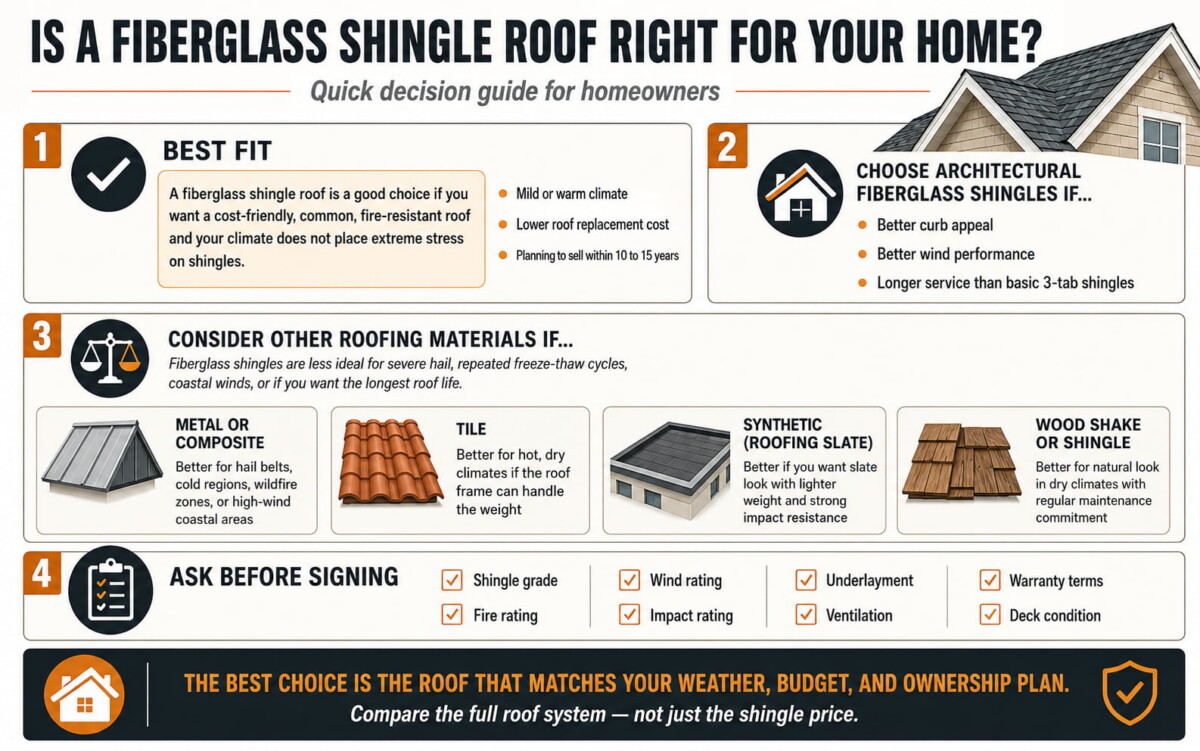
A fiberglass shingle roof is a good choice if you want a cost-friendly, common, fire-resistant roof and your climate does not place extreme stress on shingles. It is less ideal if you face severe hail, repeated freeze-thaw cycles, coastal winds, or want the longest roof life.
Use this quick decision guide:
- Choose fiberglass shingles if you live in a mild or warm climate, want a lower roof replacement cost, and plan to sell within 10 to 15 years.
- Choose architectural fiberglass shingles if you want better curb appeal, better wind performance, and longer service than basic 3-tab shingles.
- Compare metal or composite if you live in a hail belt, cold region, wildfire zone, or high-wind coastal area.
- Compare tile if you live in a hot, dry climate and your roof frame can handle the weight.
- Ask about shingle grade, fire rating, wind rating, impact rating, underlayment, ventilation, warranty terms, and deck condition before signing.
The best choice is the roof that matches your weather, budget, and ownership plan. Before choosing fiberglass shingles, compare the full roof system, not just the shingle price.
Conclusion
Fiberglass roof shingles are a practical choice for many homes. They can lower roof replacement cost, offer many styles, and provide strong fire resistance in the right roof system. Their value is highest when the climate, shingle grade, and installation quality all match the home’s risk.
Use CLAR before choosing: climate, lifespan, annual cost, and risk. Fiberglass may be a smart budget choice for a mild-climate home. Metal, tile, or composite may make more sense for harsh weather, long-term ownership, or higher protection needs.
You May Also Want to Read
You may also want to read:
- Cost to Replace Roof Shingles: 2026 Pricing
https://relentlessroofingco.com/cost-to-replace-roof-shingles-2026-pricing/ - Understanding the Different Types of Roofing Materials
https://relentlessroofingco.com/understanding-the-different-types-of-roofing-materials/
FAQs
Are fiberglass roof shingles any good?
Yes, fiberglass roof shingles are good for many homes because they are affordable, light, fire-resistant, and widely available. They are strongest in mild, warm, or moderate climates. In harsh cold, hail, or high wind, choose a stronger architectural product or compare other materials.
How long do fiberglass roof shingles last?
Fiberglass roof shingles often last about 20 to 30 years. Shingle grade, climate, attic ventilation, installation, and maintenance affect the real lifespan. Harsh UV, freeze-thaw cycles, moss growth, poor nailing, and weak underlayment can shorten roof life.
What are the disadvantages of fiberglass roofing?
The main disadvantages are shorter lifespan than metal or tile, brittleness in cold weather, storm damage risk in thin shingles, algae growth in humid areas, and repair needs as the roof ages. Better shingles and correct installation reduce many of these risks.
Are fiberglass shingles better than asphalt shingles?
Fiberglass shingles are a type of asphalt shingle. The better comparison is fiberglass mat versus organic mat. Fiberglass is lighter, more moisture-resistant, and often more fire-resistant. Organic asphalt shingles are heavier and may handle some cold, dry regions better.
Are fiberglass shingles suitable for all climates?
No, fiberglass shingles are not equally suitable for all climates. They can work well in mild, warm, humid, or wildfire-prone areas with the right product. Cold, hail-prone, and high-wind regions need stronger shingles, better installation details, or another roofing material.