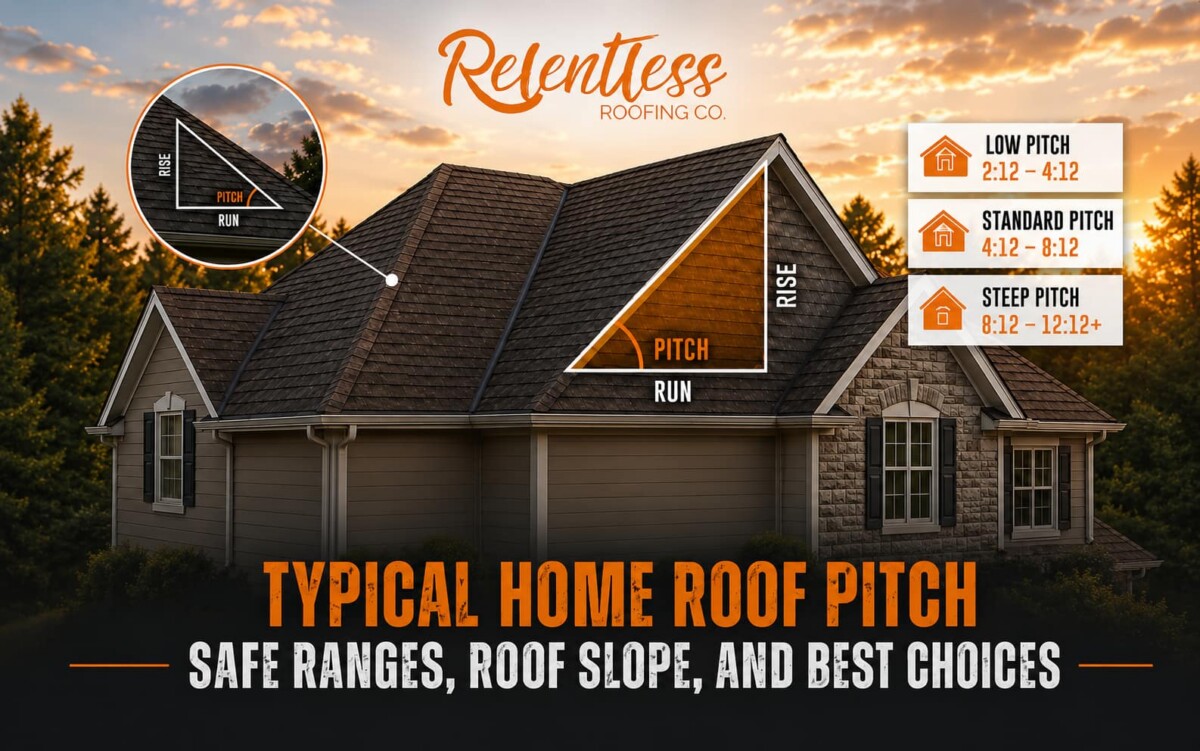
A typical home roof pitch often falls between 4/12 and 9/12, but the safest choice depends on climate, roofing material, drainage, and attic or ceiling design. The pitch of a roof is best viewed as a safe range, not one fixed number, because low-slope, standard, and steep roofs carry different risks.
Introduction
A typical home roof pitch shows how steep the roof is and how well it can shed water, snow, and debris. Most residential homes use a standard roof slope because it works with many roofing materials and keeps costs practical.
Roof pitch affects more than curb appeal. It can change shingle performance, roof replacement cost, attic space, solar panel layout, and long-term leak risk. A low-slope roof may look clean and modern, but it needs stronger drainage details. A steep roof may shed water and snow better, but it can cost more to install and repair.
Think of roof pitch as a risk band. The right band should match three things: local weather, roofing material, and the space or style you want under the roof.
Key Takeaway
A typical home roof pitch is usually around 4/12 to 9/12, but that range is not safe for every house. The best roof pitch must match the roofing material, local climate, and drainage needs.
Use these quick rules:
- Under 2/12: usually needs a membrane roofing system.
- 2/12 to 4/12: low-slope risk band; shingles need special installation details.
- 4/12 to 9/12: common residential roof pitch range.
- Above 9/12: steep roof range; better water shedding but higher labor difficulty.
- Always check: local code, manufacturer instructions, climate, and drainage path.
What Is a Typical Home Roof Pitch?
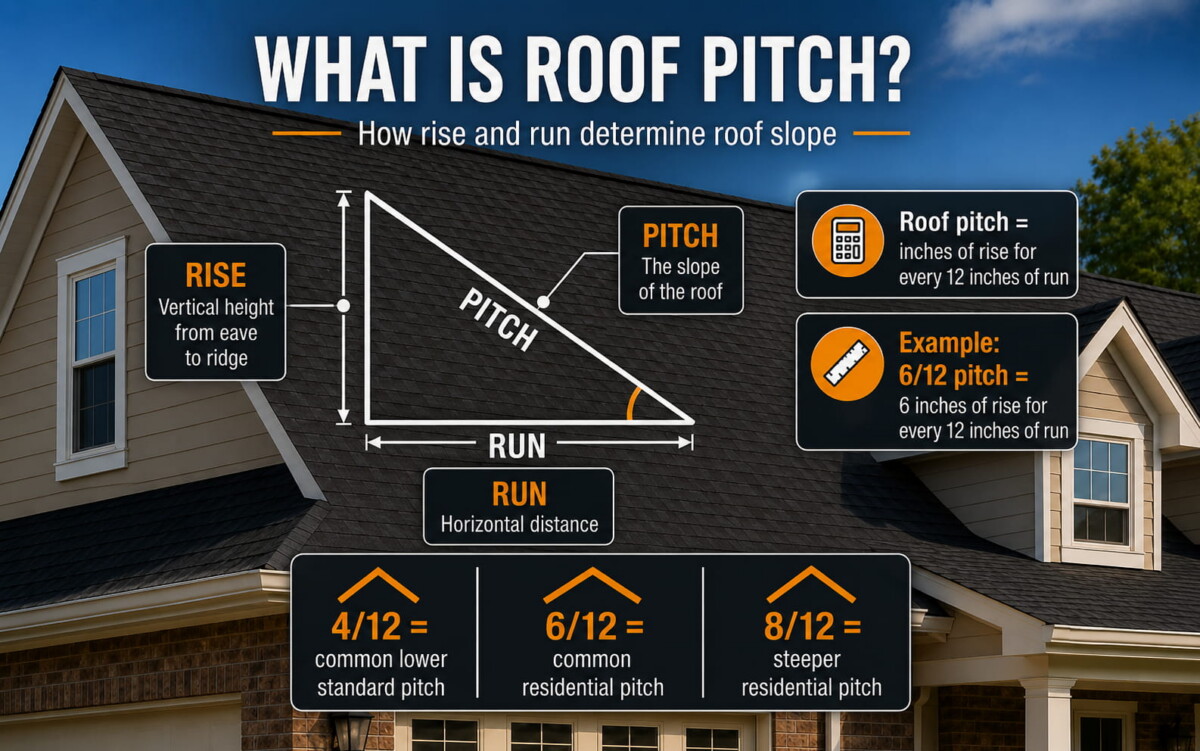
A typical home roof pitch is the roof’s rise compared with 12 inches of horizontal run. For example, a roof that rises 4 inches for every 12 inches of run has a 4/12 pitch. Many residential homes fall in the 4/12 to 9/12 range, but that range should still be checked against climate and material limits.
Roof pitch is expressed as a ratio because it shows how fast the roof climbs. A 6/12 roof rises 6 inches for every 12 inches of horizontal run. This number helps roofers, inspectors, designers, and material makers understand how the roof should perform.
A 4/12 roof is often the lower edge of the standard band for many shingle roofs. A 6/12 roof gives stronger drainage and still stays practical for many roofing contractors. An 8/12 or 9/12 pitch is steeper, which can help with water and snow, but may raise labor cost.
Typical does not always mean best. A normal roof pitch in a dry area may be risky in a place with heavy snow, ice dams, or wind-driven rain.
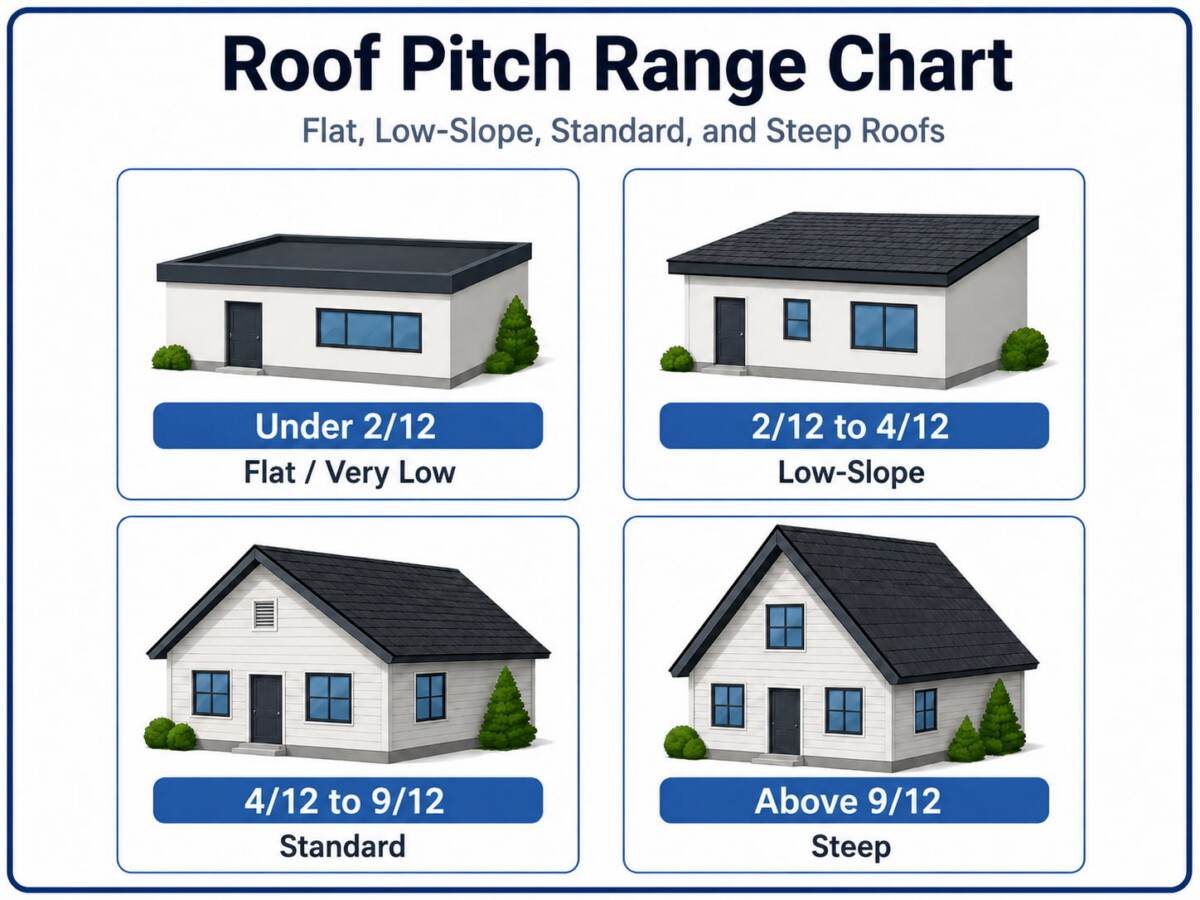
Roof Pitch Chart: Flat, Low-Slope, Standard, and Steep Roofs
A roof pitch chart helps homeowners see the risk level of each slope. Flat, low-slope, standard, and steep roofs behave differently under water, snow, wind, and foot traffic.
| Roof Pitch Band | Common Pitch Range | Approx. Degrees | Best Fit | Main Risk |
| Flat or very low | Under 2/12 | Under 10° | Membrane roofing | Ponding water |
| Low-slope | 2/12 to under 4/12 | About 10° to 18° | Special shingle details or low-slope products | Slow drainage |
| Standard | 4/12 to 9/12 | About 18° to 37° | Asphalt shingles, metal roofing, many homes | Must match climate |
| Steep | Over 9/12 | Over 37° | Visible roofs, snow-shedding designs | Higher labor cost |
A flat roof is not truly flat. It still needs a slight slope so water can move to drains, scuppers, or gutters. If water sits on the roof surface, the roofing system ages faster and leaks become harder to trace.
How Do You Measure Roof Pitch Safely?
You can measure roof pitch by checking how many inches the roof rises over 12 inches of horizontal run. The safest homeowner method is usually from the attic, using a 12-inch level and tape measure against a rafter. Avoid walking on steep, wet, icy, or damaged roofs.
Follow these steps:
- Go into the attic if it is safe.
- Place a level against the underside of a rafter.
- Mark 12 inches on the level.
- Measure straight up from the 12-inch mark to the rafter.
- The number you get is the rise.
- If the rise is 6 inches, your roof pitch is 6/12.
Roof pitch apps and calculators can help convert ratio to degrees. For example, 4/12 is about 18.5 degrees, 6/12 is about 26.5 degrees, and 9/12 is about 36.9 degrees. Use apps as a guide, not as final proof for code, warranty, or insurance work.
How Do Climate, Drainage, and Roof Slope Affect Your Home?
Climate changes the safe roof pitch band because rain, snow, heat, wind, and ice do not stress every roof in the same way. A low-slope roof in a dry area may work with the right membrane. The same roof with shingles in a snowy area can trap water and leak.
Cold regions need extra care. Heavy snow can sit longer on low-slope roofs. As snow melts and refreezes, water can back up near eaves and form ice dams. If the roof slope is too shallow for the material, water may move under shingle edges.
Rainy areas need clear drainage. A standard pitch helps shed water, but valleys, gutters, flashing, and roof penetrations still matter. A steep roof with poor flashing can leak. A low-slope roof with the right membrane and drainage can perform well.
High-wind areas need a balanced design. Very steep gable roofs can catch more wind if the roof is not braced and fastened well. Hip roofs often perform better in wind because their slopes run on all sides.
Which Roofing Materials Work Best for Each Roof Pitch?
Roofing material must match roof pitch because each product sheds water in a different way. Asphalt shingles rely on slope and gravity. Membranes are built for low-slope roof surfaces. Metal roofing, tile, slate, and wood products each have limits.
| Roofing Material | Better Pitch Range | Watch This Before Installing |
| Asphalt shingles | Usually 4/12 and above | 2/12 is a common lower limit, but 2/12 to 4/12 needs extra underlayment |
| Metal roofing | Varies by panel type | Standing seam may fit lower slopes better than some lapped panels |
| EPDM, TPO, modified bitumen | Low-slope and flat roof designs | Needs correct drainage and edge details |
| Tile or slate | Often standard to steep slopes | Weight, slope, underlayment, and code matter |
A common failure happens on low-slope additions. A homeowner adds a shallow porch roof and uses the same shingles as the main roof. The roof looks matched, but water drains slowly. If the pitch is below the shingle limit, leaks can start even when the shingles are new.
How Does Roof Pitch Affect Cost, Space, and Style?
Roof pitch affects cost because it changes roof surface area, labor difficulty, safety setup, and material choices. A steeper pitch can add more roof area and make work slower. A lower pitch may be easier to access, but it can require better waterproofing, drainage, or a membrane roofing system.
A standard roof slope often gives the best balance for many homes. It sheds water well, accepts common roofing materials, and keeps roof repair access more practical. It can also create enough attic space for insulation, ventilation, storage, or mechanical runs.
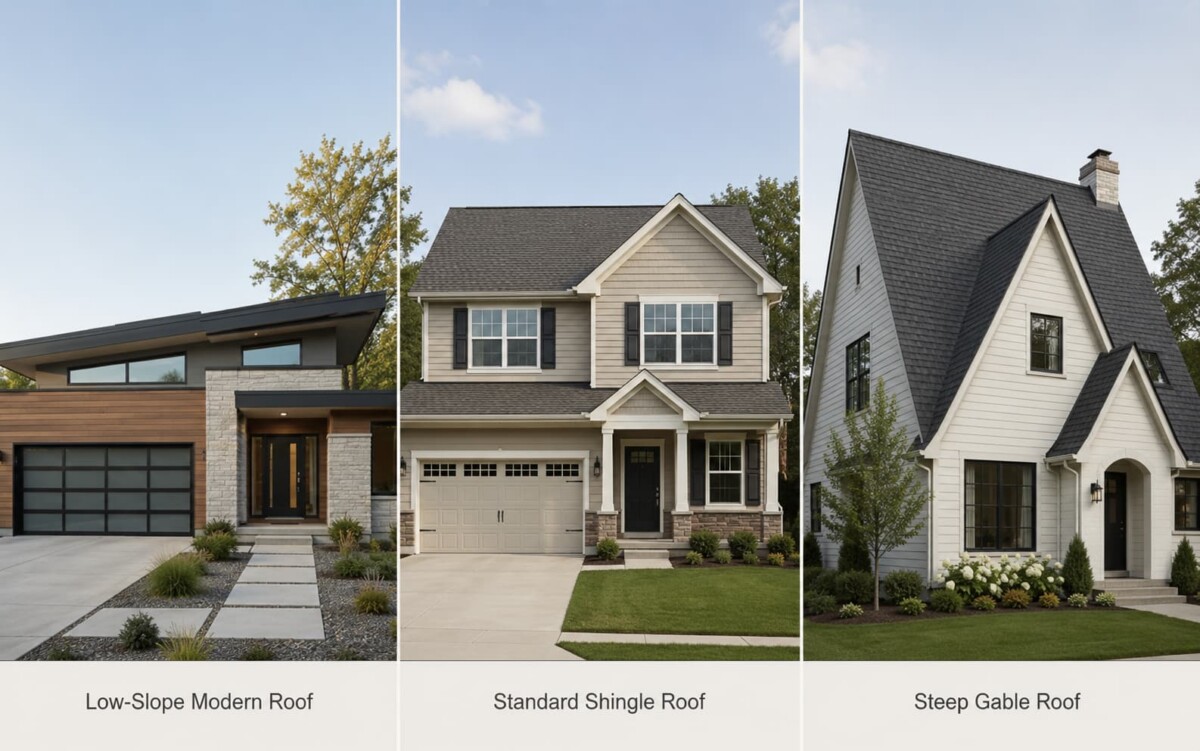
Steep roofs change the look of a home. They make shingles, metal roofing, tile, or slate more visible from the ground. They can also create vaulted ceilings or larger attic volume. That added space is useful, but flashing around dormers, chimneys, valleys, and walls becomes more important.
Low-slope roofs can support a modern design. They may also work well for solar panels when the panel racking gives the right tilt and direction. The roof still needs safe drainage. A low-slope roof should not be chosen only because it costs less to frame.
What Roof Pitch Is Best for New Builds, Additions, or Roof Replacement?
The best roof pitch is the one that fits your climate, roofing material, code rules, drainage plan, and design goals. For many homes, 4/12 to 9/12 is a practical starting range. For low-slope additions, flat roof styles, snow areas, or solar plans, the safest pitch may change.
Use this checklist before approving a roof pitch:
- Check the local climate: snow, rain, wind, or heat.
- Check the roofing material: asphalt shingles, metal, tile, slate, or membrane.
- Check the minimum slope in the manufacturer’s installation instructions.
- Check the roof shape: gable, hip, mansard, shed, or flat roof design.
- Check the drainage path: gutters, valleys, drains, and downspouts.
- Check the space goal: attic storage, vaulted ceiling, solar panels, or simple roofline.
- Check the existing roof on additions, because mismatched slopes can create weak leak points.
For a snowy home with asphalt shingles, an upper-standard pitch like 6/12 to 8/12 may make more sense than a 3/12 low-slope roof. For a modern flat look, a membrane system may be smarter than forcing shingles onto a shallow roof.
Conclusion
A typical home roof pitch is best understood as a safe range, not one magic number. Many residential homes sit between 4/12 and 9/12, but the right roof slope depends on material, climate, drainage, and the space under the roof.
Use the risk-band method before making a decision. First, find your pitch. Then check whether it is flat, low-slope, standard, or steep. After that, compare it with your roofing material and local weather.
A good roof pitch should protect the home first. Style, attic space, and curb appeal matter, but they should not override drainage, installation rules, or climate needs.
You May Also Want to Read
You may also want to read:
- How to Find a Leak in a Flat Roof
https://relentlessroofingco.com/how-to-find-a-leak-in-a-flat-roof/ - Flat Roof Pooling Repair vs Replacement
https://relentlessroofingco.com/flat-roof-pooling-repair-vs-replacement/
FAQs
What is a common roof pitch for a house?
A common roof pitch for a house is often between 4/12 and 9/12. This standard band gives many homes a good mix of drainage, material choice, cost control, and appearance. Still, the right pitch depends on climate, roofing material, and roof shape.
Is a 4/12 roof pitch good?
A 4/12 roof pitch can be good for many homes because it sits at the lower edge of the standard range. It often works with asphalt shingles under normal installation methods. In heavy snow or wind-driven rain areas, ask about underlayment, flashing, and local code.
Is an 8/12 or 9/12 roof pitch more typical?
An 8/12 or 9/12 roof pitch is common on steeper residential roofs, but it is not always more typical than 4/12 or 6/12. These pitches can shed water and snow well, yet they may cost more to install and repair.
What is the lowest pitch for asphalt shingles?
The lowest pitch for asphalt shingles is commonly cited as 2/12, but that is a low-slope edge case. Slopes from 2/12 to 4/12 need extra underlayment, and roofs below 2/12 usually need a membrane roofing system.
What is the most attractive roof pitch?
The most attractive roof pitch depends on the home style. Many homeowners like medium to steeper roofs because the roof is more visible and gives the home stronger shape. Do not choose by looks alone. The pitch should also fit climate, material, drainage, and budget.