Introduction
Cutting metal roofing looks simple at first. You measure, mark, and cut. But metal behaves very differently than wood or shingles. One wrong cut can damage the coating, create sharp edges, or lead to rust later.
Many homeowners try DIY to save money. That makes sense. Still, the risk is not just about tools. It is about safety, roof performance, and long-term cost.A clean cut keeps water out, especially when you are installing metal roofing over shingles where precision at every edge matters even more. A rough cut can cause leaks months later.
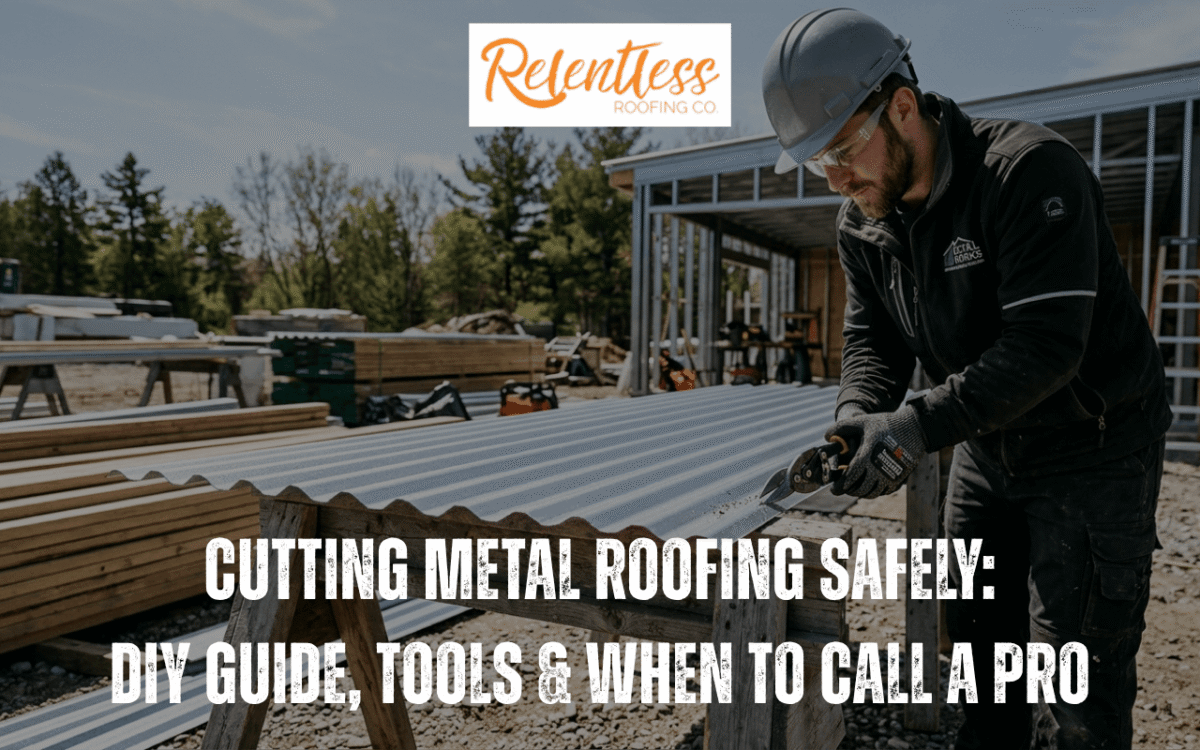
This guide shows what you can safely do yourself and where you should stop. You will learn how to cut metal roof panels on the ground, choose tools, and protect edges. You will also see clear signs when a job is better handled by a roofer.
Key Takeaway
- Cutting metal roofing affects safety, durability, and long-term roof performance—not just appearance
- The right tool, stable setup, and controlled cutting method are key to clean results
- Ground-level cuts are usually safe for homeowners and easier to control
- Roof-level or complex cuts (around vents, edges, or steep slopes) carry higher risk
- Knowing when to stop DIY and call a professional prevents costly errors
- A clean cut edge helps prevent rust and keeps the metal roof sealed
- A poor cut can lead to corrosion, leaks, and expensive repairs over time
Before You Cut: Should You DIY or Call a Pro?
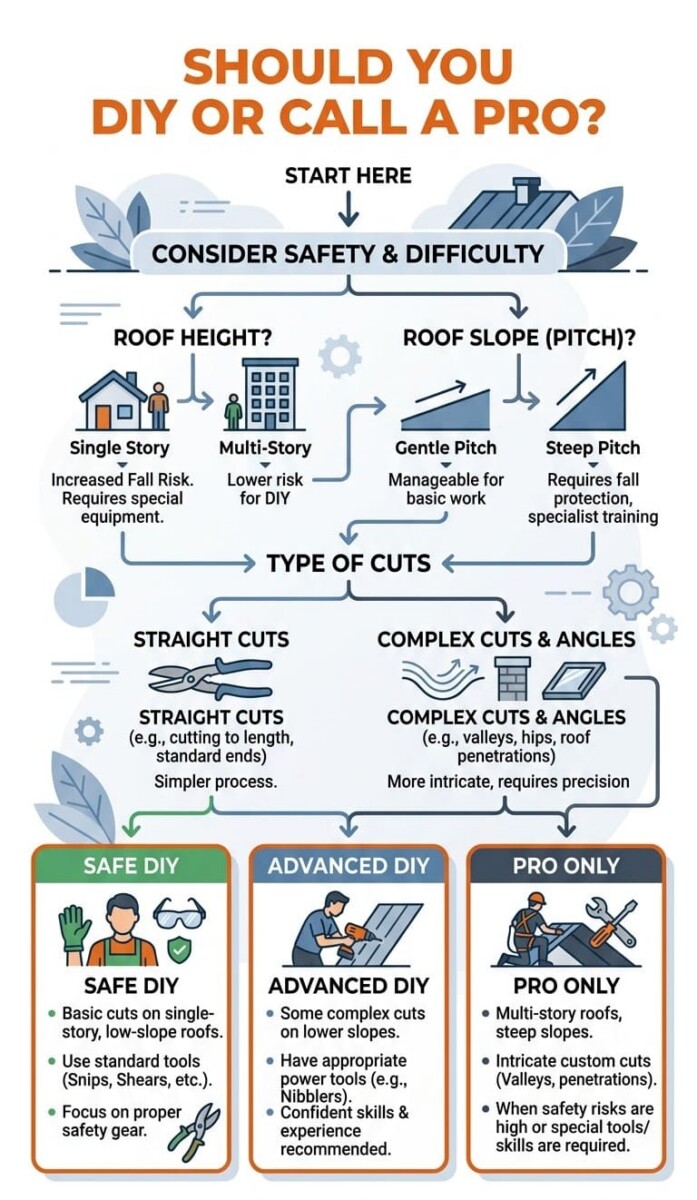
Cutting metal roofing is safe only in low-risk situations like ground-level trimming with simple tools. Once height, slope, or complex cuts are involved, the risk increases fast. The key is to decide early if your task is safe DIY, advanced DIY, or pro-only work.
Metal roofing is tough but unforgiving. A bad cut does not just look rough. It can expose the metal core and lead to rust. Heat from tools like a grinder can damage coatings. This is called cut-edge corrosion, and it spreads over time.
Start with a quick self-check:
- Is your roof more than one story high?
- Is the slope steep or slippery?
- Do you need curved or detailed cuts?
- Are you comfortable with power tools?
If you answer yes to most of these, move up the risk level.
Here is a simple way to think about it:
- Safe DIY: Straight cuts on the ground using tin snips or a shear
- Advanced DIY: Long cuts using a circular saw or nibbler
- Pro-Only: Cutting on the roof, steep slopes, or around vents
Many cuts are possible for DIY. That does not mean they are worth the risk. A mistake here can cost more than hiring a pro.
Quick Steps: How to Cut Metal Roofing Safely (Overview)
The safest way to cut metal roofing is to work on the ground, use the right tool for the material, and protect the cut edge. Each step matters because it affects safety, accuracy, and how long your metal roof lasts.
Here is a simple process you can follow:
1. Measure and mark clearly: Use a straight edge and mark your cut line precisely — measuring for metal roofing before cutting is the step most DIYers rush and regret. If your measurement is off, the panel may not fit.
2. Move work to the ground: If you planned to cut on the roof, stop. Cutting on a stable surface is safer and more accurate.
3. Secure the panel: Use clamps or sawhorses. Loose panels can shift and cause bad cuts.
4. Choose the right tool: Tin snips for small cuts, shears for straight lines, and a circular saw only if needed.
5. Make the cut slowly: Let the tool do the work. Pushing too fast creates rough edges and heat damage.
6. Deburr the edge: Smooth sharp edges with a file to prevent injury and rust.
7. Clean and protect: Remove metal shavings and apply touch-up paint if needed.
If your setup feels unsafe at any step, stop and reassess. That is often the smartest move.
Tools for Cutting Metal Roofing (What’s Safe vs Risky)
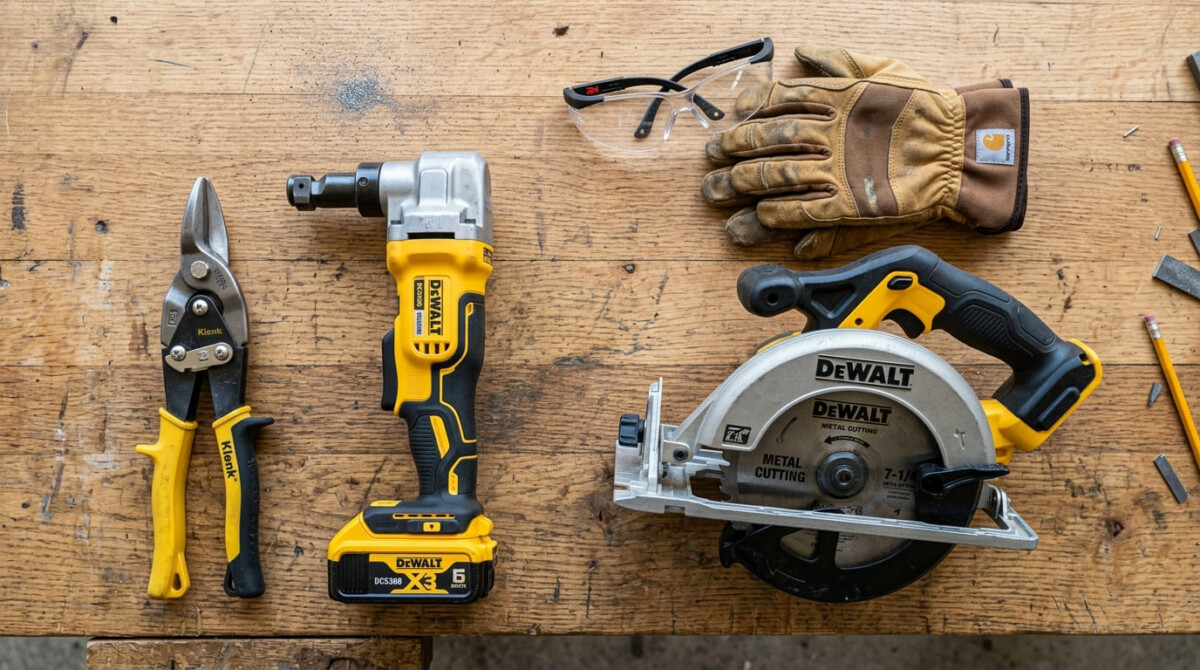
The best tool depends on the type of cut, panel thickness, and your skill level. Some tools are safe for homeowners. Others can damage your metal roof if used the wrong way.
| Tool | Best Use | Safety Level | Risk to Roof |
| Tin snips | Small, detailed cuts | Low | Low |
| Shears | Long straight cuts | Low | Low |
| Nibbler | Corrugated panels | Medium | Low |
| Circular saw | Large panels | Medium | Medium |
| Angle grinder | Heavy cuts | High | High |
Tin snips are simple and reliable. They work well for thin panels and short cuts. A shear is faster and easier for long straight lines.
A nibbler cuts without bending the metal. This makes it useful for corrugated metal roofing.
A circular saw can cut large metal roof panels quickly. But it creates heat and metal particles. These particles, called swarf, can stick to the surface and cause rust later.
An angle grinder is powerful but risky. It creates sparks and heat that can damage coatings. Many manufacturers do not recommend it for metal cutting.
A tool that cuts faster is not always better. The goal is a clean cut that protects the panel.
Step-by-Step: Cutting Metal Roofing Panels on the Ground
Cutting metal roofing on the ground gives you better control and reduces risk. A stable setup helps you make straight cuts and avoid damage to the panel.
1. Start with preparation. Measure the panel and mark your cut line clearly. Use a straight edge so the line stays true. Avoid cutting very thin strips because they are hard to secure and seal.
2. Next, support the panel. Place it on sawhorses or a flat surface. Clamp it so it does not move. Movement during cutting leads to jagged edges.
3. Now choose your method:
- Tin snips: Cut slowly along the line. Let the metal bend away as you move forward.
- Shears: Keep steady pressure and follow the line in one smooth motion.
- Circular saw: Use a metal blade and guide. Move at a steady speed to avoid overheating.
4. After cutting, smooth the edge. Use a file or deburring tool to remove sharp edges.
5. Finish by cleaning all metal particles. Small fragments left behind can rust and stain the surface. Good preparation often matters more than the tool itself. A well-supported panel gives better results every time.
Cutting Around Vents, Chimneys & Curves (High-Risk Zone)
Cutting metal roofing around vents or chimneys is one of the hardest tasks. These areas are also the most likely to leak if done wrong. Small mistakes here can cause long-term water damage. Curved cuts require a different approach. You usually start by drilling a hole inside the cut area. Then you use tin snips or a nibbler to follow the shape.
For corrugated panels, cut from the lower part of the wave. This helps you stay in control and avoid tool slips. Still, these cuts are risky. They affect how flashing fits around the opening. Flashing is the part that seals water out. If your cut is too large or uneven, sealing becomes difficult.
Use this quick guide:
DIY may be okay if:
- The roof is low and easy to access
- The cut is simple and visible
Call a pro if:
- The roof is steep or high
- The opening is complex
- You are unsure about sealing
Penetration cuts often fail because of small errors. That is why many roofers treat them as pro-level work.
Safety Essentials: PPE, Fall Risk & Work Setup
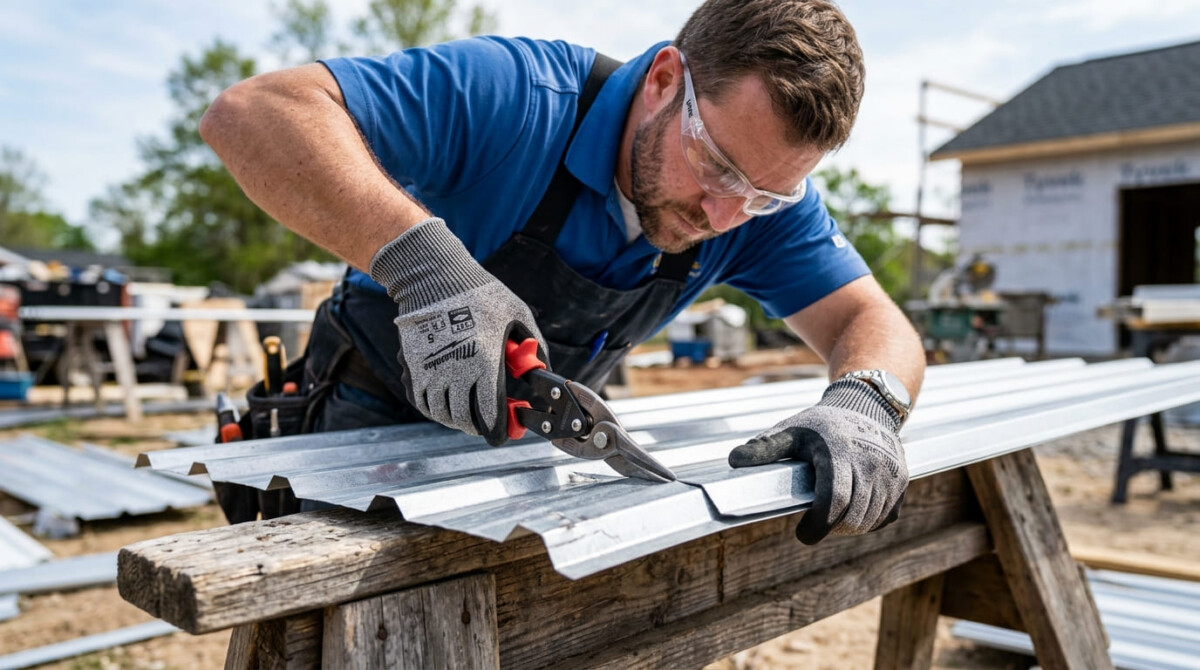
Cutting metal roofing can cause serious injuries if safety is ignored. Sharp edges, flying particles, and fall risks all come into play. Good safety habits reduce most of these dangers.
Start with basic protective gear:
- Cut-resistant gloves
- Safety glasses with side protection
- Hearing protection for power tools
- Dust mask when using a saw
Hand injuries and eye injuries are the most common problems during metal cutting. These usually happen when people rush or skip protection. Your workspace also matters. Keep the area clean and stable. Remove loose objects that can cause trips or slips. Avoid cutting on the roof whenever possible. A metal roof can be slippery, especially on a slope. Even small mistakes can lead to falls.
Never do the following:
- Cut panels near the roof edge
- Work without gloves or eye protection
- Use power tools on unstable surfaces
Safety is not just a step. It decides whether you should even do the job yourself.
Protecting Cut Edges: Prevent Rust, Leaks & Warranty Issues
Cut edges are the most vulnerable part of a metal roof. When you cut metal roofing, you expose the inner layer. If this area is not treated, it can start to rust over time.
Metal particles created during cutting are called swarf. These tiny pieces stick to the surface and rust quickly. If not cleaned, they leave stains and damage the coating.
After every cut, remove all debris. Use a brush or cloth. Do not leave particles behind. Next, smooth the edge. A rough edge holds moisture and increases corrosion risk. A clean edge helps water run off properly.
In some cases, you should apply touch-up paint or primer. This adds protection to the exposed area. Many metal roof panels come with coatings designed to last decades. Poor cuts can reduce that lifespan and create hidden vulnerabilities that make finding a leak in a metal roof much harder to trace later.
Some warranties also depend on proper handling. If cuts are done incorrectly, coverage may not apply. That is why careful cutting and finishing matter for long-term performance.
When to Call a Professional Roofer (Clear Decision Guide)
You should call a professional roofer when cutting metal roofing involves height, complex shapes, or safety risks. If the job affects sealing or structural parts of the roof, DIY can lead to costly problems.
Professional roofers use specialized tools and follow strict safety steps. They also understand how to protect coatings and maintain water-tight seals. This reduces the chance of leaks and future repairs.
Think about these situations:
- Steep or multi-story roofs
- Multiple vents or skylights
- Large or heavy metal roof panels
- Limited experience with tools
A roofer also plans cuts with installation in mind. They align panels correctly and avoid weak points. This improves both performance and lifespan.
DIY works best for small, simple cuts. Once the job goes beyond that, hiring a pro is often the better choice. It saves time, reduces risk, and protects your investment in a quality metal roof replacement that is built to last for decades.
Conclusion
Cutting metal roofing requires planning, patience, and the right approach. Rushing the job or using the wrong tool can damage both the panel and your safety.
Start with low-risk tasks and work on the ground whenever possible. Choose tools that match your skill level. Focus on clean cuts and proper finishing.
If the job feels unsafe or too complex, calling a professional roofing contractor is the smart move that protects both your safety and your roof. It protects your roof and gives you peace of mind.
You May Also Want to Read
You may also want to read:
- Asphalt vs Metal Roofing — Which Is Better for Your Home
https://relentlessroofingco.com/metal-roof-vs-asphalt-shingles-cost-comparison/ - Metal Roof vs Asphalt Shingles Cost Comparison
https://relentlessroofingco.com/metal-roof-vs-asphalt-shingles-cost-comparison/
FAQs
1. What’s the best tool for cutting metal roofing?
The best tool depends on the job. Tin snips and shears are safest for most homeowners because they produce clean cuts with low risk. For longer cuts, a nibbler or circular saw can work, but they require more care to avoid damaging the panel.
2. Can you use a circular saw to cut metal roofing?
Yes, you can use a circular saw with a metal cutting blade. It works well for long straight cuts. However, it creates heat and metal particles that can damage coatings, so it requires careful handling and cleanup.
3. How do you cut metal roofing by hand?
You can cut metal roofing by hand using tin snips. Mark your cut line, then slowly follow it while keeping steady pressure. This method works best for thin panels and small cuts where precision matters more than speed.
4. Is using an angle grinder safe for metal roofing?
An angle grinder can cut metal roofing, but it is not recommended for most homeowners. It creates sparks and heat that can damage coatings and increase rust risk. It is better reserved for experienced users or avoided when possible.
5. When should you stop DIY and call a roofer?
You should stop DIY when the roof is high, steep, or involves complex cuts like vents or skylights. If safety feels uncertain or the cut affects sealing, a roofer can handle the job more safely and protect the roof’s long-term performance.