
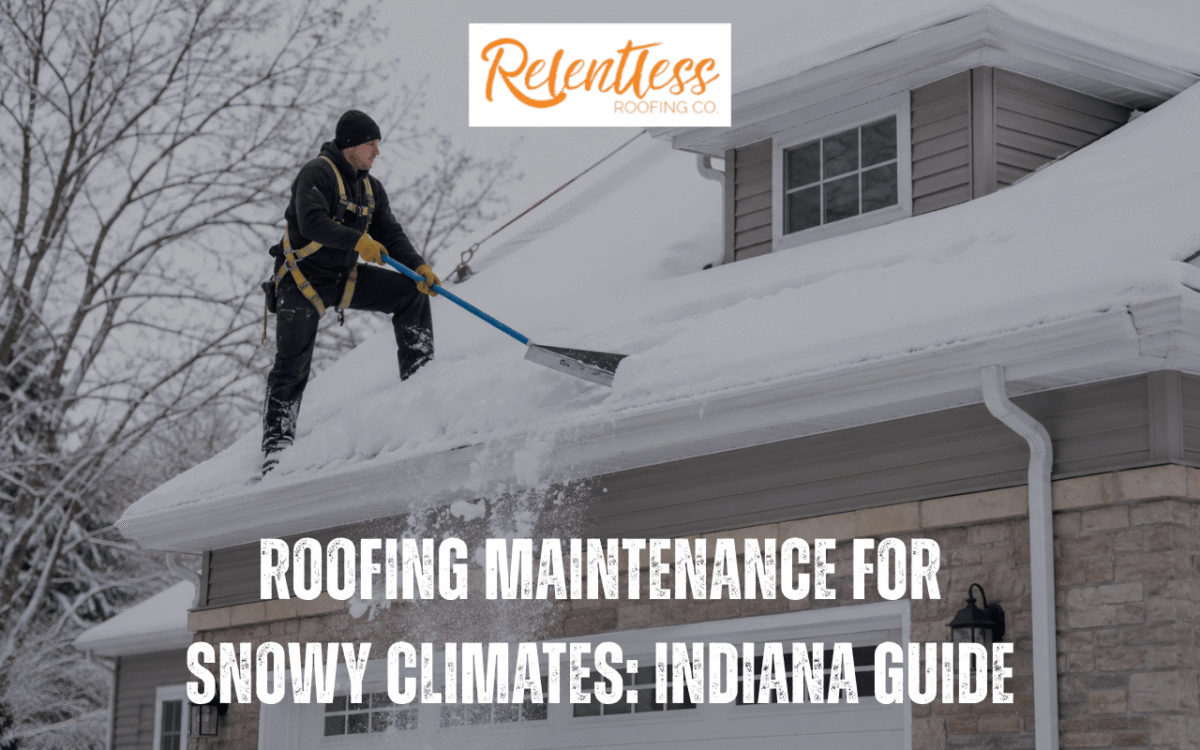
The short answer: Roofing maintenance in a snowy climate like Indiana means getting ready before the first freeze. Inspect shingles and flashing, clear gutters, and stop warm attic air from melting snow into ice dams. In winter, rake snow from the ground and watch for leaks. Elkhart and Michiana homeowners who treat roof, attic, and drainage as one system avoid most winter damage.
Key Takeaways
- Snow damages roofs three ways: weight, ice, and repeated freezing and thawing.
- Elkhart County roofs are designed for a 30 pounds per square foot ground snow load (2020 Indiana Residential Code, Table R301.2(1)).
- Ice dams usually start with heat escaping into the attic, not with the snow outside.
- Indiana code requires an ice barrier at the eaves of Elkhart County homes (Indiana Residential Code R905.1.2).
- ENERGY STAR recommends R-60 attic insulation for an uninsulated attic in our climate zone (Zone 5).
- Fall is the best time for inspections and small repairs, before snow hides weak spots.
- If you only do one weekend task, clean the gutters and check the attic.
Why Are Indiana Winters So Hard on Roofs?
Winter roof damage builds slowly, then shows up all at once. A small flashing gap in October can become a ceiling stain in January. A clogged gutter in fall can become an ice dam after the first thaw.
Indiana winters swing back and forth. Snow melts during warmer hours, then refreezes at night. That freeze-thaw cycle pushes water into small gaps, freezes, expands, and makes the gaps bigger. In Michiana, lake-effect snow off Lake Michigan can pile up fast and stack new storms on top of snow that has not melted yet. The National Weather Service office for Northern Indiana (NWS IWX, Syracuse) issues a Winter Storm Warning for Indiana counties when 6 inches or more of snow is expected (NWS IWX warning criteria, 2026).
Extreme cold is hard on materials too. Asphalt shingles turn brittle and crack more easily. Sealants around vents, chimneys, and flashing shrink and split. Water that freezes inside a clogged gutter can push it away from the fascia or pull it down.
Your roof also works as a system. It includes shingles, underlayment, flashing, drip edges, vents, gutters, and the structure beneath, and it works with the attic below. If heat loss warms the roof deck, snow melts unevenly and refreezes at the colder eaves. Many homeowners blame the snow, but the real problem is often the house losing heat upward.
What does the building code say about snow and ice on Elkhart County roofs?
The 2020 Indiana Residential Code sets the design values for every county in Table R301.2(1). For Elkhart County and St. Joseph County, the key values are:
| Design value (Elkhart County, IN) | Value | What it means for your roof |
|---|---|---|
| Ground snow load | 30 pounds per square foot | The snow weight a roof structure is designed to carry |
| Ultimate design wind speed | 115 mph | The wind load used for roof framing and fastening |
| Ice barrier underlayment required | Yes | Self-adhering ice and water membrane is required at the eaves |
| Frost line depth | 36 inches | Not a roof item, but it shows how cold our winters are designed around |
| Weathering | Severe | Materials must handle repeated freeze-thaw cycles |
Source: 2020 Indiana Residential Code, Table R301.2(1), Indiana Department of Homeland Security.
The ice barrier rule matters most. Under Indiana Residential Code R905.1.2, in counties marked “Yes” (Elkhart and St. Joseph are both on the list), the ice barrier must extend from the lowest edge of every roof surface to a point not less than 24 inches inside the exterior wall line. On roofs with a slope of 8:12 or steeper, it must also run at least 36 inches up the slope from the eave edge (Indiana DHS, Ice and Water Shield update, February 2020). If your roof was installed without that membrane, an ice dam has a direct path into the house.
The 5 Biggest Winter Roof Problems in Indiana Homes
Winter roof problems come from moisture, extra weight, or trapped heat. Knowing the cause helps you pick the right fix instead of paying for the wrong repair.
Ice dam roof damage
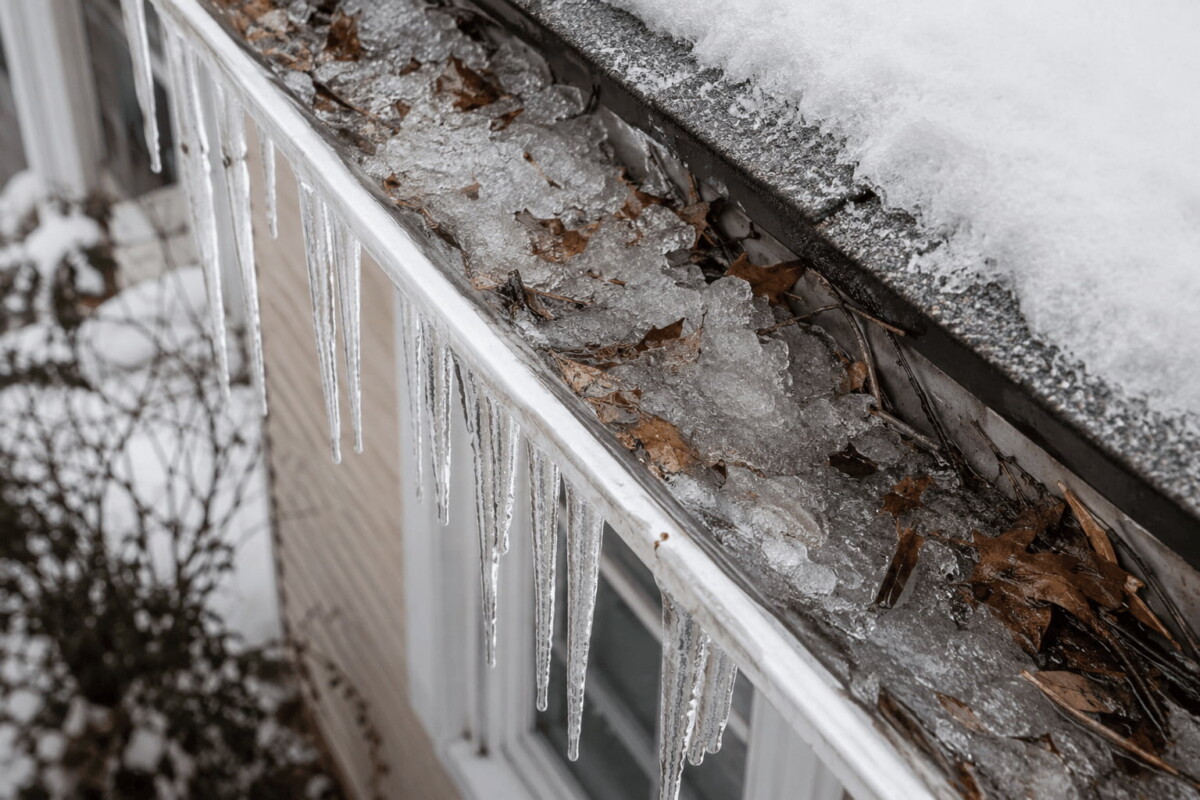
Snow melts higher on the roof, then refreezes near the colder edge. That ridge of ice traps water behind it, and the water slips under shingles and underlayment into the home.
Snow load stress
Snow is heavier than it looks. According to IBHS guidance (cited by the Maine Emergency Management Agency), 10 to 12 inches of fresh snow, 3 to 5 inches of packed snow, or 1 inch of ice each weigh about the same as 1 inch of water, roughly 5 pounds per square foot. Using those equivalents, the 30 psf design load for Elkhart County is roughly 18 to 30 inches of packed snow sitting on the whole roof. Older homes, roofs with rotted decking, and roofs that have been overloaded before are most at risk, especially when storms stack up before the last snow melts.
Freeze-thaw cracks
Water gets into tiny gaps around shingles, flashing, and seals. When it freezes, it expands. As the cycle repeats, small openings grow into larger damaged areas.
Attic condensation
Warm indoor air rises into a cold attic and turns into moisture. It soaks insulation, framing, and roof decking, which can lead to mold, wood damage, and insulation that stops working well.
Gutter backups
Blocked gutters trap meltwater instead of draining it. Overflow spills onto fascia, siding, and roof edges, then freezes. Water pooling near the foundation is another risk.
When several of these show up together, the roof usually has a bigger system problem tied to drainage, insulation, ventilation, or heat loss. For year-round issues, see common roofing problems in Indiana homes.
Not sure where your roof stands before winter? Relentless Roofing Co. offers a free roof inspection for homeowners across Elkhart and Michiana. Call 574-218-0642 or contact us to schedule yours.
How Do Ice Dams Form, and How Do You Stop Them at the Source?
An ice dam is a ridge of ice at the roof edge that blocks meltwater from draining. It is one of the most common causes of winter leaks. It forms when the roof is warm in the middle and cold at the edge:
- Air leaks let warm air into the attic.
- Low insulation lets more heat reach the roof deck.
- Poor ventilation traps that heat and humidity.
- Snow melts on the warm upper roof and runs down.
- The cold eaves refreeze the water, and the ice grows.
Fix it in this order:
- Air-seal first. Close gaps around attic hatches, lights, pipes, and wiring.
- Add insulation. ENERGY STAR recommends R-60 for an uninsulated attic in Climate Zone 5 (which covers Elkhart County), or adding up to R-49 if you already have 3 to 4 inches (ENERGY STAR recommended insulation levels, based on the 2021 IECC).
- Open up ventilation. The residential code’s baseline is 1 square foot of net free vent area for every 150 square feet of attic floor, split between soffit (intake) and ridge (exhaust) vents (IRC R806.2). Keep both clear.
- Clean gutters before winter so meltwater has a way out.
- Rake the roof edge from the ground after heavy snow.
Chipping ice off may help for the moment, but repeat ice dams mean heat loss or poor ventilation is still there.
Pre-Winter Roof Checklist: Finish Before the First Freeze
The best time for roof maintenance is before freezing weather starts. Repairs are easier, safer, and often cheaper in fall, and once snow covers the roof you lose both visibility and safety. Waiting until December leaves little time for repairs.
From the ground (take photos of anything suspicious):
- Shingles that are curling, cracked, missing tabs, or showing bare spots. Granules in the gutter mean you should schedule a repair soon.
- Dips in the roofline that may point to structural stress.
- Debris in valleys and along edges that can hold water.
- Lifted metal or failed seals around vents, chimneys, and skylights.
Close-up (ladder only, and only if it is safe):
- Flashing at chimneys, skylight curbs, and plumbing stacks. Lifted edges leak.
- Drip edges. Missing or loose ones cause rot and drip marks.
- Sealant and caulk. Replace only what is cracked or open. Smearing caulk everywhere can damage roofing materials and may affect warranty terms.
In the attic:
- Wet wood, dark stains, or frost on nails signal moisture.
- Damp or thin insulation loses R-value and can point to air leaks.
- Daylight through gaps, or a mildew smell from trapped humidity.
- Bathroom fans that vent into the attic instead of outside.
Around the roof:
- Trim overhanging branches. Ice adds weight to limbs that can then fall on the roof.
- Treat moss, algae, and mildew on shaded roofs. They trap moisture and damage shingles.
- Fix loose shingles and worn spots around skylights, chimneys, and valleys now. The average roof repair in Elkhart costs about $791, and most jobs run $468 to $1,126 (Relentless Roofing Co. Elkhart repair cost guide, 2026). See typical roof repair costs in Elkhart to plan ahead.
If you see active water, call a professional roofer. Winter repairs on steep surfaces are risky.

Gutters and downspouts
Clear gutters lower ice dam risk. Clogged gutters back water up, it refreezes, and it pushes under shingles at the roof edge. Before the first hard freeze:
- Remove leaves, needles, and grit by hand with gloves.
- Flush the gutters to confirm water flows to each downspout.
- Clear each downspout exit so water drains away from the house.
- Check hangers and seams for leaks or sagging.
If gutters keep clogging, a tight drip edge guides water into the gutter instead of behind it, and gutter guards cut down on debris from nearby trees. Learn how the right gutter system can prevent roof damage and leaks, or see our gutter replacement service.
Attic Insulation, Air Sealing, and Ventilation
Many winter roof issues begin in the attic. When warm indoor air escapes upward, it warms the roof and adds moisture. That shortens your roof’s life and raises heating costs.
Insulation slows heat movement, and a higher R-value means better resistance to heat loss. In cold climates, proper attic insulation helps keep the roof surface colder and more even, so snow does not melt and refreeze at the edges. The ENERGY STAR targets above (R-49 to R-60 for Zone 5) are a good benchmark; many older Michiana attics have far less.
Air sealing matters just as much, because gaps around hatches, lights, pipes, and wiring let warm air leak upward. Ventilation then clears trapped moisture: soffit vents bring fresh air in and ridge vents let warm, moist air out. Together, these parts act as the control center for your roof all winter.
How Do You Remove Snow From a Roof Safely?
Snow removal lowers risk after heavy snowfall, but bad technique can damage shingles and gutters or cause injury. Watch the risk areas: valleys collect snow and meltwater, roof edges freeze first, and flat sections hold snow longest.
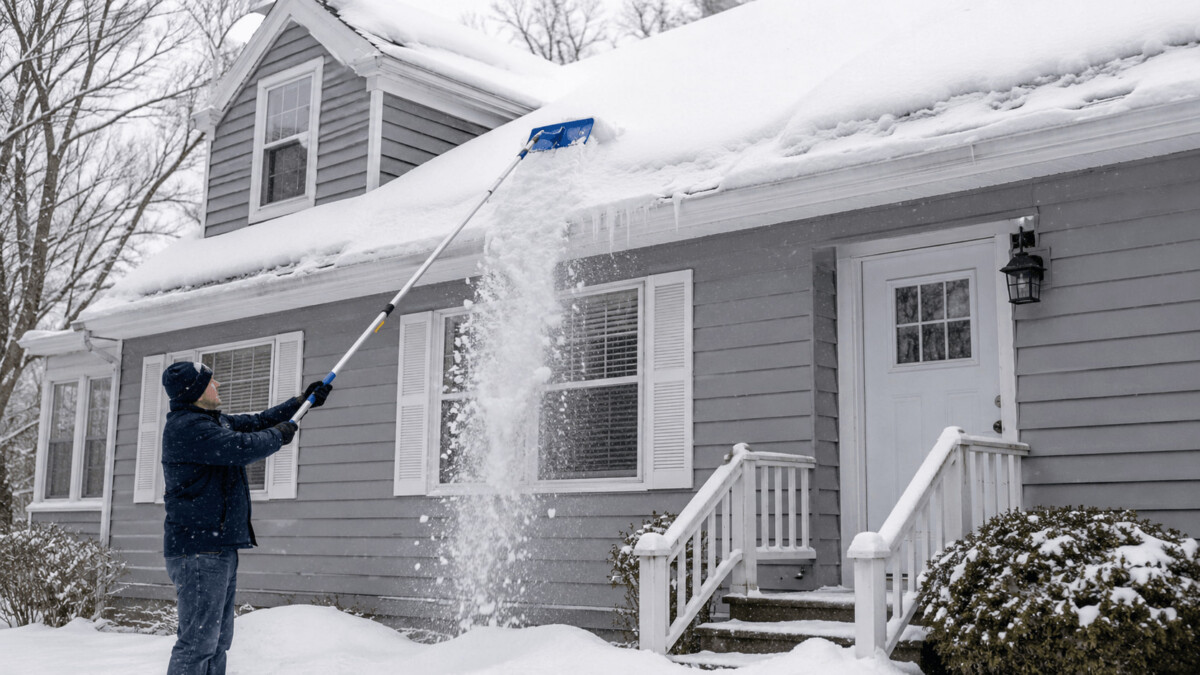
- Use a roof rake with an extension pole from the ground. Never climb onto a snowy roof.
- Pull snow off the lower 3 to 6 feet near the eaves first.
- Work in small sections instead of pulling down huge piles.
- Leave a thin layer. Scraping to the shingles damages them and the underlayment.
- Stay clear of power lines and watch where falling snow lands.
Skip sharp metal tools, and never break ice by force. IBHS also advises against electric heating devices and open-flame tools on a roof.
Signs the snow is too heavy: new ceiling cracks, doors or windows that suddenly stick, popping or creaking sounds, or bowed rafters in the attic. IBHS lists these same signs as structural stress indicators. If you see sagging, or the roof is steep or tall, call a professional. This is a safety problem, not a money problem.
Flat roof areas: clear drains and scuppers, remove snow in stages, focus on low spots, and avoid salt, which harms roofing materials and metal parts. Flat roofs that hold water year round are a separate issue, covered in flat roof pooling: repair vs replacement.
One rule covers all of it: if you cannot do it safely from the ground, do not do it. If deep, wet snow is causing damage, knowing how much it costs to tarp a roof helps if temporary protection is needed before permanent repairs. Snow removal is load control, not a repair.
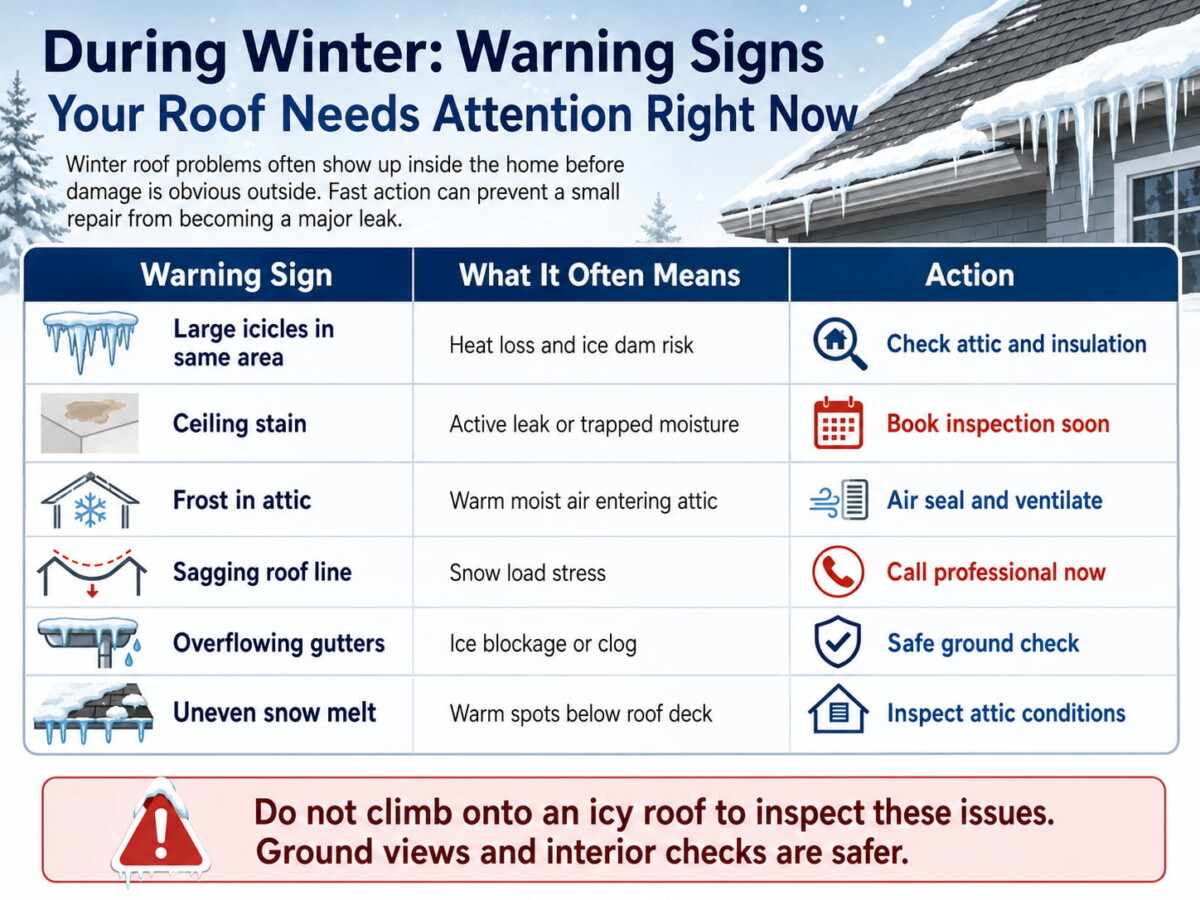
During Winter: Warning Signs Your Roof Needs Attention
Winter warning signs often show up inside the home before damage is visible outside. Acting fast keeps a small repair from becoming a major leak.
| Warning sign | What it often means | What to do |
|---|---|---|
| Large icicles in the same area | Heat loss above that spot, ice dam risk | Check attic insulation and air sealing |
| Ceiling stain | Active leak or trapped moisture | Book an inspection soon |
| Frost in the attic | Warm, moist air entering the attic | Air seal and ventilate |
| Sagging roofline | Snow load stress | Call a professional now |
| Overflowing gutters | Ice blockage or a hidden clog | Check safely from the ground |
| Water dripping behind the gutter | Missing or loose drip edge | Have the roof edge inspected |
| Uneven snow melt | Warm spots under the roof deck | Inspect attic conditions |
Do not climb onto an icy roof to check any of these.
After every storm or thaw: a 10-minute check
Storms often loosen parts, and the next freeze-thaw cycle turns small gaps into a leak. After heavy snow, rain, wind, or a sudden thaw, take 10 minutes outside (from the ground) and 10 minutes in the attic:
- Outside: missing or lifted shingle tabs, granules near downspouts, lifted flashing at vents and chimneys, gutters pulling loose, and debris in valleys.
- Inside: dark stains, damp insulation, fresh drip marks, new drafts, or damp smells. Condensation can look like a roof leak, but the cause may be poor ventilation.
For a deeper checklist, see signs you need roof repair after a storm. When the snow melts, do a full damage check and prepare your roof for spring storms in Indiana.
Which Roofing Materials Perform Best in Snowy Climates?
The best material depends on budget, roof design, and maintenance goals. No single material fits every home. The lifespans below are InterNACHI’s standard estimates for residential roofing (InterNACHI Standard Estimated Life Expectancy Chart).
| Roofing material | Winter performance | Typical life expectancy (InterNACHI) | Best for |
|---|---|---|---|
| 3-tab asphalt shingle | Fair; lowest wind rating, stiffens in cold | 20 years | Tight budgets |
| Architectural asphalt shingle | Good with proper install and ice barrier | 30 years | Most Michiana homes |
| Metal roof (standing seam) | Strong snow shedding, resists uplift | 40 to 80 years | Heavy snow areas, long-term owners |
| Slate | Excellent durability, very heavy | 60 to 150 years | Premium homes with framing to match |
| Synthetic (composite) roofing | Good cold-weather option, lighter than slate | Varies by product | Classic look with less weight |
Metal roofs, especially standing seam panels, shed snow faster; see standing seam metal roof cost in Indiana or our metal roof replacement service. Asphalt shingles stay common because they cost less. Slate is durable but heavy. Whatever you choose should match your attic performance, slope, and drainage.
Roof Maintenance vs Roof Repairs
Maintenance prevents damage. Repairs fix it after it happens. You need both, but prevention usually costs less.
| Roof maintenance | Roof repairs |
|---|---|
| Gutter cleaning | Leak repair |
| Flashing checks | Replacing damaged flashing |
| Attic review | Wet decking repair |
| Small seal fixes | Interior water damage repair |
| Snow monitoring | Structural corrections |
A loose shingle is minor in fall. Left through winter storms, it can lead to soaked insulation and stained drywall. Nationally, Angi puts the average roof repair at $1,174, with most homeowners paying $395 to $1,967 (Angi, updated August 2026). Roofs over ten years old often need more winter attention because seals, shingles, and fasteners age. Regular upkeep also helps when you sell, since a well-kept roof shows buyers the home was cared for. For a full year-round routine, read how to extend the life of your roof with regular maintenance.
When Should You Call a Professional Roofer?
Keep DIY to ground-level checks and light maintenance. If ladder work feels unsafe, hire a pro. Call a roofing contractor if you notice:
- Active leaks, ceiling stains, or wet attic insulation
- Ice dams that keep coming back in the same spot
- Sagging roof areas or bowed rafters
- Missing shingles or bent metal after a storm or high wind
- Heavy snow you cannot assess safely
- Flashing damage around skylights or chimneys
- Mold smells, or an older roof where small issues keep stacking up
For a leak right now, see our roof leak repair service and what to do when your roof leaks in rain. For urgent damage, see emergency roof tarping and emergency roof repair. If you are weighing a fix against a new roof, read roof repair vs roof replacement in Elkhart.
How Relentless Roofing Co. Helps Michiana Homeowners Each Winter
We help homeowners in Elkhart, Goshen, South Bend, Mishawaka, Granger, and nearby towns get ready for winter:
- Pre-winter inspections of the full roof system: shingles, flashing, ice barrier coverage, attic insulation, ventilation, and drainage.
- Help between storms. When snow, ice, or wind make work unsafe, we inspect, tarp, and handle urgent damage, then finish repairs when conditions improve.
- Prompt repairs for leaks, flashing, and storm damage before small problems spread.
- Full roof replacement when an older roof is no longer worth patching. See roof replacement cost in Elkhart to budget.
FAQs
How do I prevent snow damage to my roof in Indiana?
Start with fall maintenance: replace damaged shingles, check flashing and drip edges, and clean gutters and downspouts. Then seal warm air leaks in the attic and bring insulation toward the ENERGY STAR Zone 5 target of R-49 to R-60 to help prevent ice dams. After storms, watch snow buildup and use a roof rake from the ground near the edges. If problems repeat, book a professional inspection.
Can roof repairs be done in the winter?
Yes. Emergency leak work, flashing fixes, and storm damage repairs are common in winter. Cold weather does limit some work: asphalt shingles get stiff and sealants cure slowly, so full replacements or some products may wait. A roofer may do a temporary repair first, then finish the full fix when conditions improve.
What temperature is too cold for roofing?
There is no single legal cutoff. GAF says the self-sealing strip on its asphalt shingles needs warmth, sun and temperatures above 40°F to activate. Below 40°F, GAF recommends hand-sealing each shingle with roofing cement. Repairs, tarping, and flashing work can be done in colder conditions.
Do roofers work when it’s snowing?
Sometimes, but active snowfall, ice, or strong wind can stop work for safety reasons. Many roofers inspect, tarp, or handle urgent damage between storms. If conditions are risky, they schedule the repair for when surfaces are safer.
How much snow can a roof in Elkhart County hold?
Homes in Elkhart County are designed for a 30 pounds per square foot ground snow load under the 2020 Indiana Residential Code. Using IBHS weight equivalents (3 to 5 inches of packed snow or 10 to 12 inches of fresh snow equal about 5 psf), that is roughly 18 to 30 inches of packed snow across the whole roof. Older roofs, rotted decking, and drifted or iced areas lower that margin, so treat sagging, cracking sounds, or sticking doors as a signal to call a professional.
Is winter roof maintenance worth it on an older roof?
Yes. Older roofs are more likely to have worn shingles, weak flashing, and hidden leaks. InterNACHI puts the typical life of a 3-tab asphalt roof at 20 years and an architectural asphalt roof at 30 years, so a roof past 15 years should be checked every fall. Seasonal maintenance can extend service life, reduce emergency repairs, and help you plan a roof replacement before the roof fails.
Get Your Roof Ready Before the Snow Flies
Most winter roof damage starts with heat loss, moisture, blocked drainage, or weak flashing, and almost all of it is easier to fix in fall. Use fall for inspections and cleanup, winter for monitoring and safe snow control, and spring for a damage check after the thaw.
If your roof is older, leaking, or showing repeat ice dams, schedule a free roof inspection with Relentless Roofing Co. Call 574-218-0642 or contact our team. Early action is often the cheapest action.