
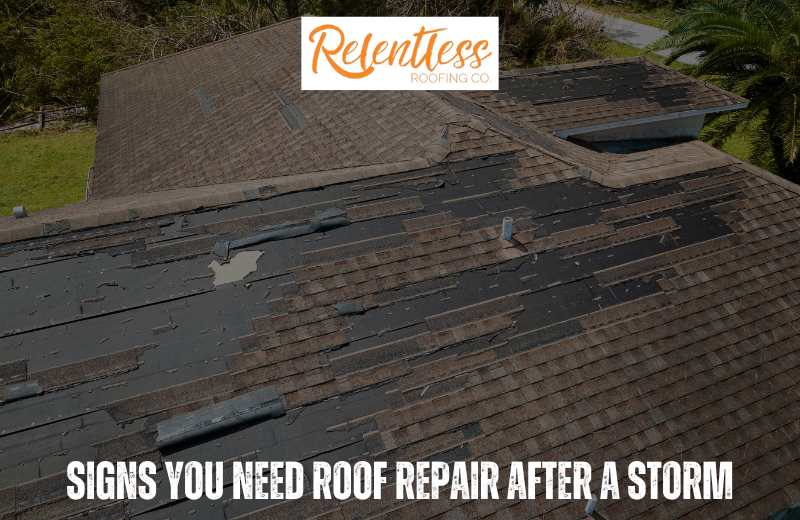
Quick answer: After a storm in Elkhart or anywhere in Michiana, look for missing, cracked, or curled shingles, bent flashing, shingle granules or dents in your gutters, and new water stains on ceilings or walls. Check your attic for drips or musty smells. A sagging roof line means you should call a professional right away.
Storm damage does not always look like much on day one. A few lifted shingles or a bent piece of flashing can let water in slowly, and that water leads to mold, rot, and bigger repair bills later. This guide walks you through the 15 signs to look for, the hail and wind sizes that cause damage, how to check safely, what you can fix yourself, what repairs cost in Elkhart, and how an Indiana insurance claim works.
Storm Damage Checklist at a Glance
Use this table as a quick walk-around list. The full explanation of each sign is further down the page.
| Sign | Where to look | What it usually means | How urgent |
|---|---|---|---|
| Missing, cracked, curled, or dimpled shingles | Roof surface, yard after the storm | Wind lifted shingles or hail knocked off granules | Repair soon to stop leaks |
| Bent, cracked, or missing flashing | Around chimneys, vents, skylights | Water can get under shingles at seams | Repair soon |
| Shingle granules in gutters | Gutters and downspout outlets | Hail or wind wore away the shingle coating | Have it inspected |
| Dents in gutters, vents, or soft metal | Gutter runs, downspouts, roof vents | Hail hit the roof; dents in metal are evidence an adjuster will look for | Have it inspected |
| Water stains or drips | Ceilings, walls, attic | Water is already getting inside | Act now |
| Mold, mildew, or musty smell | Attic, upper walls, closets | Moisture has been trapped for a while | Act now |
| Sagging roof deck or cracks in framing | Roof line, attic, ceilings | The structure may be weakened | Call a professional right away |
Why Are Storms in Elkhart and Michiana So Hard on Roofs?
Homes in Elkhart and across Michiana deal with frequent high winds, hail, and heavy rain. The National Weather Service classifies a thunderstorm as severe when it produces hail of 1 inch (quarter size) or larger, or wind gusts of 58 mph or more. The local office that issues those warnings and records storm reports for Elkhart and St. Joseph counties is NWS Northern Indiana (IWX) in Syracuse. Those reports are the public record you can point to when an insurer asks what happened and when.
Even a storm below those thresholds can loosen shingles, bend flashing, or wear the protective granules off asphalt shingles, especially on an older roof.
Storm damage is also the most common type of homeowners insurance claim. According to Insurance Information Institute data from ISO, wind and hail claims occurred at a rate of 2.80 per 100 house-years from 2019 to 2023, with an average claim of $14,747 (III, “Facts and Statistics: Homeowners and renters insurance”). State Farm alone paid more than $5.6 billion in hail claims in 2025, and March storms in the Midwest triggered more than 50,000 of those claims (State Farm, April 2026).
The problem is that this damage often starts small. Missing shingles or cracked flashing let water seep in a little at a time, and that slow leak can lead to mold, mildew, and weakened framing. The longer you wait, the more the repair usually costs, because minor issues make the whole roof wear out faster.
That is why it pays to check your roof after every major storm and to get a professional roof inspection if anything looks off. If you are planning ahead for storm season, our guide on how to prepare your roof for spring storms in Indiana covers what to do before the weather turns.
How big does hail have to be to damage a roof?
Shingle makers test impact resistance under UL 2218 by dropping steel balls onto the shingle. A Class 4 rating, the highest, means the shingle survived a 2-inch steel ball dropped from 20 feet (GAF, 2024). Standard shingles are not tested that way, which is why 1-inch hail, the NWS severe threshold, is enough to bruise or crack an ordinary asphalt shingle, and why dents on soft metal (gutters, vent caps, flashing) are the first thing an adjuster checks. Sloped surfaces take hits at an angle, so damage is usually worst on the slope facing the storm.
How much wind does it take to lift shingles?
Architectural shingles are commonly rated to ASTM D7158 Class H (tested to 150 mph) and ASTM D3161 Class F (110 mph). Those ratings assume the shingles were installed correctly and the seal strip has bonded (GAF, 2024). Aged shingles, shingles installed in cold weather that never sealed, and the first course at the eave lift at much lower speeds. That is why a 58 mph gust can peel tabs off a 15-year-old roof while a new roof next door is untouched.
15 Signs of Roof Damage After a Storm
Some of these signs show up on the roof itself. Others only show up inside your home. We have grouped them so you can work from the outside in.
Signs on the Roof and Gutters
1. Missing, Cracked, Curled, or Dimpled Shingles
Missing or damaged shingles are one of the most noticeable signs of storm damage. Strong winds can lift shingles or tear them off entirely. Hail and heavy rain can leave shingles cracked or curled.
Shingles are your roof’s main barrier against water. When they are cracked or missing, water can reach the roof deck and then the inside of your home. Shingles also help with insulation, so damaged ones can make your home harder to heat and cool.
Watch for dimpled shingles too. Dimples are often a sign of hail or high winds. A dimpled shingle loses its protective granules, so it does a worse job keeping water out. Damaged shingles should be replaced promptly. If hail is the likely cause, see our hail damage roof repairs page.
2. Dented or Damaged Flashing
Flashing is the metal that directs water away from the joints and seams around chimneys, vents, and skylights. Storm winds and hail can bend it, crack it, or rip it loose.
After a storm, look for:
- Bent, cracked, or missing flashing around chimneys, vents, and skylights.
- Visible gaps where flashing should be sealed.
- Spots where flashing looks lifted, which lets water slip under nearby shingles.
Damaged flashing often causes hidden leaks that show up weeks later as stains inside. Our roof flashing repair guide explains how flashing is fixed.
3. Granules in Your Gutters
Asphalt shingles are covered in small granules that protect them from UV rays and weather. Finding a lot of those granules in your gutters or at the bottom of downspouts is a clear warning sign. It usually means the shingles are aging or were damaged by hail, strong winds, or heavy rain.
Granule loss weakens shingles and can lower your roof’s energy efficiency. Loose granules can also clog gutters, which stops water from draining and can send water toward your foundation.
4. Dents in Gutters and Soft Metal
Check your gutters, downspouts, vent caps, and flashing for dents from hail or storm debris. Dents are useful evidence that hail hit your home, and the size of the dents gives an adjuster a rough idea of hail size. They can also make gutters drain poorly, so water backs up at the roof edge and makes damage worse over time.
5. Clogged or Leaky Gutters
Storms fill gutters with leaves, twigs, and granules. When gutters cannot drain, water can back up at the roof edge, get under the first rows of shingles, and soak the roof deck. Over time, overflowing gutters can also rot the fascia and soffit.
Clean and check your gutters after every big storm. If yours are damaged beyond a simple cleaning, see our gutter replacement service.
6. Debris on the Roof
Branches, leaves, and other debris are common after a storm. They are not harmless. Heavy branches can puncture or scrape shingles. Piles of leaves trap moisture against the roof, which speeds up mold growth and wear. Debris can also block gutters and valleys so water pools instead of draining.
Clearing debris promptly protects your roof, but only do it from the ground or a ladder if it is safe. Leave anything heavy or high up to a professional.
7. Visible Nail Pops
Nail pops happen when the nails holding shingles to the deck work loose. You will see small bumps under the shingles, or nail heads pushing up through them. Loose nails mean the shingles may be shifting, which opens gaps where water can get in. Nail pops tend to get worse over time, so have them fixed early.
8. Holes or Gaps
Even small holes or gaps in your roof can let in a lot of water. That water can damage insulation, walls, and ceilings and lead to mold and wood rot. Holes and gaps can also let pests into your attic.
9. Leaky Chimneys
Chimneys are a common source of roof leaks after a storm. The flashing around the chimney can be damaged, or the chimney itself can crack. Old mortar and loose bricks make the problem worse. If you see stains near the chimney inside your home, have both the chimney and its flashing checked.
Signs Inside Your Home
10. Visible Leaks and Attic Drips
Visible leaks are the most obvious sign of storm damage. You might see water dripping from the ceiling during or after the storm, or find drips and puddles in the attic. Common causes are broken or missing shingles, cracked flashing, or damaged roof membranes.
Leaks that are left alone lead to water damage, mold, and structural problems. If water is coming in now, read what to do when your roof leaks in rain, then schedule a roof leak repair. If you have a flat roof, this guide on how to find a leak in a flat roof can help you narrow it down.
11. Water Stains and Ceiling Discoloration
Water stains on ceilings or walls often show up after a storm. They look like yellow, brown, or dark spots, sometimes in rings or irregular shapes. A stain means water has made it through the roof and into your home.
Stains tend to spread and get darker over time. They can also signal ongoing moisture that leads to mold. Take a photo of any new stain right away (it helps with an insurance claim) and have the roof inspected so the source is found, not just the stain painted over.
12. Mold, Mildew, or a Musty Smell
Mold or mildew is a clear sign that water has been getting in for a while. Trapped moisture in the attic or walls gives mold a place to grow. A musty smell is often the first clue, even before you see anything.
Mold can cause breathing problems and allergies, and it damages wood and drywall. It can also show up on the outside of the roof as algae, which hurts your home’s curb appeal. Fixing the leak is the first step to stopping it.
13. Higher Utility Bills
Roof damage you cannot see can still show up on your energy bill. Leaks and wet or damaged insulation make it harder to keep your home at a steady temperature, so your heating and cooling system works harder. If your bills jump after a storm with no other explanation, have the roof and attic checked.
Structural Warning Signs
14. Sagging Roof Deck
A sagging roof deck is one of the most serious signs of storm damage. Look for:
- A visible dip or curve in the roof line, especially in the middle or near the edges.
- Unusual bending or bulging in the ceiling or attic.
- Cracks you can see from inside or outside the home.
Sagging means the supports may be weakened by water or storm damage. It can lead to a collapse if it is not fixed. Do not go on the roof. Call a professional right away.
15. Cracks or Shifting in the Roof Structure
Bent rafters, cracked framing, or parts of the roof that look shifted after a storm point to serious structural damage. These weak spots let water in and can spread damage to other parts of the house. Have a professional roofer inspect the structure before any other repairs are made.
Spotted any of these signs? Relentless Roofing Co. offers a free roof inspection for homeowners in Elkhart and across Michiana. Call 574-218-0642 to schedule yours, or learn more about our storm damage roof repairs.
How Do You Check a Roof Safely After a Storm?
You can catch a lot from the ground and the attic. Here is a simple order to follow.
- Put safety first. Wait until the storm has passed. Wear non-slip shoes and use a sturdy ladder if you need to look at the gutters. If you are not comfortable with heights, skip the ladder and call a professional.
- Note the date and time of the storm. Write down when it hit. NWS Northern Indiana (IWX) storm reports can later confirm hail size and wind speed for your area, which supports an insurance claim.
- Take photos as you go. Photograph missing shingles, dented gutters, damaged flashing, and any water stains inside. Put a coin next to hail dents for scale.
- Check the shingles. From the ground, look for missing, curled, cracked, or dimpled shingles, and for shingles lying in the yard.
- Check the flashing. Look at the flashing around chimneys, skylights, and vents for bends, gaps, or missing pieces.
- Check the gutters. Look for granules, dents, and clogs. Make sure downspouts are draining away from the house.
- Clear light debris. Remove leaves and small branches you can reach safely. Leave large limbs on the roof to a professional.
- Check inside. Look at ceilings and upper walls for stains, and check the attic for drips, wet insulation, or a musty smell.
If you find sagging, cracks in the structure, or leaks inside the house, stop there and call a professional. For a more detailed list, use our roofing inspection checklist.
What Can You Fix Yourself, and When Should You Call a Professional?
Small Fixes That Can Wait for a Pro
Some minor damage can be stabilized until a roofer arrives:
- Remove debris like leaves, branches, and twigs so they do not cause more damage.
- Seal small leaks with roofing sealant or roofing tar. This is a temporary fix that keeps water out until a permanent repair is made.
- Secure a loose shingle or a loose piece of flashing if you can reach it safely.
If a section of roof is open to the weather, a tarp is the safest short-term step. See our emergency roof tarping service.
When to Call a Professional Right Away
Call a professional roofer if you see any of these:
- Large areas of missing shingles. These need proper replacement to stop water from getting in.
- Damage to the roof deck. This can point to structural problems.
- Sagging or visible cracks in the roof structure. These need a professional assessment right away.
- Leaks inside the house or in hard-to-reach areas. A roofer can find the real source safely.
Temporary Fixes vs. Permanent Repairs
| Temporary fix | Permanent repair | |
|---|---|---|
| Examples | Sealing small leaks, securing loose shingles, roofing tar on exposed spots, tarping | Replacing damaged shingles, repairing structural parts, reinforcing weak areas |
| Purpose | Stop water from getting in right now | Restore the roof’s strength and protection |
| How long it lasts | Short term only | Built to last for years |
| Who does it | Homeowner (if safe) or roofer | Professional roofer |
Temporary fixes are useful, but relying on them for too long leaves your roof open to more damage. Once the immediate problem is under control, schedule a professional inspection and a lasting repair.
What Does Storm Damage Repair Cost in Elkhart?
The figures below come from our roof repair cost guide for Elkhart (2026). Nationally, Angi puts the average roof repair at $1,174, with most homeowners paying $395 to $1,967 (Angi, updated August 2026).
| Repair (Elkhart, IN, 2026) | Typical cost |
|---|---|
| Average roof repair, all types | About $791 (most jobs $468 to $1,126) |
| Replace 10 to 20 asphalt shingles | $200 to $600 |
| Flashing replacement | $300 to $1,200 |
| Minor hail or storm damage repair | $500 to $2,000 |
| Emergency tarp or protective covering | $200 to $800 |
| Major storm damage with structural repairs | $3,000 to $10,000+ |
If you are not sure whether the damage calls for a repair or a full replacement, read roof repair vs. roof replacement in Elkhart, Indiana.
Why Does a Professional Roof Inspection Find What You Miss?
A DIY check usually catches the visible damage: missing shingles, debris, and clogged gutters. It often misses water under the shingles, weakened decking, loose flashing, and early structural problems. Those hidden issues are what turn into expensive repairs later.
Professional roofers know where storm damage hides. They can use tools like infrared cameras to find moisture under shingles that you cannot see. They also look at the whole roof structure for weak spots, not just the parts visible from the ground, and they check whether the ice and water barrier that Indiana code requires at the eaves of Elkhart County homes is actually there (Indiana Residential Code R905.1.2).
Hiring a professional also brings:
- Safety. Roofers are trained to work on roofs without putting themselves or your home at risk.
- Thoroughness. A full inspection covers every part of the roof, from shingles to gutters.
- Long-term protection. Proper repairs help your roof hold up in the next storm.
Does Homeowners Insurance Cover Storm Damage in Indiana?
Most homeowners policies cover sudden roof damage from covered events like wind and hail. That can include repairs to shingles, flashing, and roof decking. Normal wear and aging are usually not covered, and flood damage is generally handled under separate flood coverage, so read your policy for its exact terms and exclusions. The average wind or hail claim nationally was $14,747 from 2019 to 2023 (III, ISO data), which is why insurers inspect carefully before they pay.
Steps to Take If You Find Damage
- Document the damage. Take clear photos of missing shingles, dented gutters, damaged flashing, and water stains inside, and note the storm date.
- Get a professional inspection. A roofer can confirm what is storm damage and what is normal wear before you decide on a claim.
- Report it to your insurance company promptly. Be ready to share when the storm happened and what damage you found.
- Meet the adjuster. Your insurer may send an adjuster to inspect the roof and estimate repair costs.
- Get repair estimates from professional roofers. This helps you understand the full cost of the repair.
Do not wait to report damage. In Indiana, if you give your insurer late notice of a claim, courts presume the delay hurt the insurer (Miller v. Dilts, Indiana Supreme Court, 1984). The burden then falls on you to prove it did not. Reporting promptly keeps that from becoming an issue.
Also keep in mind that a covered claim still comes with your deductible. For a full walk-through of how claims are paid, see our guide to roof insurance claims in Indiana. If you are unsure who to call first, read storm damage: should you call a roofer or your insurance company first?
After a storm, watch out for door-knockers promising a free roof. Under Indiana Code 24-5-11-10.5, a contractor may not offer to pay or rebate any part of your insurance deductible, and if your insurer denies the claim you can cancel the contract within three business days of the written denial. The Indiana Attorney General’s August 2026 storm guidance adds: get everything in writing, never pay in full up front, and report problems to the Consumer Protection Division at 1-800-382-5516. Our guide on the door-to-door “free roof” insurance scam explains the warning signs.
How Do You Prevent Future Storm Damage in Elkhart?
You cannot stop a storm, but you can make your roof much harder to damage.
Get Regular Inspections
Have your roof inspected at least once a year, and again after every severe storm. Annual inspections catch loose shingles and small leaks before they grow.
Keep Up With Maintenance
- Clean gutters and downspouts before and after storm season so water drains properly during heavy rain.
- Reinforce weak spots like valleys, vents, and flashing so they hold up to hail and strong winds.
- Do routine repairs such as replacing damaged shingles and making sure seals and flashing are intact.
Upgrade Your Roofing Materials
When it is time for a new roof, consider stronger materials like metal or UL 2218 Class 4 impact-resistant shingles. Class 4 shingles are tested with a 2-inch steel ball dropped from 20 feet, and some insurers offer premium discounts for them; ask your agent before you buy. Learn more about metal roof replacement or a full roof replacement.
Regular inspections, steady maintenance, and durable materials together lower your risk of storm damage and help your roof last longer.
How Relentless Roofing Co. Helps After a Storm
At Relentless Roofing Co., we handle detailed roof inspections, storm damage repairs, hail damage repairs, and complete roof replacements. Our team checks the whole roof for both visible and hidden damage, explains what we find, and makes repairs built to last.
We serve homeowners across Michiana, including Elkhart, Goshen, South Bend, Mishawaka, and Granger, along with Bristol, Middlebury, Nappanee, Wakarusa, and Osceola.
Frequently Asked Questions
What are the first signs of roof damage after a storm?
The first signs are usually missing, cracked, or curled shingles, bent flashing around chimneys and vents, shingle granules or dents in your gutters, and new water stains on ceilings or walls. Drips or a musty smell in the attic are also early warnings.
How big does hail need to be to damage a roof?
The National Weather Service calls hail severe at 1 inch (quarter size) or larger, and hail that size can bruise or crack standard asphalt shingles. Impact-resistant shingles rated UL 2218 Class 4 are tested with a 2-inch steel ball dropped from 20 feet. Dents in gutters and vent caps are the clearest sign hail hit your roof.
Is it safe to inspect my roof myself after a storm?
You can safely check a lot from the ground and the attic. If you use a ladder, wear non-slip shoes and use a sturdy ladder. Do not walk on a roof that sags or has visible damage, and call a professional if you are uncomfortable with heights.
Does homeowners insurance cover storm damage to my roof in Indiana?
Most policies cover sudden damage from covered events like wind and hail, but not normal wear or aging. Flood damage is generally handled under separate flood coverage. Report damage promptly, because in Indiana late notice is presumed to hurt the insurer (Miller v. Dilts, 1984) and the burden falls on you to prove otherwise.
How much does storm damage roof repair cost in Elkhart?
Minor hail or storm damage repairs in Elkhart typically run $500 to $2,000, and the average roof repair of any type is about $791 (Relentless Roofing Co. Elkhart repair cost guide, 2026). Major storm damage with structural repairs can reach $3,000 to $10,000 or more. Nationally, Angi reports an average repair cost of $1,174 (August 2026).
How often should I have my roof inspected in Elkhart?
Have your roof inspected at least once a year, and again after every severe storm. Regular inspections catch small problems like loose shingles and minor leaks before they become costly repairs.
Get a Free Roof Inspection in Elkhart and Michiana
If you have noticed any of the signs in this guide, do not wait for a small problem to become a big one. Relentless Roofing Co. offers free roof inspections for homeowners in Elkhart and across Michiana. Call 574-218-0642 today to schedule yours.