Introduction
Your roof is one of the most important parts of your home. But if your roof is around 20 years old and storm damage hits, you may wonder: should you file a roof insurance claim or pay out of pocket? Insurance companies often treat older roofs differently, so the answer is not always simple.
This guide from Relentless Roofing Co., explains what insurance usually covers, when a claim makes sense, and how to protect your home and wallet. If you live in Michiana or a similar area with frequent storms, this advice is especially helpful.
How Long Does a Roof Last and Why Does Roof Age Matter for Insurance Coverage?
Most asphalt shingle roofs last 20–30 years. Metal roofs can last 40 years or more, while tile and slate often go 50+ years. But for insurance purposes, the age of your roof is just as important as the material.
Insurance companies see older roofs as a higher risk. A 20-year-old roof is more likely to leak, lose shingles, or fail under heavy hail. Because of this, many policies reduce coverage for roofs once they reach a certain age. Some may only cover actual cash value (ACV), which means they subtract depreciation and pay much less than the cost of a new roof.
You may also read: How long do roofs last in Indiana?
Will Insurance Cover a 20-Year-Old Roof After Wind or Hail Damage?
Yes, insurance can cover a 20-year-old roof if the damage is caused by a covered peril such as hail, wind, fire, or falling debris. Homeowners insurance is for sudden events—not normal wear and tear.
Policy Type Matters
- Replacement Cost (RCV): Pays for a new roof at today’s prices (minus deductible).
- Actual Cash Value (ACV): Pays the depreciated value. On a 20-year-old roof, this may be only a fraction of replacement cost.
Example: A $12,000 replacement may only get $3,000–$4,000 under ACV.
Why Age Is a Factor?
Insurance companies often see older roofs as higher risk. Some limit payouts or require inspections before covering roofs over 20 years old.
When Claims Get Denied?
Coverage may be denied if:
- Damage is judged as normal wear and tear
- The roof was poorly maintained
- The policy excludes older roofs
Quick Hail and Wind Claim Tips
- Take photos after the storm
- Call a roofer to verify damage before filing
- File within the required deadline (often 12 months)
Is It Wise to File an Insurance Claim on an Older Roof or Pay Out of Pocket?
Filing a roof insurance claim on a 20-year-old roof can be a gamble. Insurance companies often treat an aging roof as near the end of its life, which means claims may be denied or only paid at Actual Cash Value (ACV). That usually leaves homeowners with a payout far below the cost of a new roof.
It is usually smart to file a claim only when the damage is clearly storm-related and repair costs are much higher than your deductible. If the issue looks like normal wear and tear, or the repair bill is close to your deductible, paying out of pocket often makes more sense. Too many small or denied claims can also raise premiums and hurt your long-term homeowners insurance record.
The rule of thumb is simple: claim only when major storm damage is obvious, otherwise handle smaller repairs yourself to protect both your roof and your insurance standing.
You may also read: Are Door-to-Door Roofing Contractors Offering a Free Roof Through Insurance Legitimate or Just a Scam?
How Do Insurance Companies Decide If an Older Roof Is Covered?
Insurers look at more than just roof age. Common factors include:
- Type of policy (RCV vs. ACV)
- Condition of your roof (well-maintained or neglected)
- Cause of the damage (storm vs. wear and tear)
- Local codes (some areas require roof replacement at certain ages)
How Do Insurance Adjusters Determine Wear vs. Storm Damage?
Adjusters look for patterns:
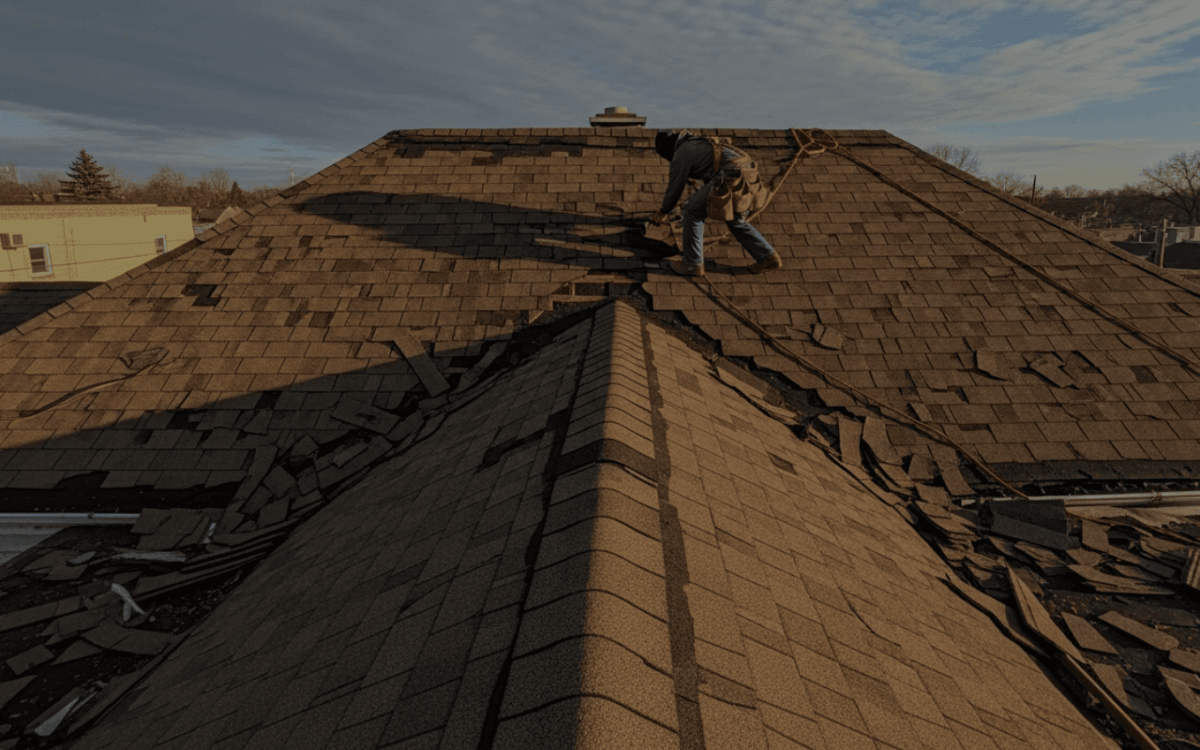
- Storm damage = Missing shingles, dents from hail, sudden leaks, broken flashing.
- Wear and tear = Curling shingles, brittle material, granule loss, long-term leaks.
If the adjuster decides it’s just “normal wear,” your claim may be denied. That’s why documentation is so important.
What Counts as Roof Damage Under Homeowners Insurance Policies?
Not all roof problems qualify for insurance coverage. Homeowners insurance is meant for sudden, unexpected damage—not for an aging roof that is simply wearing out.
Covered by Most Homeowners Insurance Policies
- Windstorms and tornado damage
- Hail impacts that break or dent shingles
- Fire or lightning strikes
- Falling trees or heavy debris
- Sudden leaks caused by a covered peril
Not Covered by Homeowners Insurance
- Normal wear and tear on an older roof
- Gradual leaks that develop over time
- Poor or neglected roof maintenance
- Damage from age-related deterioration
- Issues caused by improper installation
Insurance companies typically cover sudden, accidental roof damage but deny claims for aging or poorly maintained roofs. To strengthen a roof insurance claim, you’ll need proof that the issue came from a covered peril rather than old roof damage.
Does Homeowners Insurance Cover Normal Wear and Tear on an Old Roof?
No, homeowners insurance does not cover normal wear and tear on an old roof. Insurance is meant to protect against sudden events—like wind, hail, or fire—not the gradual aging that occurs as a roof nears the end of its life.
If shingles are curling, granules have worn away, or slow leaks have developed over time, these issues are considered the homeowner’s responsibility. Filing a roof insurance claim for wear and tear will almost always result in denial.
Insurance only applies when the damage to your roof comes from a covered peril, not from long-term neglect or deterioration.
Will My Premiums Rise If a Roof Insurance Claim Is Denied?
Yes, filing a roof insurance claim can affect your premiums even if the claim is denied. Insurance companies track every claim in your history, and too many—approved or not—can make you appear as a higher risk. This may lead to higher homeowners insurance premiums or even difficulty renewing coverage.
For small repairs, especially on an older roof, it is often better to pay out of pocket instead of risking a denied claim. Save your insurance claims for major storm damage, like hail or wind, where the repair costs clearly exceed your deductible.
When Should I Call a Roofer Before Filing a Claim?
You should call a roofer as soon as you notice possible wind or hail damage on an older roof. A licensed roofer can inspect for hidden problems, take photos, and confirm whether the damage is storm-related or just normal wear. This step is important because insurance adjusters often deny claims if the issue looks like aging rather than sudden damage.
By getting a professional opinion first, you’ll know if filing a roof insurance claim is worth it. If the roofer finds only minor wear, it may be better to handle repairs out of pocket. But if they confirm storm damage, their inspection report can strengthen your claim and improve your chances of approval.
Replacement Cost vs. Actual Cash Value for a 20-Year-Old Roof
When filing a roof insurance claim for a 20-year-old roof, the payout depends on whether your policy uses Replacement Cost (RCV) or Actual Cash Value (ACV).
- Replacement Cost (RCV): Pays for a brand-new roof at today’s prices, minus your deductible. For example, if replacement costs $12,000, your policy could cover most of it.
- Actual Cash Value (ACV): Pays the roof’s depreciated value. A 20-year-old roof may only be valued at $3,000, even if replacement costs $12,000.
The difference is huge, which is why knowing your policy type is critical. Always review your homeowners insurance policy before deciding to file a claim.
You may also read: What Does a 25‑Square Roof Replacement Cost in Michiana?
How Roof Inspections Affect Insurance Coverage on Aging Roofs
For roofs over 20 years old, many insurers require proof of inspection before renewing coverage.
A professional inspection helps:
- Show that your roof is still in safe condition
- Provide evidence for claims
- Extend your roof’s insurability
In areas like Michiana, where hail is common, scheduling inspections every 1–2 years can protect your coverage.
Maintaining Your Roof: How Regular Inspections Protect Coverage
Regular maintenance is one of the best ways to keep an older roof insurable. Insurance companies often look at the condition of your roof when deciding whether to approve or deny a claim. A well-maintained roof shows you are reducing risks and protecting your home.
Simple steps can make a big difference: clean gutters to prevent water backup, replace missing or broken shingles quickly, trim overhanging trees to avoid damage, and schedule regular roof inspections. These actions extend the life of your roof and create a record of care that can support a roof insurance claim after a storm.
By proving you’ve taken care of your roof, you increase the chances that your homeowners insurance provider will cover storm-related damage rather than denying it as neglect.
You may also read: How to Extend the Life of Your Roof with Regular Maintenance
Tips for Navigating Roof Insurance Claims on a 20-Year-Old Roof
Filing a roof insurance claim on an older roof can feel overwhelming, but following a clear process makes it easier to get fair coverage. These steps will help you protect your claim and avoid costly mistakes.
- Review your policy – check if you have Replacement Cost (RCV) or Actual Cash Value (ACV), since this decides how much your insurer may pay.
- Document everything – take photos, videos, and keep inspection reports to show the roof’s condition before and after the storm.
- Notify your insurance quickly – most homeowners insurance policies have strict deadlines for roof damage claims.
- Work with a roofer – a professional inspection and repair estimate can strengthen your case.
- Meet the adjuster prepared – share evidence and your roofer’s report to prove the damage came from a covered peril.
- Negotiate if needed – if the payout is too low, push back with proof that storm damage—not wear and tear—caused the loss.
Following these steps reduces the chance of denial and helps you save money when repairing or replacing a 20-year-old roof.
You may also read: Why Do Roofers Want to See Your Insurance Estimate?
Conclusion
Filing a roof insurance claim on a 20-year-old roof can be tricky. Storm damage like wind or hail is often covered, but payouts depend on your policy and roof condition. If repairs are costly and storm-related, a claim makes sense. For minor issues or normal wear, paying out of pocket is usually the smarter choice.
Regular inspections, maintenance, and knowing whether your policy is Replacement Cost or Actual Cash Value will give you the best chance of coverage when you need it most.
Key Takeaway
A 20-year-old roof can still be covered by homeowners insurance if storm damage is clear, but payouts depend on your policy type and roof condition. File a roof insurance claim only when the damage is major and storm-related; handle small repairs or normal wear out of pocket. Regular inspections, maintenance, and documentation give you the best chance of getting coverage approved.
FAQs About Roof Insurance and Older Roofs
1. What is the actual cash value of a 20-year-old roof?
Usually just a fraction of the replacement cost, often 10–20% of what a new roof would cost. Insurance companies calculate this from the condition of your roof and depreciation at 20 years old.
2. Will insurance pay for hail damage on an old roof?
Yes, if hail damage is from a covered peril. But many insurance policies only pay Actual Cash Value, not full roof replacement, especially for an older roof nearing the end of its life.
3. How long do you have to file a wind and hail claim?
Most insurance providers require you to file a claim within 12 months, though some home insurance policies set shorter deadlines. A timely roof inspection helps support your claim.
4. Can an insurance company force you to replace your roof?
Yes, some insurance companies may require you to replace your roof before renewing insurance coverage, especially if it’s 20 years old or shows normal wear and tear.
5. What can you do if your claim for old roof damage is denied?
Check what your policy covers, request another roof inspection, or appeal with documentation. A roofer’s report proving storm damage can support your insurance claim and show the need for repair or replacement.