Introduction
Choosing between a rafter and a truss affects how your roof performs for years. It impacts cost, strength, attic space, and even how fast your home gets built. Many homeowners focus only on price, but that can lead to the wrong decision.
A roof is more than shingles, and understanding the hidden parts of your roof anatomy helps you see how the structure beneath carries weight from snow, wind, and the roof deck. That structure must transfer load safely to the exterior wall. If the framing is wrong, problems show up later as sagging or cracks.
This guide breaks down rafters vs trusses in a clear way. You will learn how each system works, where each fits best, and how to decide based on your home, budget, and future plans. The goal is simple: help you avoid costly mistakes and choose the right roof system.
Key Takeaway
If you need a fast answer, here is the simple way to choose between rafters and trusses:
- Choose trusses if you want lower cost and faster construction
- Choose trusses if your roof design is simple
- Choose trusses if you do not need attic space
- Choose rafters if you want attic storage or living space
- Choose rafters if your roof shape is complex
- Choose rafters if you need flexibility during construction
Most modern homes use prefabricated trusses because they reduce labor and cost. Still, rafters remain useful when design freedom or future use of space matters. Think about how you will use your roof area before deciding, and understanding the different types of roofing materials available can help you match the right system to your chosen framing structure.
What Is a Roof Truss and How Does It Support Your Roof System?
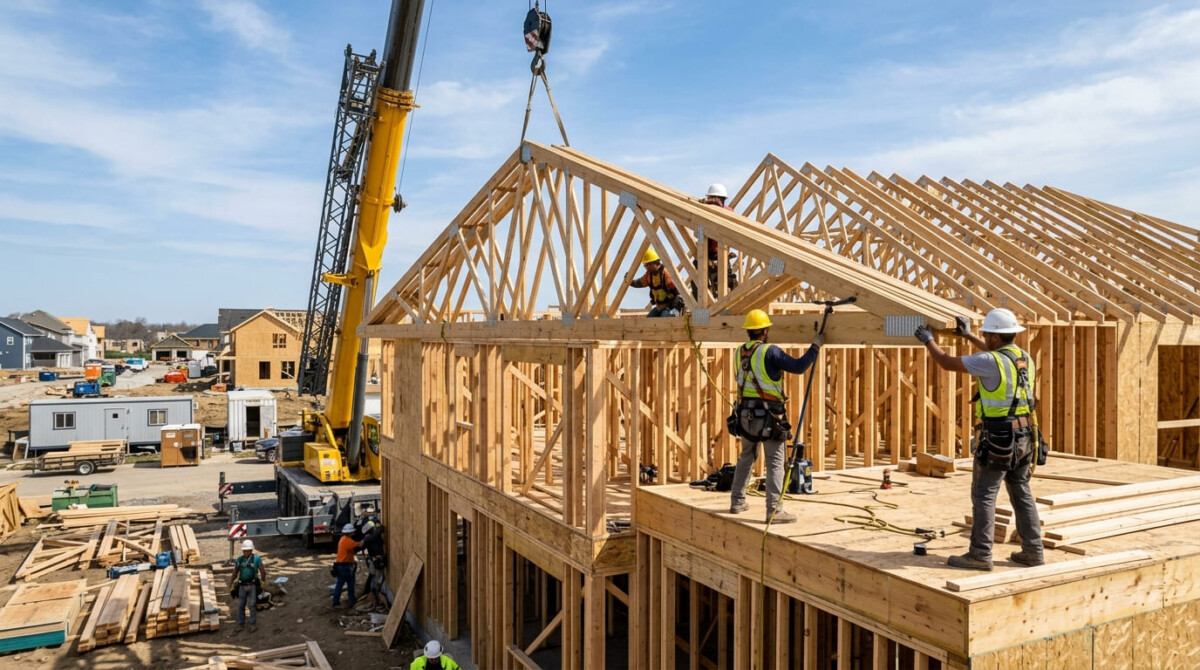
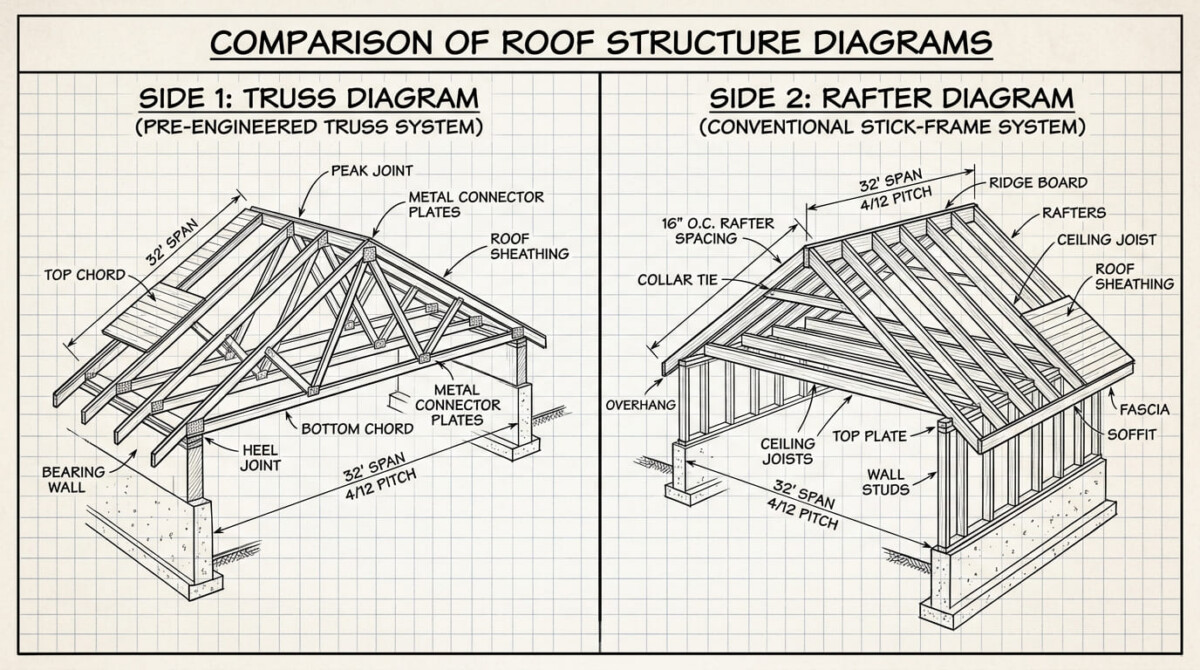
A roof truss is a pre-built framework made of wood that supports the roof by spreading weight across multiple connected pieces. It forms a triangular shape, which helps distribute loads evenly to the exterior wall. This design makes trusses strong and efficient for most homes.
Trusses are built in a factory, not on-site. They arrive ready to install, which saves time and reduces labor. Because trusses are engineered, they follow strict load calculations. This reduces human error during roof construction.
Another key point is how trusses handle force. Instead of relying on single beams, they use a system of smaller members that work together. This allows them to span longer distances without support. That is why trusses are common in modern roof framing systems.
What Is a Roof Rafter? Understanding Traditional Roof Framing
A rafter is a sloped beam that runs from the ridge of the roof down to the wall plate. Rafters are built on-site, often called stick framing. Each piece is cut and installed one by one to form the roof structure.
Rafters rely on fewer connections compared to trusses. They work together with ceiling joists to hold the roof shape and prevent walls from spreading. This system has been used for decades in traditional construction.
One major advantage of rafters is flexibility. Builders can adjust the design during installation. This makes rafters useful for custom homes or complex roof shapes. However, this flexibility also means more labor and higher cost compared to trusses.
Rafters vs Trusses: Key Differences Every Homeowner Should Know
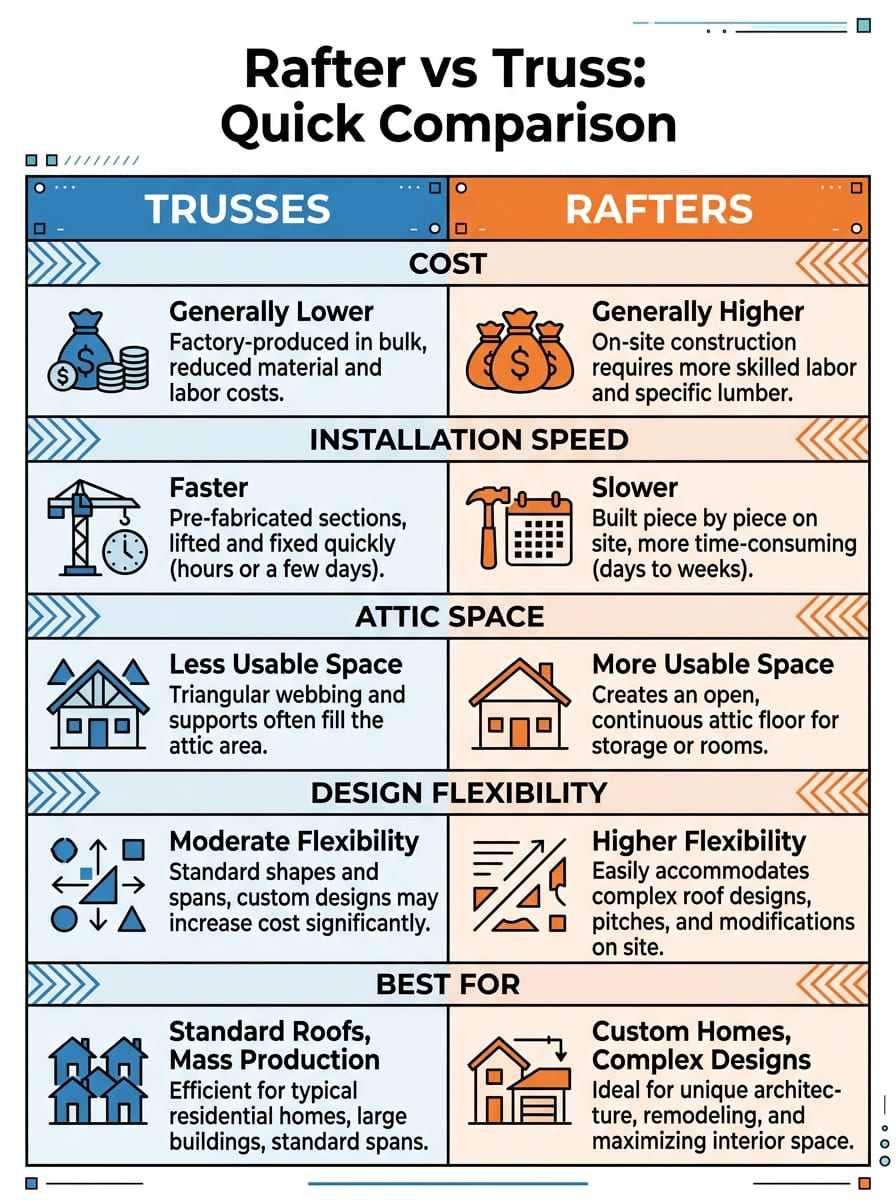
Rafters and trusses serve the same purpose but work very differently. The key differences affect cost, design, and performance.
| Feature | Rafters | Trusses |
| Construction | Built on-site | Prefabricated in factory |
| Cost | Higher labor cost | Lower overall cost |
| Installation | Slower | Faster |
| Design Flexibility | High | Limited |
| Span Capability | Shorter spans | Span longer distances |
| Attic Space | More usable space | Limited or none |
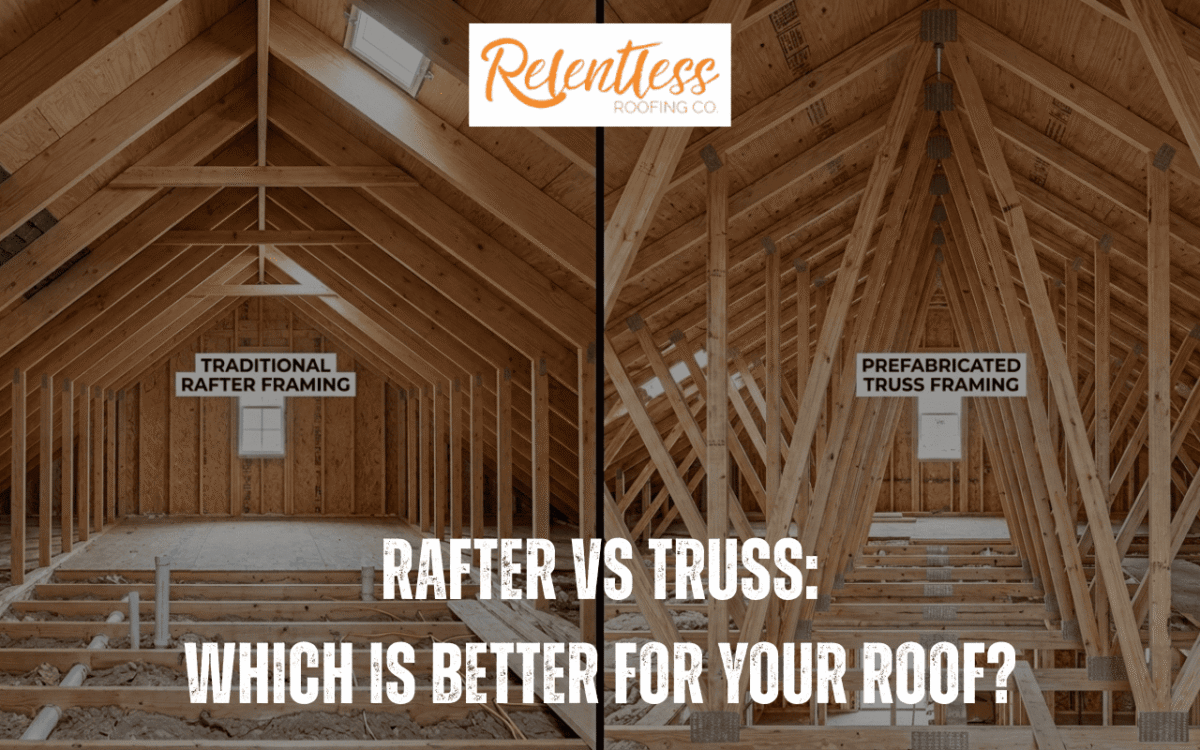
The biggest difference is how they are built. Rafters require skilled labor on-site. Trusses arrive ready, which cuts down time. Another major factor is attic space. Rafters provide open space, while trusses fill that space with webbing.
Span, Strength, and Load: Which Roof System Performs Better?
Trusses usually perform better when it comes to span and load. They are engineered to distribute weight evenly, which reduces stress on any single part of the roof. This allows them to span longer distances without extra support.
- Trusses span longer distances without interior walls
- Rafters need support for longer spans
- Trusses distribute load through multiple joints
- Rafters carry load along single beams
Trusses also reduce the risk of sagging over time. Because they are designed using precise calculations, they handle heavy loads like snow or wind more reliably.
Rafters can still be strong, but their performance depends on proper installation. Small errors in cutting or spacing can affect strength. This makes trusses more consistent for most residential roofs.
Pros and Cons of Roof Trusses: Where They Work Best (and Where They Don’t)
Trusses are widely used because they offer clear advantages. Still, they are not perfect for every project.
Advantages of Trusses
- Lower cost due to reduced labor
- Faster installation time
- Consistent strength from engineering
- Ability to span longer distances
Limitations of Trusses
- Limited attic space
- Hard to modify after installation
- Requires planning before delivery
Trusses work best for standard roof designs where speed and cost matter, but if you plan to use attic space or want a roof that is easier to maintain for long-term longevity, trusses may limit your options later. That trade-off is often overlooked during planning.
When Rafters Make More Sense Than Trusses
Rafters are still a better choice in situations where flexibility and future use matter more than speed. While trusses are faster to install, rafters give builders more control during construction and allow changes if needed later.
1. Custom roof design: Rafters allow on-site adjustments to angles and roof shape. This makes them suitable for complex designs with multiple slopes, ridges, or unique layouts.
2. Attic space or storage: Rafters leave more open space under the roof. This makes it easier to use the attic for storage or convert it into a living area in the future.
3. Renovation projects: Rafters are easier to modify in existing homes. Changes like adding a dormer or adjusting the roof structure are more practical compared to trusses.
4. On-site adjustments: Rafters can be cut and adjusted during installation. This helps handle uneven walls or unexpected issues without delaying the project.
Rafters often make more sense when long-term use, space, and flexibility are important.
Cost Breakdown: Rafters vs Trusses (Short-Term vs Long-Term Value)
Cost often drives the decision, but looking only at the upfront price can lead to the wrong choice. Trusses usually cost less at the start because they install faster and need less labor. Rafters cost more upfront but offer more flexibility over time.
| Option | Cost Range (per sq ft) | Installation Time | Long-Term Value |
| Rafters | Higher | Slower | Flexible use |
| Trusses | Lower | Faster | Cost-efficient |
Example:
A typical home can save thousands by using trusses due to lower labor costs. However, if you plan to use attic space later, rafters may provide better long-term value.
The key point is simple. Lower upfront cost does not always mean better value. Think about how you will use the space under your roof before making a final decision.
Roof Design, Shape, and Space: How Your Home Affects the Choice
Roof design plays a major role in choosing between rafters and trusses. Simple roof shapes like gable roofs work well with trusses. Complex designs with multiple slopes often need rafters.
Trusses are best for standard layouts where uniformity matters. They perform well when the roof shape is predictable. This is why most production homes use trusses.
Rafters are better when the roof shape changes or includes features like vaulted ceilings. They allow more control over the final design. This is important for custom homes or remodels.
Space is another key factor. If you need attic space, rafters are usually the better option. Trusses can limit usable space due to their internal structure.
Choosing Between Rafters vs Trusses for Your New Roof
Choosing between rafters and trusses depends on your priorities, not just price. The right roof system should match your budget, timeline, and how you plan to use the space in the future.
Use this quick checklist to decide:
- Budget: Do you want to reduce upfront cost?
- Timeline: Do you need faster installation?
- Roof complexity: Is your roof simple or does it have multiple angles and shapes?
- Future plans: Will you need attic space for storage or living area later?
- Flexibility: Do you expect changes during construction?
If most of your answers focus on saving time and money, trusses are usually the better option. If your focus is on space, design control, and future use, rafters make more sense.
It is always best to confirm your choice with a contractor, and starting with a professional roof replacement consultation gives you expert guidance based on your home’s specific layout and load requirements.
They can review your roof structure and guide you based on your home’s layout and load requirements.
Conclusion: Making the Right Roof Framing Decision for Your Home
Rafter vs truss is not about which is better overall. It is about what fits your needs. Trusses work well for cost and speed, while rafters offer flexibility and space.
Think beyond the initial build. Consider how your roof will be used over time. A cheaper option today may limit your choices later.
The best decision comes from balancing budget, design, and long-term use, and working with a trusted local roofing team ensures your roof system is built to support your home for years without issues. Take time to plan, and your roof system will support your home for years without issues.
You May Also Want to Read
You may also want to read:
- How Much Does a New Roof Cost in Indiana
https://relentlessroofingco.com/how-much-does-a-new-roof-cost-in-indiana/ - Avoid Common Mistakes When Choosing a Roofing Contractor in Elkhart Indiana https://relentlessroofingco.com/when-choosing-a-roofing-contractor-in-elkhart-indiana/
FAQs
1. What is the difference between rafter and truss?
Rafters are individual beams built on-site, while trusses are prefabricated structures made in a factory. Rafters allow more design flexibility and attic space, while trusses are faster to install and usually cost less.
2. Are trusses stronger than rafters?
Trusses are often stronger because they distribute load through multiple connected parts. This design reduces stress on single points and improves overall stability, especially for longer spans.
3. Which is cheaper, rafters or trusses?
Trusses are usually cheaper due to lower labor costs and faster installation. Rafters cost more because they require skilled on-site construction and more time.
4. How can I tell if my roof has rafters or trusses?
Check your attic. Rafters appear as open beams, while trusses have a web-like pattern of connected pieces. Trusses fill more space and look more complex.
5. Are rafters better for attic space?
Yes, rafters provide more open attic space. This makes them better for storage or converting the area into living space.
6. Can you replace rafters with trusses?
It is possible, but it requires major structural changes. A contractor must assess the roof system before making such a change to ensure safety and proper support.