
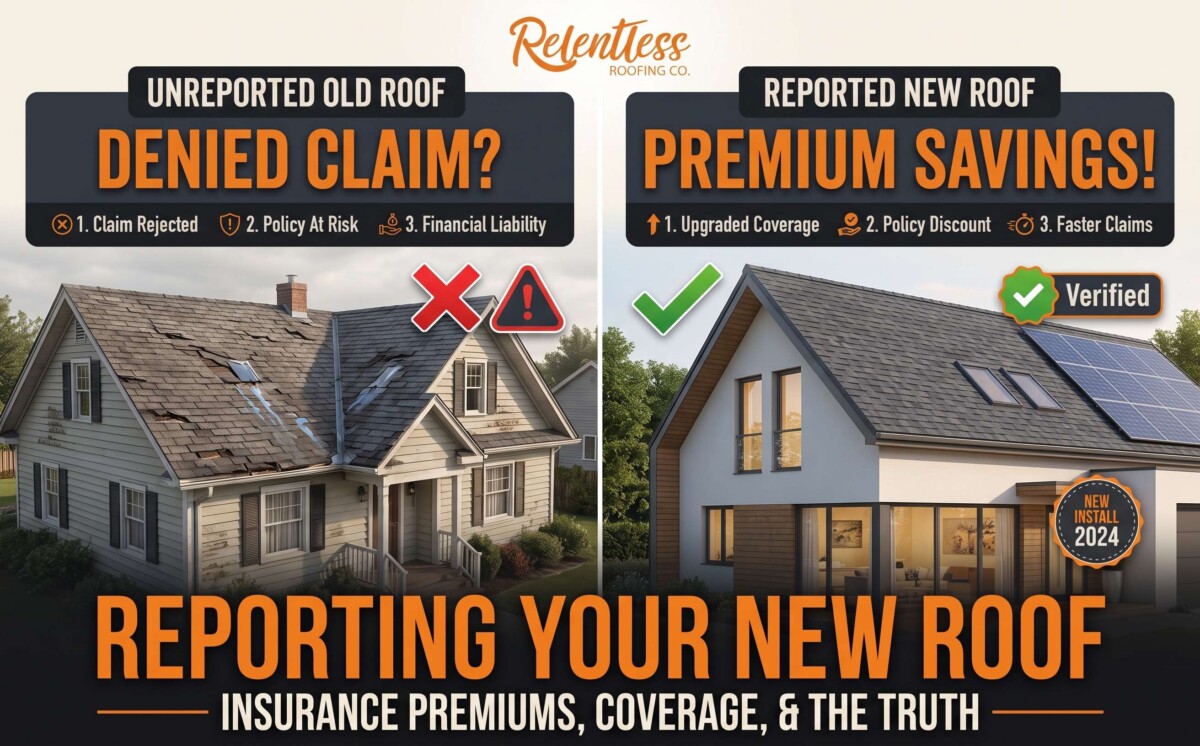
Should I tell my insurance company about my new roof? Yes. Tell your insurance company after the new roof is complete and any required inspection has passed. The update may qualify you for a discount, correct the roof age on your policy, and create proof for future claims. Ask the insurer to confirm the change in writing.
Introduction
A new roof changes how your insurer views your home. Its roof age, roofing materials, condition, and replacement cost can affect your homeowners insurance premium, renewal terms, and future roof claims.
Think of this as the Roof Risk-Clock. It starts when the roof installation is complete. Your final invoice, permit, warranty, inspection record, and photos prove when you replaced the roof and which materials were used.
Reporting the work does not guarantee lower insurance costs. It gives the insurance company accurate records, helps you ask about available discounts, and reduces questions if wind or hail damage leads you to file a claim later.
Key Takeaway
Report the completed roof replacement, send proof to your insurer, and check that your homeowners insurance policy has been updated. This helps the insurance company record the correct roof age and roofing materials before you renew your policy or file another insurance claim.
- Send the final invoice, permit, warranty, inspection record, and photos.
- Provide the product name, roofing material, and impact rating.
- Ask about new-roof and impact-resistant shingle discounts.
- Confirm the roof age, deductible, and settlement method.
- Check whether the roof has replacement cost coverage or actual cash value coverage.
- Keep the insurer’s written reply with your roofing records.
The Indiana Department of Insurance advises homeowners to keep records of property improvements and provide them during the claims process.
Why Telling Your Insurer About a New Roof Usually Saves Money and Protects Coverage
A new roof may lower your insurance cost because it can reduce the risk of leaks, water damage, and future wind or hail damage. Savings vary by insurer. The main reason to report the roof replacement is to keep your insurance coverage and property records accurate.
Roof age can affect the payout after an insurance claim. Actual cash value, or ACV, subtracts depreciation based on age and wear. Replacement cost coverage may pay for similar roofing materials without deducting depreciation, subject to the deductible, policy limits, and claims process.
A dated invoice can protect you years later. If hail damages the roof in 2031, proof of a 2026 roof installation confirms its age and supports the insurer’s review of replacement cost coverage.
How Much Can a New Roof Lower Home Insurance in Indiana?
There is no standard Indiana discount for a new roof. The effect on your home insurance premium depends on the insurer, previous roof age, roofing materials, impact rating, location, and home insurance policy. Ask for a written quote instead of relying on a national average.
| Roof update | Possible insurance result | What to ask |
| Standard asphalt shingles | Roof-age credit or no premium change | Does my insurer offer a new-roof discount? |
| Class 4 impact-resistant shingles | Possible hail-resistant roofing credit | Is this shingle product approved? |
| Metal roof | Review based on material and risk | Does this roofing material qualify for a credit? |
| Higher-cost roofing system | Possible credit and higher Coverage A | Does my dwelling limit need to change? |
State Farm lists Indiana among the states where qualifying impact-resistant roofing may earn a discount. The roof must use an eligible product, and the homeowner may need to submit a certification form. Class 4 is the highest UL 2218 impact rating, but it does not guarantee lower insurance costs or prevent all hail damage.
What Documents Should You Send After a Full Roof Replacement?
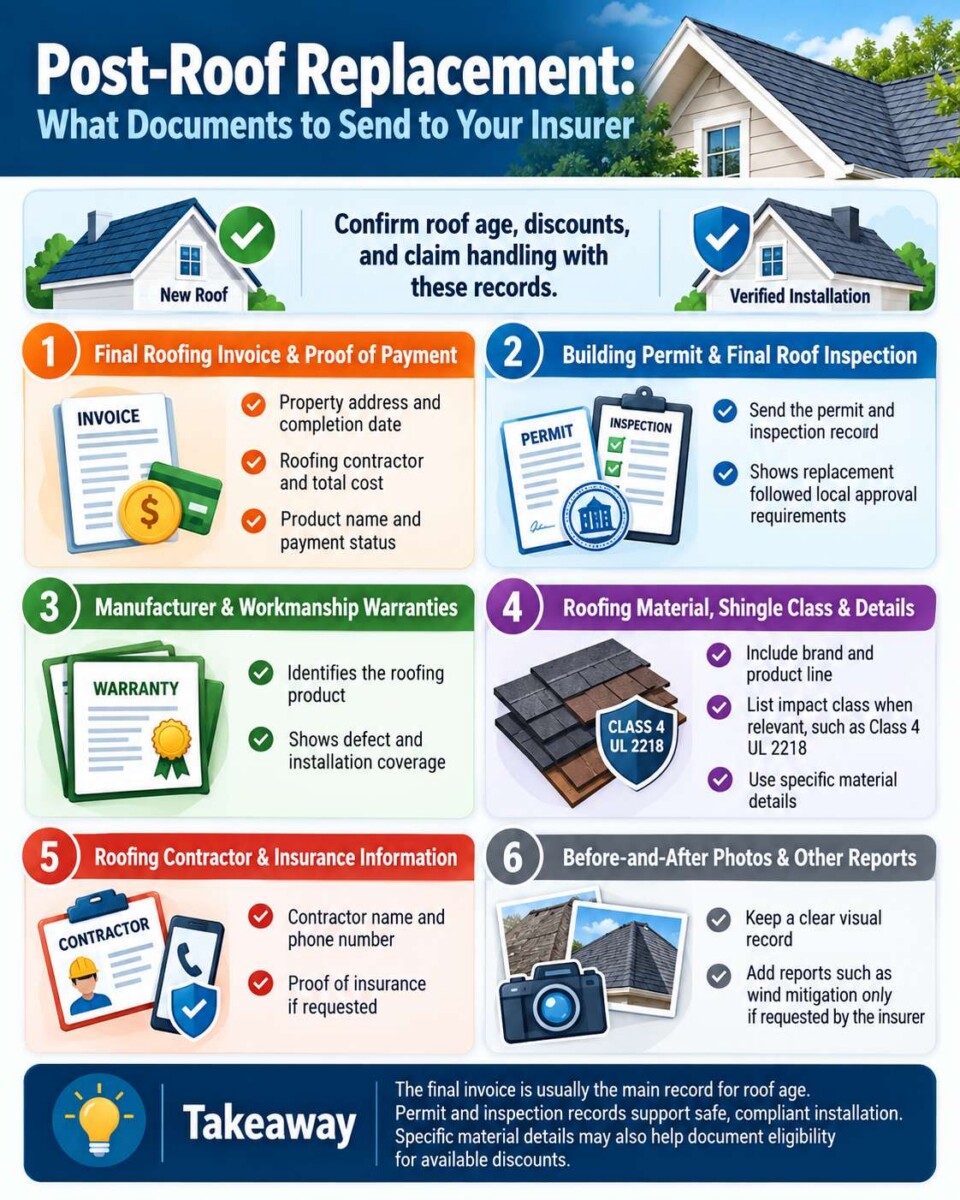
Send records that prove when the roof installation was completed, which roofing materials were used, who performed the work, and whether the project passed local requirements. These documents help your insurer confirm the roof age, review possible discounts, and handle a future insurance claim with fewer questions.
Final Roofing Invoice and Proof of Payment
The invoice should show the property address, completion date, product name, roofing contractor, total cost, and payment status. This is the main record proving when you replaced the roof.
Building Permit and Final Roof Inspection
Send the permit and final roof inspection record when your city or county required them. They show that the full roof replacement followed the local approval process.
Manufacturer and Workmanship Warranties
These warranties identify the roofing product and explain who may cover material defects or installation problems.
Roofing Material, Shingle Class, and Product Details
Provide the brand, product line, roofing material, and impact class. A description such as “asphalt roof” may be too broad for an insurance coverage or discount review.
Roofing Contractor and Insurance Information
Include the contractor’s company name, phone number, and proof of insurance if the insurer requests it.
Before-and-After Photos and Other Reports
Photos create a clear record of the roof before and after the work. They may also help during a later claims process. Order a wind-mitigation report only if your insurance provider confirms that it is required.
What to Do After Your Roof Is Done With Home Insurance
Once the roof installation is complete, follow these five steps to update your home insurance policy and create a clear record for future roof claims.
- Collect your roofing records.
Gather the final invoice, permit, roof inspection report, warranties, product sheet, and completion photos. - Contact your insurance company.
Use email or the insurer’s online portal so you have a dated record of the update. - Explain how the roofing project was paid for.
State whether the roof replacement was covered by an insurance claim, paid out-of-pocket, or completed to meet a renewal requirement. - Request a policy review.
Ask the insurer to confirm the roof age, Coverage A limit, ACV or replacement cost coverage, available discounts, and wind and hail deductible. - Check the updated policy.
Save the insurer’s reply and review your next declarations page to make sure the roof details are correct.
For a claim-funded roof, ask whether recoverable depreciation is still owed. For a self-funded replacement, request a new insurance premium review and ask whether the roofing materials qualify for any discount.
Conclusion
Tell your insurer once the roof replacement is complete. Send the final invoice, permit, warranties, product details, inspection record, and photos so your home insurance policy reflects the correct roof age and materials.
Ask whether the new roof qualifies for an insurance premium credit and whether future roof damage will be settled through ACV or replacement cost coverage. Request written confirmation that the update was completed, then keep it with your roofing records. This gives you clear proof if questions arise during renewal or a future insurance claim.
You May Also Want to Read
You may also want to read:
Roof Repair Cost More Than Insurance Estimate? How Supplements Work
Roof Insurance Claims in Indiana: Estimating, Filing and Payout Guide
FAQs
Should I Tell My Insurance Company Before or After Getting a New Roof?
For a standard roof replacement, contact your insurance company after the work is complete and the roof inspection has passed. Notify the insurer before work begins if the project changes the structure, raises the rebuild cost, requires temporary relocation, or follows a repair or replacement notice.
Does Homeowners Insurance Pay for a Roof Replaced Because of Age or Wear and Tear?
Usually, no. Homeowners insurance may cover roof damage caused by a covered event, such as wind, hail, fire, or a fallen tree. Insurance will not normally pay for an old roof, poor maintenance, or normal wear and tear. Check the exclusions and deductible before filing an insurance claim.
Will Insurance Cover a 10-Year-Old Roof in Indiana?
A 10-year-old roof may still have insurance coverage. Roof age can affect inspections, depreciation, the payout, and how much you pay out-of-pocket. Ask whether your home insurance policy uses ACV, replacement cost coverage, or a roof payment schedule before you file a claim.
Can My Insurance Company Require Me to Replace an Older Roof?
An insurance company may require roof repair or replacement before it agrees to renew your policy. Ask for the roof inspection findings, reason, and deadline in writing. You can then repair the roof, replace it, correct inaccurate records, or compare coverage from another insurance provider.
Can a Future Roof Claim Be Disputed If I Did Not Report the Replacement?
Yes. An incorrect roof age or missing roofing material record can create questions about depreciation, insurance coverage, and claim eligibility. Failing to report the roof replacement does not automatically cancel every claim, but it can make the claims process harder. Submit the records and keep the insurer’s written confirmation.