

When the roof repair cost is more than the insurance estimate, the difference may come from missed materials, hidden damage, code work, wrong measurements, or pricing gaps. A roof supplement asks the insurance carrier to review those added covered costs using an itemized estimate, photos, measurements, and other supporting records.
Introduction
A higher roofing contractor estimate does not always mean the roofer is overcharging. The insurance estimate may be based on visible roof damage, standard pricing, or an early inspection. The contractor may later find missing materials, extra labor, code-required work, or hidden damage that changes the roof repair cost.
Homeowners should review the difference through three lenses: Policy, Scope, and Evidence. Check what the insurance policy covers, whether the scope of work matches what the roof needs, and what photos, measurements, or records support each added cost. This helps protect your insurance claim and reduces the risk of paying a covered expense out of pocket.
Key Takeaway
Treat a gap between the roofing contractor’s estimate and the insurance estimate as a reason to review the insurance claim, not as proof that either side is wrong.
Check three things:
- Policy: Does your homeowners insurance provide coverage for the added roof repair or roof replacement work?
- Scope: Does the contractor’s scope of work match the roof damage and what the roof needs?
- Evidence: Do photos, measurements, roof inspection records, product instructions, or building code references support each added cost?
A roof insurance supplement may correct missing or underpriced items. The insurance adjuster may approve, reduce, or deny the request based on the policy, repair needs, and supporting records.
Why Is My Roof Repair Cost More Than the Insurance Estimate?
The insurance adjuster and roofing contractor may be pricing different parts of the same insurance claim. The adjuster prepares an insurance estimate for the covered roof damage found during the claim inspection. The contractor prices the labor, materials, safety steps, and full scope of work needed to repair or replace the roof.
The first estimate may rely on visible damage, aerial measurements, and standard local pricing. A detailed roof inspection may later reveal incorrect quantities, missing roof sections, hidden decking damage, or materials required by building codes and manufacturer instructions. These findings can raise the roof repair cost.
Compare both repair estimates line by line. The roofing contractor should explain what is missing, why the roof needs it, and how each added cost was calculated. An itemized estimate gives the homeowner a clearer way to review the repair needs and discuss the difference with the insurer.
Your insurance coverage also affects the final payout. Actual Cash Value reflects the roof’s age and depreciation. Replacement Cost Value may provide more funds after the work is completed and documented. The deductible, policy terms, approved scope, and final invoice will determine how much the insurance company pays and whether you have an out-of-pocket expense.
Why Adjuster Roof Estimates Can Miss Required Line Items
An adjuster may inspect the roof before all damage is visible. Some conditions stay hidden until the old shingles are removed. Other gaps come from incorrect roof measurements, software defaults, missing labor charges, or materials that were grouped under the wrong line item.
The following table helps homeowners judge common estimate gaps:
| Possible estimate gap | Why it may be missing | Proof to request |
| Decking replacement | Damage was hidden under shingles | Tear-off photos and board measurements |
| Drip edge | Edge work was overlooked | Eave photos and installation requirement |
| Ice and water shield | Local or product rules were not reviewed | Code or manufacturer reference |
| Ridge cap shingles | A cheaper material was priced | Product specifications and roof photos |
| Steep-slope labor | Roof pitch was entered incorrectly | Pitch reading or measurement report |
| Flashing or pipe boots | Small parts were missed | Close photos and itemized scope |
| Permits and disposal | Fees or debris volume were excluded | Permit schedule and invoices |
A roofing supplement should connect each added cost to a specific roof condition. “Extra materials” is too vague. “Six damaged decking sheets found during tear-off, shown in dated photos” gives the adjuster something clear to review.
How Does the Roof Insurance Supplement Process Work?
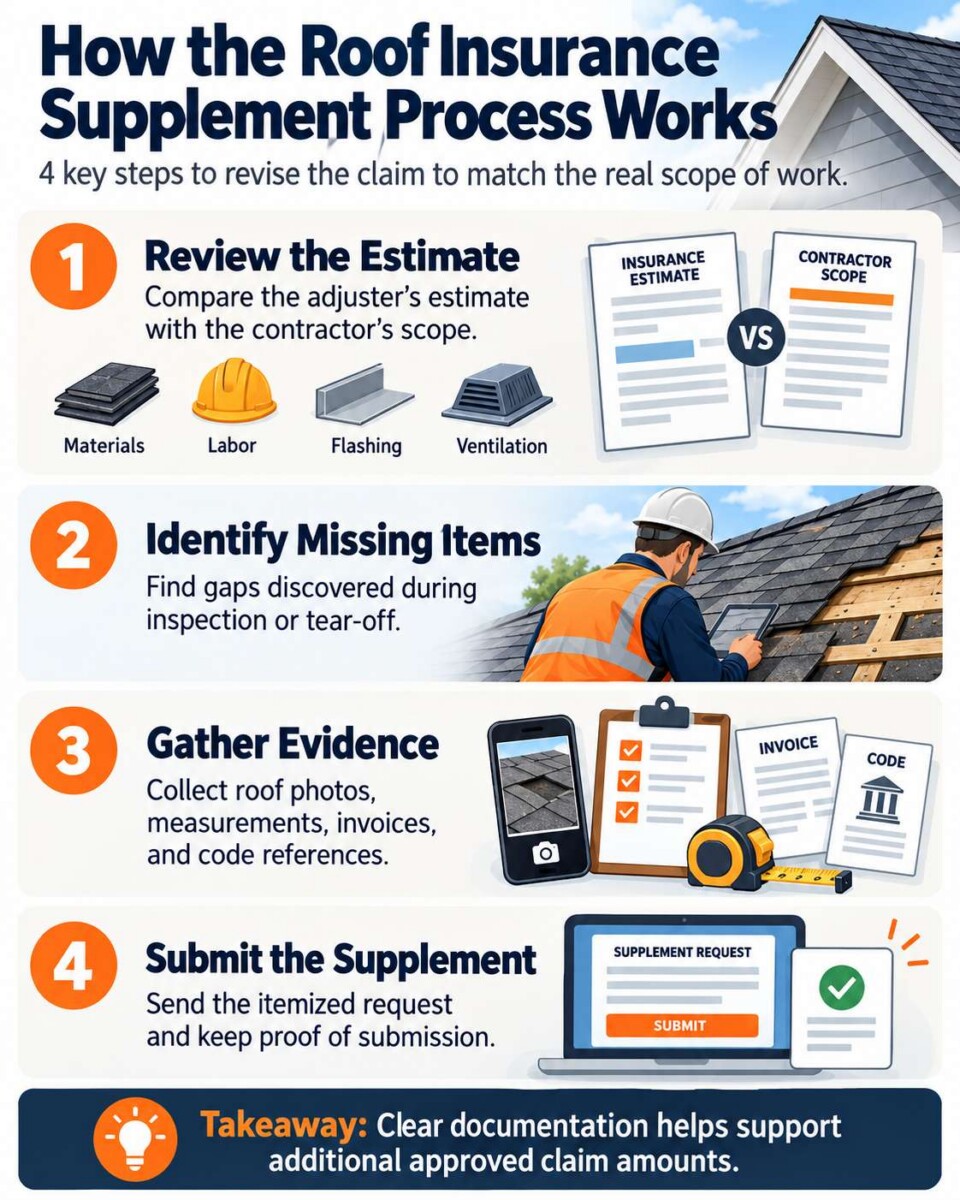
A roofing insurance supplement is an itemized request to revise the original insurance estimate after new roof damage, missing work, or pricing differences are identified. It helps align the insurance claim with the full scope of work needed for the roof repair or roof replacement.
The process usually follows five steps:
- Compare both repair estimates. Review materials, quantities, labor, disposal, permits, roof pitch, flashing, ventilation, and code-related work in the adjuster’s estimate and the roofing contractor’s proposal.
- Identify each gap. Mark items that are missing, underpriced, measured incorrectly, or found during a later roof inspection or tear-off.
- Collect supporting evidence. Use roof photos, measurements, invoices, product instructions, building code references, and records showing the extent of the damage.
- Submit the supplement. Send the itemized request through the insurance provider’s portal, email, or required claim channel. Include the claim number and keep proof of submission.
- Review the insurer’s response. The insurance adjuster may approve the request, approve part of it, ask for more records, arrange another inspection, or deny certain items.
Homeowners should keep a copy of the full supplement package. Ask which line items were submitted, how much additional payout was requested, and whether the insurance company confirmed receipt.
Real Relentless Roofing Supplement Case: Initial Estimate vs. Final Approved Claim
This section requires a verified Relentless Roofing claim before publication. The earlier example showing $9,800 to $16,450 was marked as fabricated, so it cannot be presented as a real company result.
Use the real claim file to complete this case:
| Case detail | Verified information to add |
| Initial insurance estimate | Actual approved amount |
| Original roof scope | Work included by the adjuster |
| Missing line items | Work Relentless Roofing found |
| Supporting evidence | Photos, measurements, codes, or product records |
| Supplement requested | Actual added amount |
| Final carrier approval | Verified final claim amount |
| Review period | Confirmed number of days |
The finished case should explain the cause of the increase. The strongest proof will come from showing how each added dollar was linked to a real roof condition and a record the carrier could check.
What If the Roofing Contractor’s Estimate Is Lower Than the Insurance Estimate?
A roof repair cost less than the insurance estimate does not automatically mean the homeowner can keep the full difference. The first step is to confirm that both documents include the same work.
A contractor may charge less because of supplier pricing, crew efficiency, or lower overhead. The lower bid may also leave out disposal, permits, ventilation, flashing, warranties, or other approved items. Compare the full scope before choosing based on price.
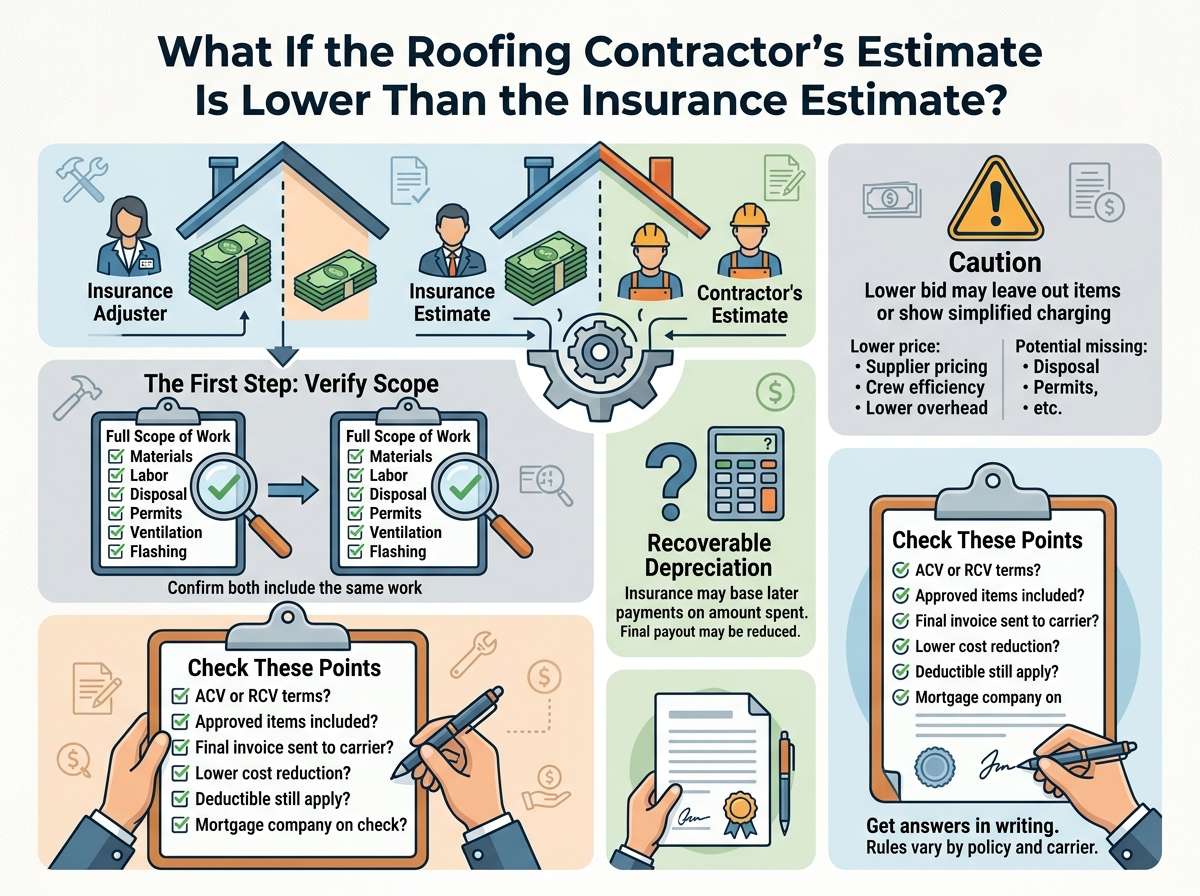
Ask the insurance carrier how a lower final invoice affects the claim. This matters most when recoverable depreciation is still being held. The carrier may base later payments on the amount actually spent.
Check these points before signing:
- Is the claim paid on ACV or RCV terms?
- Does the bid include every approved repair item?
- Must the final invoice be sent to the carrier?
- Will a lower cost reduce any remaining payment?
- Does the deductible still apply?
- Is the mortgage company named on the check?
Get the answers in writing. Insurance payment rules can vary by policy and carrier.
Who Negotiates With the Insurance Carrier During a Roof Supplement?
The contractor can explain roof work and submit construction records. The adjuster reviews the request for the insurance carrier. The homeowner remains responsible for contracts, payments, records, and major claim decisions.
Roofing Contractor
The roofer should prepare an itemized scope, document missing work, provide photos and measurements, and answer construction questions. A contractor should not promise that every supplement item will be paid.
Insurance Adjuster
The adjuster reviews coverage, pricing, quantities, and evidence for the carrier. When an item is denied, ask for the reason in writing. This shows whether the issue involves coverage, cost, scope, or missing proof.
Public Adjuster or Supplement Service
A licensed public adjuster may represent the homeowner during a claim dispute. A supplement service may prepare estimates and documents. Its legal authority to negotiate can depend on state licensing rules.
Homeowner
Keep the policy, adjuster estimate, contractor bid, supplement, photos, emails, invoices, approval letters, and payment records.
Before paying an estimate gap yourself, ask whether a supplement was filed, whether the carrier explained its decision, and whether better evidence or another inspection could resolve the issue.
Conclusion
A mismatch between the roofing contractor’s estimate and the insurance estimate should lead to a careful review. Compare the insurance policy, the approved scope of work, the actual roof repair needs, and the evidence behind each added cost.
A valid roof insurance supplement can correct missed or underpriced covered work. It does not guarantee payment for upgrades, unsupported charges, or damage excluded by the insurance coverage.
Before the repair process begins, confirm the approved claim amount, deductible, depreciation terms, final invoice rules, and any out-of-pocket expense. This helps the homeowner understand what the insurer may pay and what costs may remain.
You May Also Want to Read
You may also want to read:
What Does a New Roof Cost in Elkhart and Michiana
Should I Tell My Insurance Company About My New Roof
FAQs
What If the Roof Repair Cost Is More Than the Insurance Estimate?
Compare the roofing contractor proposal with the insurance estimate line by line. Look for missing materials, incorrect quantities, labor charges, code work, or hidden roof damage. If the added repair cost relates to covered damage and has clear proof, a roof insurance supplement can be submitted to the insurer for review.
Can I Keep the Difference If the Roof Repair Cost Is Less Than the Insurance Estimate?
Possibly, but do not assume the full difference belongs to you. The result depends on whether the insurance claim is paid under ACV or RCV terms, how depreciation is handled, and whether the insurer requires a final invoice. Your deductible, mortgage lender, and policy terms may also affect the final payout.
Do I Still Have to Pay My Deductible If the Contractor Charges Less?
A lower contractor estimate does not normally remove the deductible. The deductible is the homeowner’s share of the covered loss under the insurance policy. Ask the insurance company how the lower roof repair cost will affect the final payment, recoverable depreciation, and any remaining out-of-pocket expense before signing the roofing contract.
Why Is My Insurance Estimate Lower Than My Roofing Contractor’s Bid?
The insurance estimate may contain missing line items, incorrect measurements, lower pricing, or roof damage that was not visible during the first inspection. Ask the roofing contractor to support each difference with an itemized scope of work, roof photos, measurements, product instructions, and building code requirements.
What Happens If the Insurance Company Denies Part of the Roof Supplement?
Ask the insurance adjuster to explain the denial in writing. Then check whether the issue involves insurance coverage, repair scope, pricing, or weak evidence. You may submit clearer records, request another roof inspection, use the insurer’s review process, or seek help from a licensed public adjuster.