

In most cases, call a roofer first. An inspection can confirm the cause, record the damage, and estimate repairs before you file a claim. Call your insurance company first when water is entering the home, the structure is unsafe, the property cannot be lived in, or your policy requires immediate notice.
Introduction
In most cases, call a roofer first after storm damage. A professional roof inspection can confirm the type and extent of the roof damage before you file an insurance claim. It can also show whether hail, wind, or falling debris caused the problem, or whether it came from age, wear, or an older leak.
Homeowners insurance usually covers sudden damage caused by a covered event. It does not normally pay for routine maintenance or an ageing roofing system. A written repair estimate also helps you compare the expected repair costs with your deductible before opening a claim.
Call your insurance company first when the roof damage creates an emergency. This includes active water entry, serious structural damage, unsafe living conditions, or a policy that requires immediate notice.
Key Takeaway
- Call a roofer first when the home is safe and the roof damage needs to be confirmed by a qualified roofing contractor.
- Call your insurance company first when there is an active leak, major structural damage, or the home is unsafe to occupy.
- Check your insurance policy before filing a claim, especially when notice rules or a wind and hail deductible may affect the payout.
Why Calling a Roofer First Can Protect Your Roof and Insurance Record
Calling a roofer first can help confirm the roof damage, create useful proof, and show whether filing an insurance claim makes financial sense.
1. Document the Roof Damage Before Filing an Insurance Claim
A qualified roofing contractor can provide dated photos, measurements, and notes from the roof inspection. The report may cover damaged shingles, flashing, vents, gutters, siding, and attic areas. This gives the insurance adjuster a clear record of the damage before the claim inspection.
2. Avoid Claims for Wear or Damage Below the Deductible
The inspection may show that the problem came from roof age, failed sealant, poor maintenance, or repair costs below the deductible. In that case, filing an insurance claim may result in little or no payment.
3. Have the Roofing Contractor Meet the Insurance Adjuster
The roofer can point out visible damage, share measurements, and explain the repair scope during the adjuster meeting. The insurance adjuster still decides what the policy covers. Avoid contractors who promise claim approval or push for a full roof replacement before inspecting the property.
What a Free Storm-Damage Roof Inspection Should Cover
A free roof inspection should assess the full roofing system, nearby exterior parts, and signs of water damage inside the home. Ask the qualified roofer to check:
- Shingles, tiles, valleys, flashing, vents, and pipe boots
- Gutters, fascia, siding, windows, and outdoor equipment
- Attic decking, insulation, moisture, stains, and active leaks
- Hidden water paths and any temporary repairs needed to prevent further damage
After the inspection, you should receive dated photos, measurements, a written summary, and a clear repair or replacement recommendation. These details can help you understand the extent of the roof damage and decide whether the necessary repairs are worth filing an insurance claim for.
The roofer should explain the findings and repair process without pressuring you to sign a contract or file a claim.
What to Do During the First 24–72 Hours After a Storm
The first few days after severe weather can affect both the repair process and any future insurance claim. Focus on safety, clear documentation, and steps that prevent further damage.
- First 24 hours: Stay away from hazards. Take ground-level photos, document roof damage, record indoor leaks, and note the storm date and time.
- Within 24–48 hours: Arrange safe temporary protection to prevent further damage. Keep all receipts and schedule a professional roof inspection.
- Within 48–72 hours: Review the inspection findings. Compare the estimated repair costs with your deductible, policy exclusions, and notice rules.
- After the inspection: Contact your insurance company when the covered storm damage is clearly above the deductible. If the damage is minor, paying for the repair directly may make more sense than filing an insurance claim.
This 24–72-hour plan is a response guide, not a fixed claim deadline. Your insurance policy controls how long you have to report the roof damage and file a claim.
Is the Roof Damage Worth an Insurance Claim or Better Paid Out of Pocket?
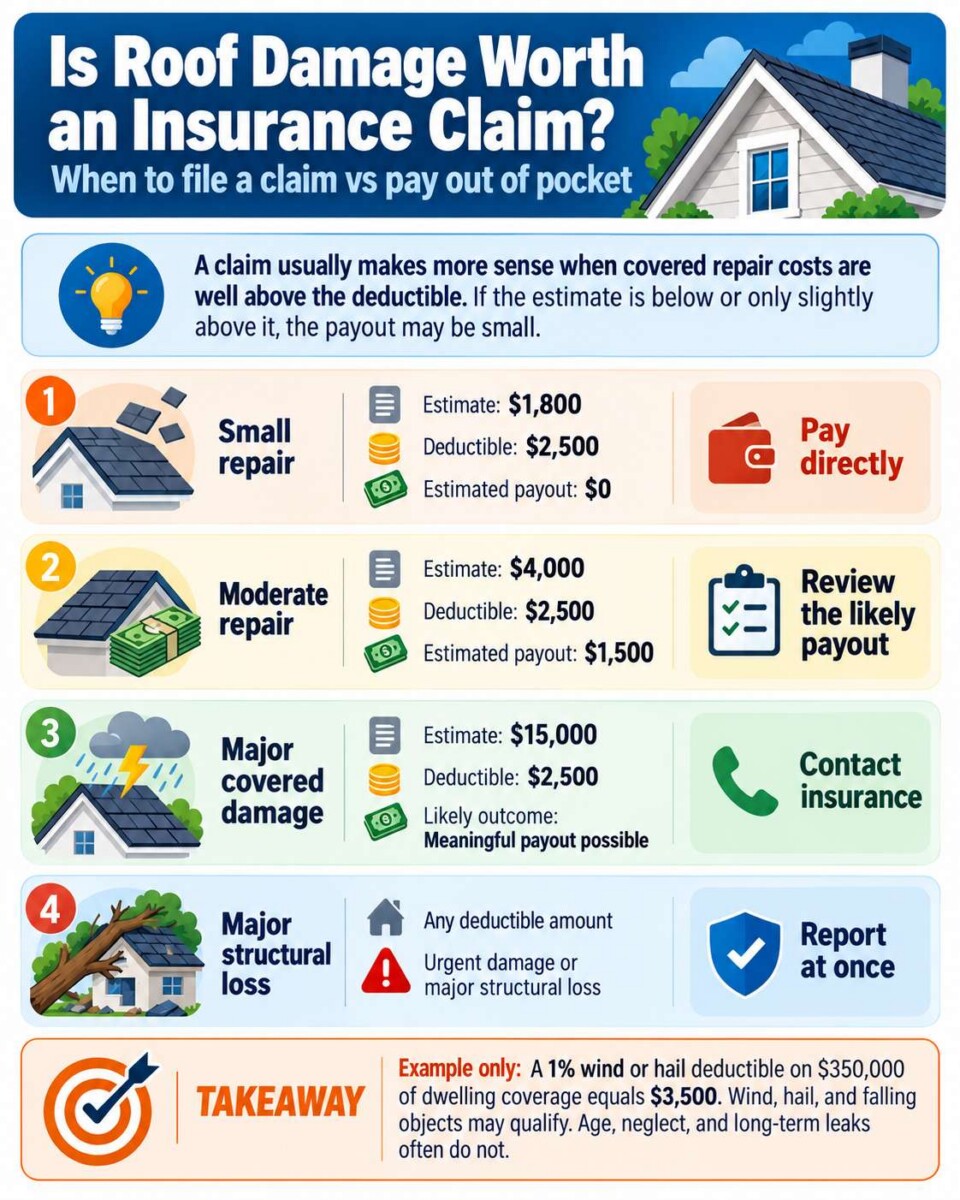
A claim makes more sense when covered repair costs are well above the deductible. When the estimate is below or only slightly above it, the possible payment may be small.
| Repair estimate | Deductible | Likely action |
| $1,800 | $2,500 | Pay directly |
| $4,000 | $2,500 | Review the likely payout |
| $15,000 | $2,500 | Contact insurance |
| Major structural loss | Any amount | Report at once |
A 1% wind or hail deductible on $350,000 of dwelling coverage equals $3,500. Wind, hail, and falling objects may qualify, while age, neglect, and long-term leaks often do not.
When You Should Call Your Insurance Company Immediately
Call your insurer at once when water is entering quickly, the roof is open to the weather, a tree has struck the home, or the property cannot be occupied. These losses may affect ceilings, walls, wiring, flooring, and belongings.
Report what happened without guessing whether the roof needs repair or replacement. Ask about the deductible, temporary repairs, adjuster timing, and extra living expense coverage.
Keep stopping further damage safely. Save photos, receipts, and messages. Avoid broad permanent work before the insurer inspects the loss unless waiting creates a safety risk.
Conclusion
Call a roofer first when the home is safe and you need a professional roof inspection before filing an insurance claim. Call your insurance company first when there is active water entry, major roof damage, unsafe living conditions, or a policy rule that requires immediate notice.
Start by protecting people and taking safe steps to prevent further damage. Then review your insurance policy, compare the repair estimate with your deductible, and decide whether filing a claim makes financial sense.
You May Also Want to Read
You may also want to read:
Storm Damage Roof Claims in Elkhart County: A Homeowners Timeline
Roof Insurance Claim Denied in Indiana? What to Do Next
FAQs
Should I Call a Roofer or My Insurance Company First After Roof Damage?
Call a roofer first when the home is safe and the damage needs confirmation. Call insurance first for active water entry, structural danger, loss of habitability, or a prompt-notice rule.
Should I Call a Roofer If I Cannot See Storm Damage From the Ground?
Yes. Hail bruising, lifted shingles, loose flashing, and small openings may be hard to see. Do not climb onto the roof. Ask a qualified roofer to inspect it.
Is Filing a Roof Insurance Claim Worth It If Repairs Are Close to My Deductible?
Often, the financial benefit is limited. Compare the estimate with the deductible and expected payment. Confirm that the cause is covered before filing.
Can a Roofing Contractor Meet the Insurance Adjuster?
Yes. The roofer can show damage, provide measurements, and explain the repair scope. The adjuster still decides coverage.