

A storm damage roof claim in Elkhart County should start with safety, clear photos, temporary protection when needed, and a professional inspection within the first week. Then review your policy, contact your insurer, prepare for the adjuster, compare repair scopes, and keep records until the claim and roofing work are finished.
Introduction
Storm damage can leave you unsure what to do first. You may see missing shingles, damaged gutters, hail marks, or an interior leak. Other damage may stay hidden until a roofer checks the roof.
The best way to handle the situation is as a timeline. Each stage has a different goal, from protecting the home and collecting evidence to reviewing the insurance estimate.
Local timing matters. According to the Michiana Roof Report 2026, 15% of roofing requests in the study were storm or insurance driven. March and April 2026 were also the busiest two-month stretch represented after the spring storm period.
Key Takeaway: Document the Damage and Request an Inspection Within the First Week
Your first week should focus on creating a clear record of the damage before rain, cleanup, or temporary work changes what can be seen. Stay off an unsafe roof, photograph visible damage, save storm information, control active leaks, and arrange a professional roof inspection as soon as practical.
Focus on four actions:
- Photograph the roof, gutters, siding, debris, and interior water damage.
- Record the storm date and save local weather alerts.
- Keep photos and receipts for temporary repairs.
- Request a professional inspection within the first week.
According to the Michiana Roof Report 2026, storm and insurance work represented 15% of requests, while March through April 2026 formed the busiest two-month period represented after the spring storms. Early action can matter when inspection demand rises quickly.
What Does a Storm Damage Roof Claim Timeline Look Like in Elkhart County?
For homeowners across Elkhart County and nearby communities, a roof claim usually moves through stages rather than one insurance call. Early actions protect the home and preserve evidence. The middle stages involve inspections, claim reporting, and adjuster review. Later stages deal with the insurer’s decision, repairs, supplements, or disputes. The exact timing can change based on your policy, insurer, and storm volume.
| Time | Main Action | What to Keep |
| First 24 hours | Stay safe and document damage | Photos, videos, weather alerts, receipts |
| Days 1–3 | Request a roof inspection | Inspection photos and findings |
| Days 3–14 | Notify the insurer if filing | Claim number, emails, call notes |
| Weeks 1–4 | Attend adjuster inspection | Adjuster estimate and contractor scope |
| Weeks 4+ | Review outcome and repair path | Approval, invoices, supplements, denial letters |
Treat these periods as a practical guide rather than fixed insurance deadlines. Your own policy controls notice requirements and other claim terms.
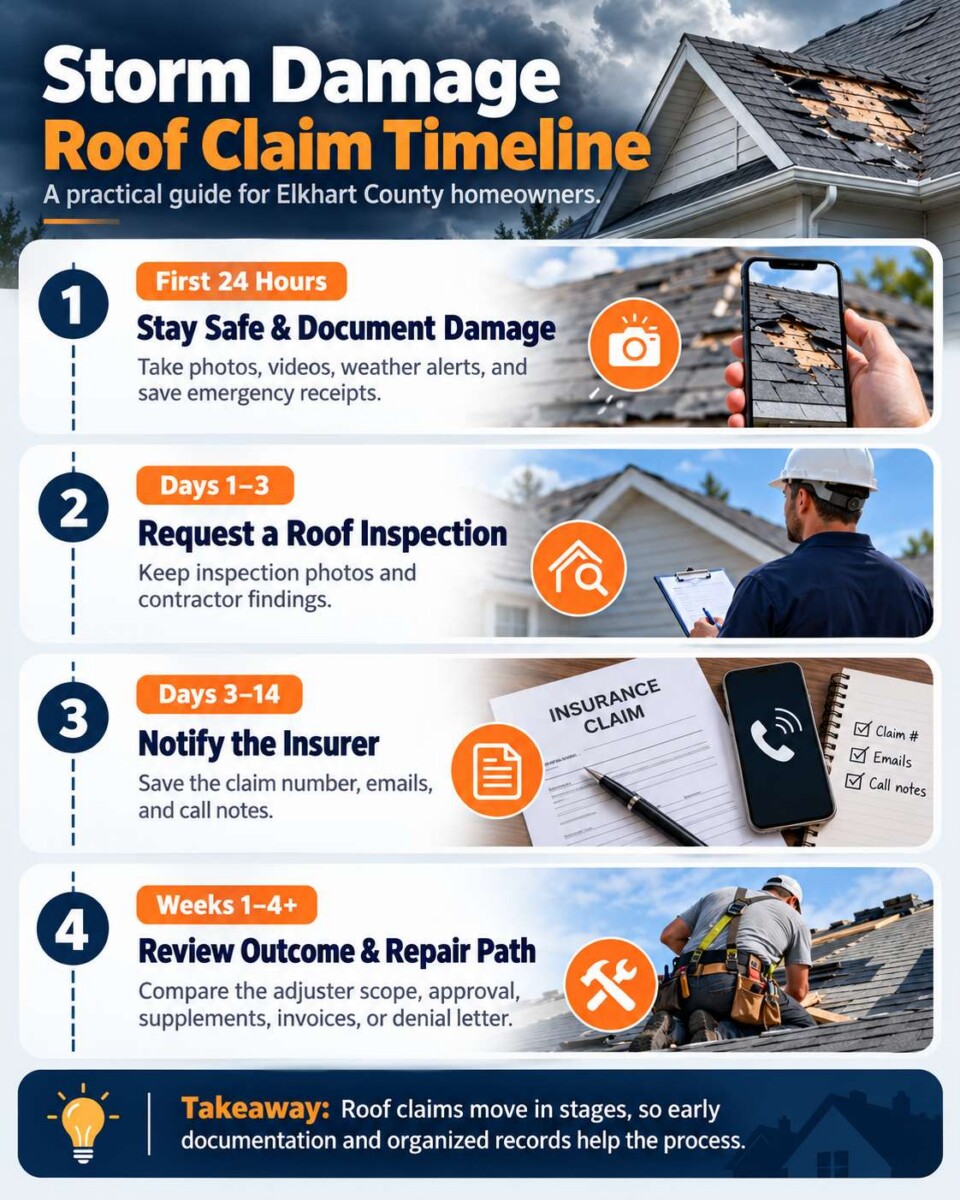
First 24 Hours: What Should You Do Immediately After Storm Damage?
The first day is about safety, stopping avoidable water intrusion, and preserving evidence. You do not need to climb onto the roof. A strong early record can be built from the ground, inside the home, and through saved weather information. Avoid permanent repairs until the damage is documented unless immediate safety requires them.
- Check the home from a safe location. Look for missing shingles, fallen branches, loose gutters, damaged siding, ceiling stains, leaks, and wet insulation.
- Take wide and close photos. Show both the overall condition and individual areas of damage.
- Save the storm details. Record the date, approximate time, and local weather alerts.
- Limit further water damage. Temporary tarps or boards may be needed. Photograph conditions before and after the work and keep receipts.
Avoid walking on wet, steep, unstable, or visibly damaged roofing. Hidden structural damage can make a roof unsafe even when it looks solid from below.
Days 1–3: How Do You Know Whether the Roof Needs an Insurance Claim, Repair, or Replacement?
The next step is finding out what actually happened to the roof. Missing shingles or a small damaged area may need repair. Widespread wind uplift, hail impacts, flashing damage, or leaks across several areas can point to a larger roofing problem.
Some storm damage is easy to miss. Wind can break shingle seals without blowing the shingles away. Hail can affect shingles, ridge caps, vents, gutters, and other parts of the roof system without causing an immediate leak. A professional roof inspection can separate visible damage from hidden damage.
Use the inspection findings with your deductible and policy terms before deciding whether to file an insurance claim. Roof age matters because older wear may exist beside new storm damage. A contractor can explain the physical condition and repair needs. Your insurer decides what the policy covers.
Days 3–14: How Do You File a Storm Damage Roof Claim Without Losing Track of the Evidence?
If you decide to file, this stage is about turning scattered photos and notes into one organized claim record. Contact your insurance company according to your policy requirements, give factual information about what you observed, and keep a record of every important call, email, document, and request.
Have these items ready:
- Policy information and storm date
- Photos and videos of visible damage
- Roof inspection findings, if available
- Temporary repair receipts
- Notes about leaks or interior damage
- Claim number and adjuster contact details
Start a simple claim log. Record dates, names, phone calls, requested documents, and next steps.
The roles also matter. The homeowner reports the loss and keeps records. The roofer inspects and documents construction damage. The adjuster evaluates the loss for the insurer. The insurance company applies the policy and makes coverage decisions. A licensed public adjuster has a separate role if hired to represent the policyholder.
Weeks 1–4: What Happens During the Adjuster Inspection and Estimate Review?
The adjuster stage connects the physical damage with the insurer’s written estimate. Prepare your photos, inspection findings, receipts, and notes before the visit. After the inspection, compare what the insurer included with what the roofing contractor found. Look at the actual work listed, rather than judging the claim only by the total dollar amount.
| Term | What It Means | Why It Matters |
| ACV | Replacement value after depreciation | May affect the first payment |
| RCV | Cost to replace damaged property, subject to policy terms | May affect total available payment |
| Deductible | Your share of the covered loss | Affects out-of-pocket cost |
| Recoverable depreciation | Depreciation that may be released after required work | May affect a later payment |
Check whether the scope includes damaged shingles, flashing, vents, ridge caps, gutters, disposal, and other necessary work.
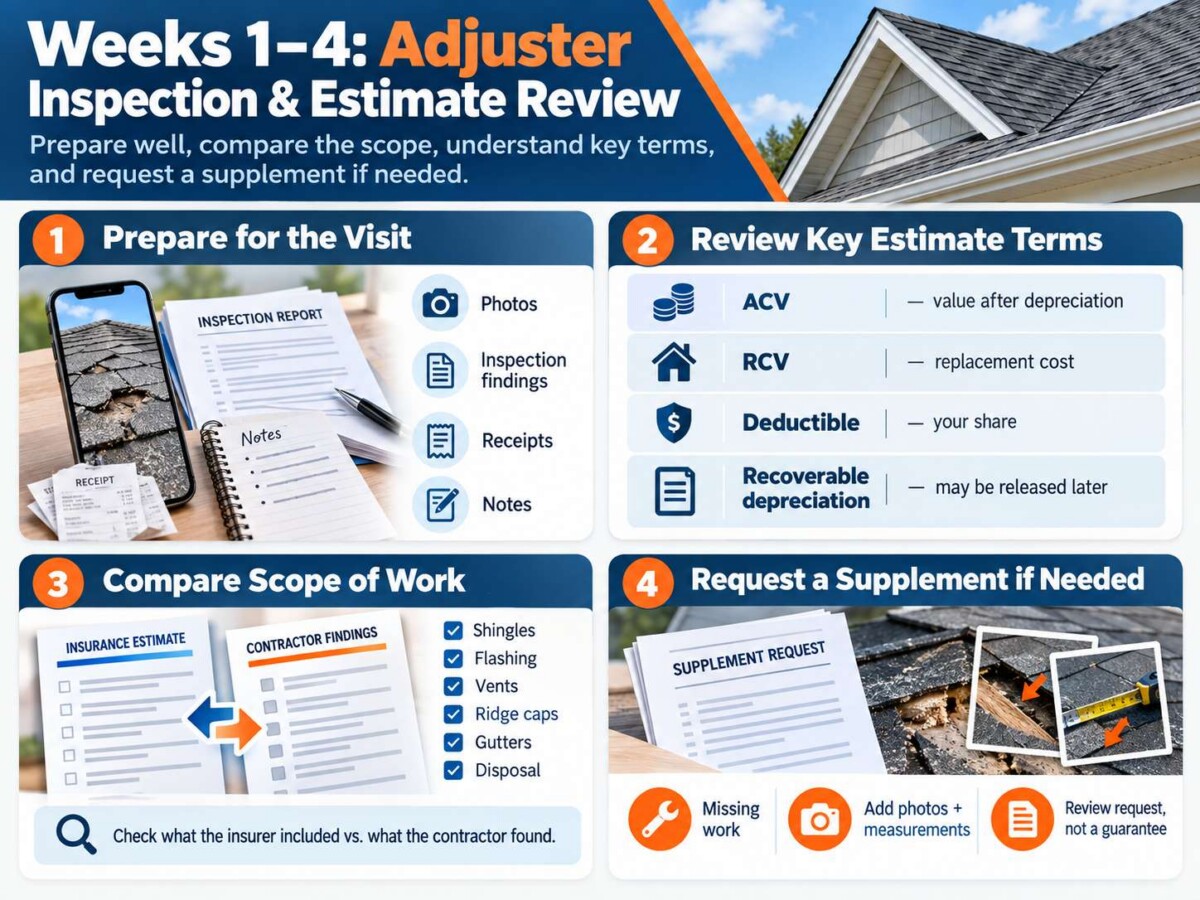
A supplement may be requested when supported work is missing from the original estimate. It should be backed by photos, measurements, material needs, or newly found damage. A supplement is a request for review, not a guarantee of extra payment.
Weeks 4+: What Happens If the Claim Is Approved, Partly Approved, or Denied?
The claim can move in several directions after review. A full approval may lead directly to roofing work. A partial approval can require closer review of excluded items. A denial may lead to a re-inspection or another option allowed under the policy. Each path needs a different response, so read the written decision carefully.
If the Claim Is Approved
Review the scope before work starts. Confirm the deductible, approved work, payment structure, and documents needed after completion. Keep contracts, invoices, completion photos, and material records.
If the Claim Is Partly Approved
Compare approved and excluded items with the contractor’s inspection. Ask why a specific component was excluded and what evidence would be needed for another review.
If the Claim Is Denied or Disputed
Start with the written reason. Compare it with your policy, roof photos, inspection findings, and storm records.
Possible next steps may include a re-inspection, added documentation, appraisal if the policy allows it, a licensed public adjuster, an Indiana Department of Insurance complaint, or legal advice for a serious dispute.
What Mistakes Can Weaken a Storm Damage Roof Claim?
Many claim problems begin with poor timing or missing records rather than the insurance form itself. Avoid actions that remove evidence, create safety risks, or make the storm date harder to connect with the damage. Your goal is to preserve a clear story from the storm through inspection and repair.
Common problems include:
- Climbing onto a wet or damaged roof.
- Failing to photograph damage before cleanup.
- Making permanent repairs before documenting the condition.
- Throwing away temporary repair receipts.
- Waiting to check policy notice requirements.
- Guessing about technical causes when speaking with the insurer.
- Treating normal wear as proof of storm damage.
- Letting a contractor promise insurance approval.
A roofer can explain damage and repair needs. The insurer controls coverage decisions.
Why Does the First Week Matter More During Elkhart County’s Storm Season?
The first week gives you the best chance to record fresh evidence and schedule an inspection before the spring rush before local demand builds. Photos taken early can show conditions before another storm, cleanup, or temporary work changes the property. An early inspection can also identify wind or hail damage that is hard to see from the ground.
According to the Michiana Roof Report 2026, 15% of requests in the study were storm or insurance related. The report also found that March through April 2026 was the busiest two-month stretch represented after the spring storm period. That local pattern helps explain why inspection schedules can fill quickly after severe weather.
The practical goal is simple: document the damage and request an inspection within the first week when conditions allow. This gives you more time to decide whether you need a minor roof repair, a larger restoration, or an insurance claim.
Conclusion
A storm damage roof claim in Elkhart County becomes easier to manage when you handle each decision in order. Start with safety and evidence. Control active leaks. Request an inspection. Review the damage, deductible, and policy before deciding whether to file.
If you open a claim, keep photos, estimates, insurer documents, invoices, and communication notes together. Compare the adjuster’s scope with the work your roof actually needs.
The goal is not to rush into a claim or roof replacement. It is to build enough reliable information at each stage to make the next decision with confidence.
You May Also Want to Read
You may also want to read:
Roof Insurance Claim Denied in Indiana? How We’ve Overturned 500+ Denials
Roof Repair Cost More Than Insurance Estimate? How Supplements Work
FAQs
Does a Roof Warranty Cover Hail or Wind Damage?
Usually, roof warranties and homeowners insurance address different problems. Manufacturer and workmanship warranties often cover product defects or installation issues. Storm damage may fall under homeowners insurance if the cause is covered. Check both documents and report the damage to the correct party instead of assuming the roof warranty will pay.
Can Insurance Deny a Storm Damage Claim Because the Roof Is Old?
An older roof can affect depreciation and the insurer’s assessment, but age alone does not explain whether new damage is covered. The insurer may review the cause, condition, maintenance, exclusions, and policy terms. A professional inspection can help separate recent storm damage from long-term wear.
How Long Do I Have to File a Roof Damage Claim in Indiana?
There is no single filing period that safely applies to every Indiana homeowners policy. Your policy may contain its own notice and documentation requirements. Check it as soon as you find damage and contact the insurer promptly if you plan to file rather than relying on a general deadline found online.
Why Should I Use a Local Elkhart County Roofing Contractor After a Storm?
A local roofer serving Elkhart County and nearby communities can inspect common roofing systems in the area, document the physical damage, and explain repair or replacement needs. Location alone is not enough. Check insurance, references, written terms, and storm-damage experience before hiring a contractor.
Can Small Storm Damage Turn Into a Larger Roof or Water Problem?
Yes. A lifted shingle, loose flashing, damaged seal, or small puncture can allow water intrusion during later rain. Moisture may then reach underlayment, decking, insulation, or ceilings. An early inspection can help determine whether a small repair is needed before water damage spreads.